Irish Examiner view: School patronage process is too slow

Among the survey's findings, 73% of parents with children in single-sex primary schools favour a move towards co-education. See link below. Picture: iStock
The conferences of the various teaching unions underway this week are of particular significance to members of that profession, obviously, but they can also offer an X-ray view of the country and how it is changing.
For instance, the national primary school survey, which was launched last November and involved over 200,000 families, has found that 40% of parents with children attending religious-run schools do not wish to retain their school’s religious ethos.
This outlook is reflected in State policy — the stated aim of the Government is to increase the number of multi-denominational primary schools by at least 400 by 2030, and the Catholic bishops appear to support this trend.
The latter group’s representatives supported the survey cited above, stating: “Bishops would like to move as quickly as possible to a situation in which the State supports parents with the provision of schools whose ethos genuinely reflects what they want for their children.”
However, in reality the slow pace of change means that government target of 400 multi-denominational schools by 2030 looks almost impossible to meet. Since 2011, just 32 schools have switched to a multi-denominational ethos, while in at least four counties — Leitrim, Cavan, Monaghan, and Longford — there are no alternatives at all to religious primary schools.
A greater sense of urgency from the Church would surely move this process along: If the supportive rhetoric from the bishops was matched by practical application these schools could be divested of their Catholic patronage more quickly.
The historical context to our current situation has often been cited in past debates — the manner in which the State outsourced education almost completely to the Church decades ago is one of the main reasons we are now struggling to meet the demand for non-denominational schooling.
It is surely the hallmark of a modern, pluralist society that it does not offer one religion a privileged position, particularly when almost half of its citizens disagree with that religion’s grip on education. The State must encourage the Church to expedite this process.
Read More
Many readers will need no reminding at all that there was widespread traffic congestion on Tuesday, as protesters took to the roads because of rising fuel prices.
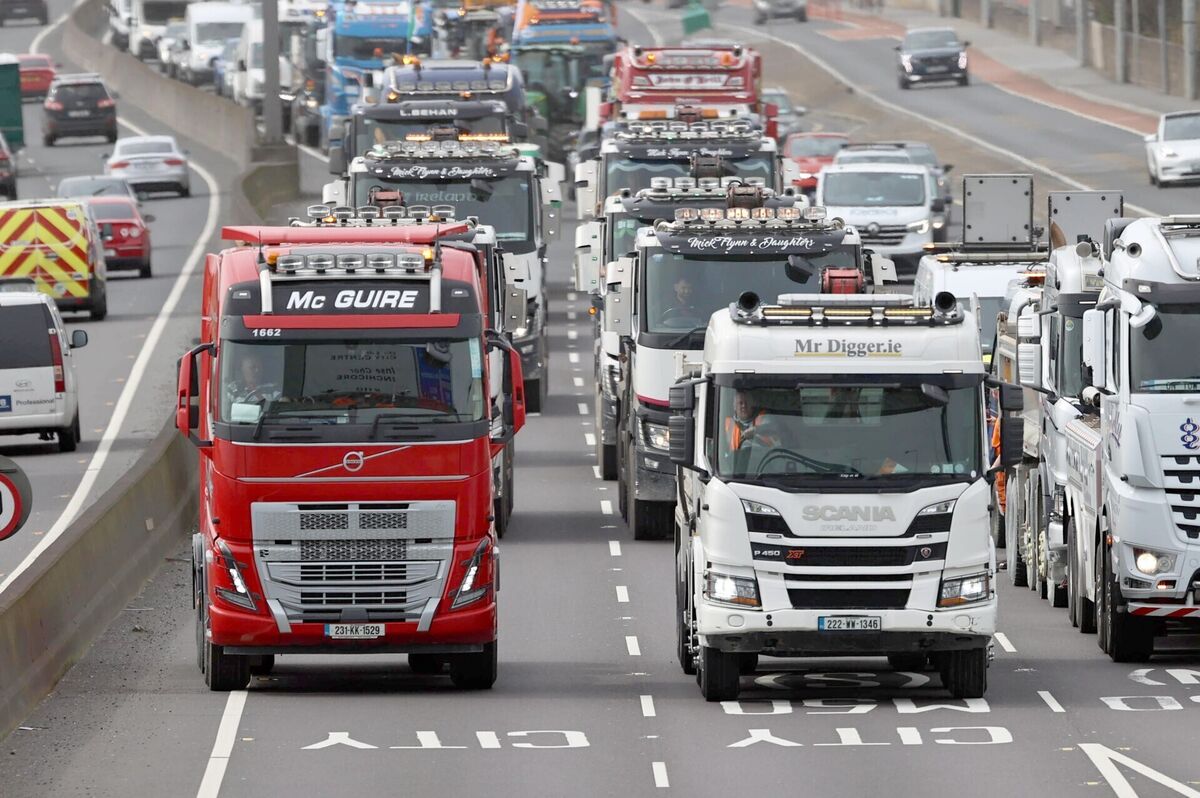
There were significant delays in Dublin, Cork, Galway, and many other areas as members of the agricultural industry and others used slow-moving or parked convoys to highlight the impact of those rising costs.
Rising fuel costs are having an impact on all sectors of the economy, but the haulage industry is particularly vulnerable to spikes in price.
Our dependence on that sector for the availability of practically every type of commodity necessary for urban life means there is a natural sympathy for those working in the industry.
The extent to which that sympathy is being tested by such protests is difficult to gauge, but it should be noted that the industry’s representative body, the Irish Road Hauliers Association, distanced itself from yesterday’s protest.
Its president, Ger Hyland, steered a fine line when saying the protest “has absolutely nothing to do with ourselves” but that it “completely empathise[s]” with those protesting.
The inconvenience caused by Tuesday’s convoys was unwelcome, no doubt, for those delayed while trying to make appointments or get to work, but it must also be acknowledged that the right to peaceful assembly and protest is a cornerstone of any functioning democracy.
Furthermore, though the protests were informally arranged, as the gardaí put it, there was some level of public awareness that they were to take place, which helped some commuters make alternative plans.
What is less encouraging was the fear expressed by some transport industry insiders that the protests could be hijacked by far-right groups.
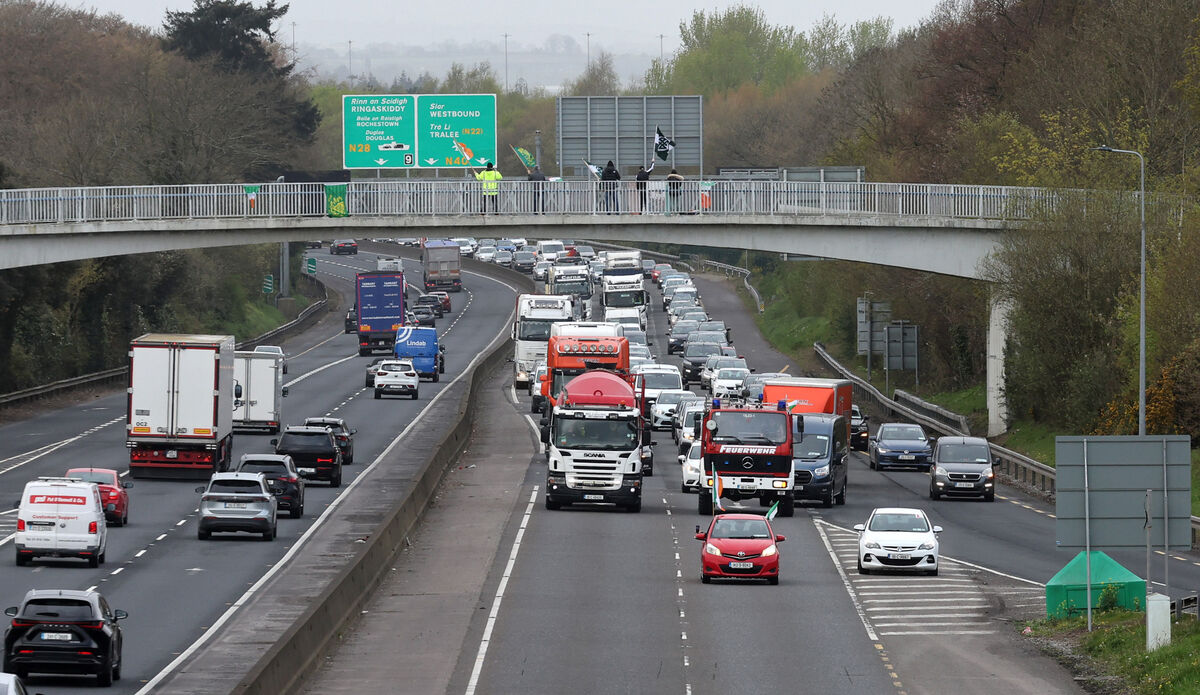
One senior source told Cianan Brennan of this parish: “If it’s not already being organised by the far right, then the far right may hijack it, and that’s a big fear that the gardaí have.”
The prospect of agitators seeking to commandeer genuine protests may be more concerning than any rise in fuel prices.
Tributes have been paid to the writer Gabriel Rosenstock, who passed away this week at the age of 76.
The Limerick native was a prolific author, working mainly in Irish.
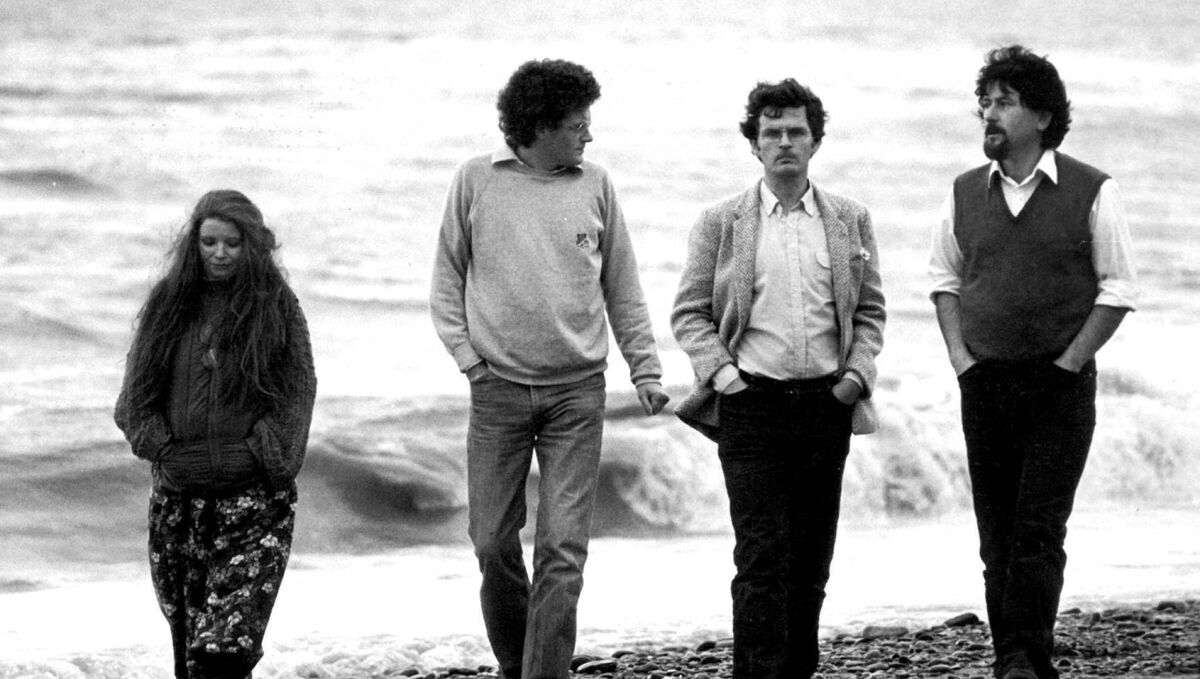
President Catherine Connolly paid him a warm tribute: “Across an extraordinary career, he made a particularly special contribution to the Irish language, leaving not only a broad body of his own work, but also a remarkably diverse set of translations, through which he brought so many of the great writers of the world to the Irish language.”
Over the course of a long career, Rosenstock helped to popularise Irish for children in particular by translating some well-loved titles from other cultures.
He translated both the Tintin and Asterix series of illustrated books to Irish, while he also produced an Irish edition of , .
For those children’s parents, he offered a different series of translations, with songs by Nick Drake, Bob Dylan, Bob Marley, Joni Mitchell, and Leonard Cohen translated into Irish for the Irish literary festival Imram.
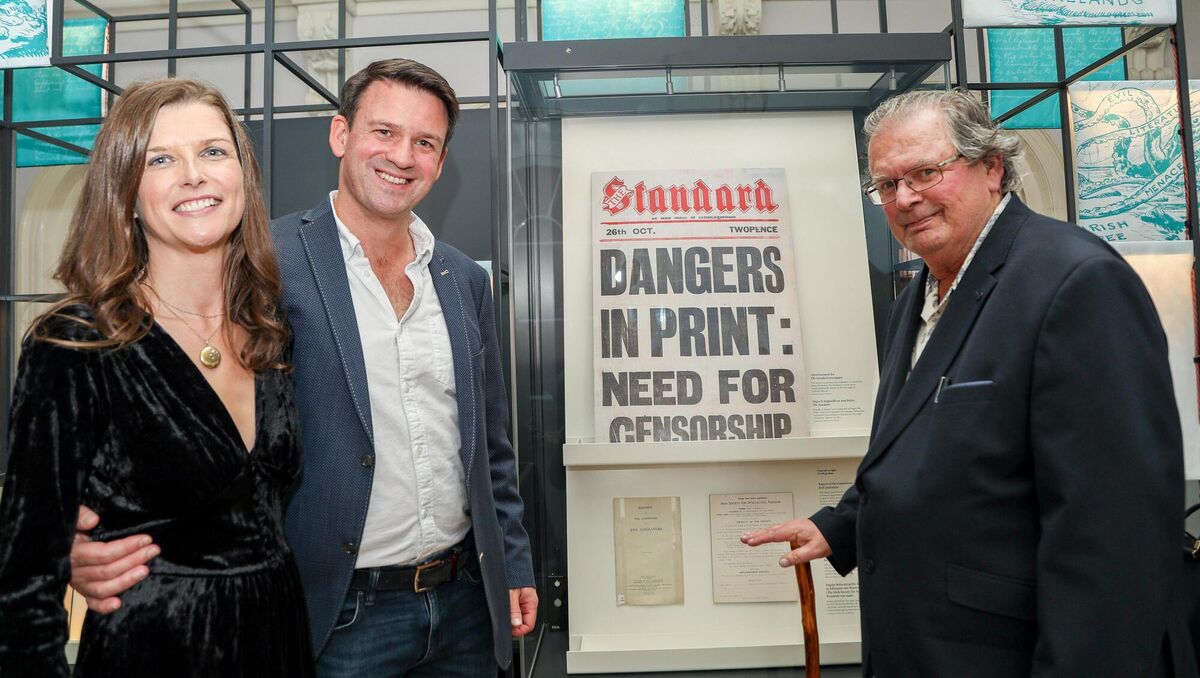
His own family said he “believed in the power of poetry and in its ability to build bridges between different cultures.
“He was a prolific and restless soul who published over 400 books. He will be greatly missed by all who knew him and who read him,” said the President.
Ar dheis Dé go raibh a anam.
Read More
CONNECT WITH US TODAY



Be the first to know the latest news and updates