Irish Examiner view: Reliable bus service is key to sustainable travel progress
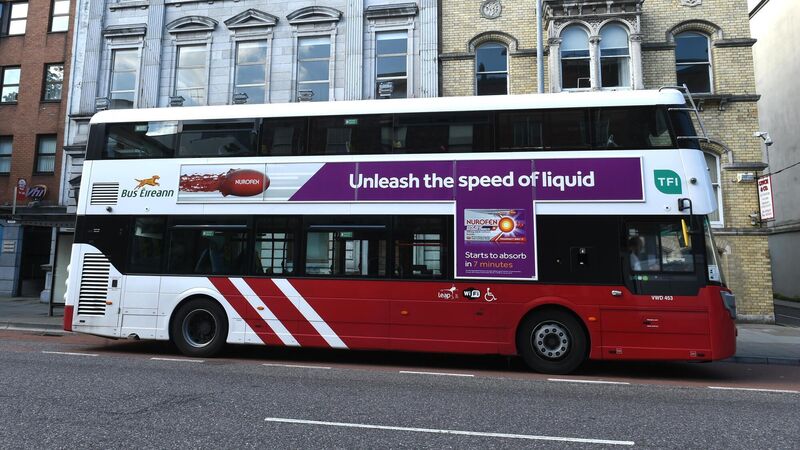
Dissatisfaction with the service does not bode well for government efforts to wrest us from behind the wheels of our car
Irish Examiner view: Reliable bus service is key to sustainable travel progress

More than 2,700 complaints were made about Cork City’s bus service in 12 months. Picture: Larry Cummins

The high level of complaints about public transport in Cork City is bad news for a number of reasons. The most immediate concern is for the bus users who missed appointments, were late for work or school, or were otherwise inconvenienced by the late or non-arrival of buses. As our story at the weekend reported, more than 2,700 complaints were made about the city’s bus service in 12 months. The most complained-about route, which serves University College Cork, Munster Technological University, and Cork University Hospital, was the subject of some 317 complaints alone.

At a broader level, the dissatisfaction with the service does not bode well for government efforts to wrest us from behind the wheels of our car and onto public transport.

A month to the day before we reported on the dissatisfaction with the city’s bus service, the Government launched two ambitious plans aimed at transforming the country’s transport system over the next five years. The moving together strategy and the sustainable mobility policy action plan describe how we might radically transform the way we travel over the next few years. The ultimate goal is a fully decarbonised transport sector by 2050, and a less congested, more efficient system that greatly improves our quality of life through freeing up time otherwise spent travelling, and reducing the transport costs to our economy.

The increased use of public transport is just one element of these plans which, sensibly, recognise that the vast majority of people living outside of our major cities and towns do not — and are unlikely to ever — have access to buses, trains, and trams for their daily journeys to work, school, or appointments. The strategy notes that, according to the most recent national household travel survey, 71% of our journeys are by car, 18% by walking, only 4% by bus or coach, and 1% by train/Dart/Luas. Starting from an admittedly small base, the strategy refers to an objective of increasing daily public transport journeys by 130% between 2018 and 2030.

Large sums of public money will be spent in the coming years on major public transport projects such as the Cork Luas, the Metrolink in Dublin, and rail improvements in other parts of the country; investment in these efficient new systems should go some way towards providing attractive alternatives to the car to many commuters. But changing the mindset of motorists requires more than the availability of buses, trains, and trams. It requires trust in the reliability of public transport. While factors such as comfort and convenience influence our decisions about whether to take the car or the bus, the experience of those bus users who between them lodged 2,700 complaints about Cork buses is also crucial.

If we do not trust that the bus will turn up on time, many of us will continue to accept that the expense and time stuck in traffic is a price worth paying to get where we want to go.

Trump’s war

Just when we thought we could no longer be shocked by the language and sentiments of his utterances, the purported leader of the free world comes out with an expletive-laden threat to blow up every power plant in Iran along with its bridges if it did not open the Strait of Hormuz by today.

There is a lot to digest in Mr Trump’s post on Truth Social. The deliberate targeting of civilian infrastructure may constitute a war crime, and yet Trump has flagged this intent in advance. More broadly, the threat suggests that, far from ending the war, he seems intent on escalating it. Most troublingly, it lays bare the collapse of any meaningful system of checks and balances on this capricious and unpredictable individual. From the moment he took office, it became apparent that the 47th president of the US did not believe that the rules and conventions which constrained his predecessors applied to him.

Within days of the inauguration, Elon Musk and his Doge team were unleashed to fire tens of thousands of employees and unravel agencies and systems that had served generations of Americans. Headlines about Musk were soon overtaken by tariff wars that disrupted global trade, the astonishing bid to acquire Greenland, and the fatal shooting of two people protesting actions by US Immigration and Customs Enforcement (ICE).

For all of the outcry, much of this agenda retained the support of Trump’s base. The war on Iran is different. It was begun without credible justification, clear objectives, or any regard to Nato or traditional allies other than Israel, and is now increasingly unpopular, not least because of its economic impact. It is clear that Trump is under severe pressure to find a way out. It is alarming that, in the absence of proper institutional restraint, it might take a precipitous drop in support for the brakes to be applied to Trump.

Cobh pilot a bright idea 

A pilot project that would allow older residents of social housing to move to smaller homes located in a town centre has laudable objectives. The project, to be trialled by Cork County Council in Cobh, is aimed at freeing up suitable social housing for young families while, at the same time, providing older people with easier-to-manage homes close to the services and amenities they require.

It is an idea that is well worth exploring at a time of a severe housing shortage when many retired people struggle, financially and physically, to maintain homes that become too big when children have grown and gone.


The last census produced an interesting statistic about occupancy levels of the 1.8m occupied dwellings recorded in the state in 2022. More than 375,000 of the 860,000 homes that had an occupancy rate of less than half a person per room were lived in by people aged 65 and above. The figures do not reveal how many of these people are happy to stay put, and how many would like to move to smaller, easier-to-heat homes that have every convenience at the doorstep. It is likely that we are going to hear more talk about the notion of “freeing up” big family homes for younger families in the future.

However, every such discussion must prioritise the wishes and requirements of the older people involved. They are the people who have worked for their homes, raised their families in them, and have built the communities which now sustain them. In those circumstances, many would be happy to move only if good quality accommodation in, or close to, their own communities was made available to them.

The Cork County Council project relates to social housing; if it is successful and embraced by the people involved, there may be lessons there for the wider housing landscape.

x

More in this section

Revoiced

Newsletter

Sign up to the best reads of the week from irishexaminer.com selected just for you.

Cookie Policy Privacy Policy Brand Safety FAQ Help Contact Us Terms and Conditions

© Examiner Echo Group Limited