Irish Examiner view: Investment scheme's allure dampened by past losses
The much-anticipated Savings and Investment Forum convenes on Tuesday
Irish Examiner view: Investment scheme's allure dampened by past losses

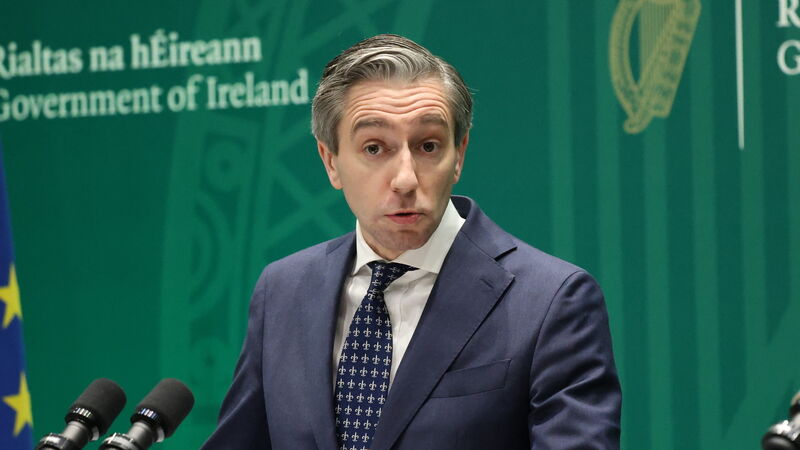
Finance minister Simon Harris has talked of the €170bn which savers have lying idle in low or no-interest accounts, money that could be put to better use by being invested. File picture: Stephen Collins/Collins

The much-anticipated Savings and Investment Forum convenes on Tuesday to begin considering what sort of savings/investment scheme might be devised to persuade Irish people to take some of their savings out of low-interest deposit and current accounts and invest in a way that would put their money to use, and give them some return on their money.

Not since the Special Savings Incentive Account (SSIA) scheme was launched 25 years ago has there been such interest in what we all do with the money we have left after the bills are paid. Back then, more than 1.1m people signed up for an SSIA, which allowed them save up to €254 a month with a guarantee of a tax-free 25% top-up by the exchequer after five years. As a mechanism for getting more people to save, it worked.

The purpose of the scheme now being considered is a little less clear. Finance minister Simon Harris has talked of the €170bn which savers have lying idle in low or no-interest accounts, money that could be put to better use by being invested. 

While details of the scheme have yet to be worked out, Harris seems to be favouring a scheme whereby there would be attractive tax benefits from investing in shares. But already, some experts are questioning who would be most likely to benefit from a scheme that could ultimately be an expensive endeavour for the State.

In an interview on Morning Ireland yesterday, Barra Roantree of Trinity College Dublin said the €170bn savings figure overstates the amount of savings the majority of households have; a disproportionate amount of that money is held by the very wealthy.

The question of why people save is also key to the likelihood of them switching from safe, but low-interest accounts, to riskier investments that might give them a better return. A person saving for a house deposit, for a rainy day, or for imminent retirement will want to access their money when they need it, and will not be able to wait out any stock market dips in their investments.

There is a strong possibility that the people most likely to sign up for an investment scheme are those who are already familiar with share buying and investing. If they are incentivised to switch from their current investment packages under which they pay tax on profits and dividends to a new scheme on which they pay less tax, then there will be a high cost to the State.

It is understandable that many Irish people take a more cautious approach to minding their hard-earning money than the approach taken by Americans and other Europeans. In 1999, more than half a million people dipped their toes into the stock market, many for the first time, when Telecom Éireann went public. That did not end well. People who bought shares in what were once considered blue-chip companies, the banks, fared even worse in the crash of 2008.

The outcome of the forum’s discussions will be watched with great interest, not just by people with money to invest, but by the taxpayer.

Built to last

The story of Cork-born film producer Lelia Doolan, who begins a protest walk from Shannon Airport to Leinster House this week, is inspiring and will have caused many people to wonder how she could still be so active and engaged at the age of almost 92.

As reported on these pages on Saturday, Ms Doolan, who is protesting the use of the airport by US military, marked her 90th birthday by jumping out of a plane to raise awareness of the war in Gaza.

While this remarkable woman may be a bit of an outlier in terms of vigour, she could well be a poster girl for a groundbreaking US study, published this month, which upends widely held beliefs about the inevitability of mental and physical decline in old age. 

The research, carried out by experts on aging from Yale University, found that 45% of adults aged 65 years and older experienced meaningful improvements in their cognitive function, physical function, or both in a period of up to 12 years covered by the study. Furthermore, the researchers found a strong correlation between these gains and positive aging beliefs.

Writing in the journal Geriatrics, authors Becca Levy and Martin Slade said the results “debunked the age belief that later life is a time of inevitable and universal decline”. It should serve to raise older people’s expectations about their own health and increase their willingness to engage in healthy behaviours rather than take a fatalistic attitude towards old age.

It is important, too, the authors point out, that the people with whom older people interact take note of the findings. In healthcare settings, for example, older patients might not be offered the same rehabilitation or preventive services as younger people, in the mistaken belief that the older person is unlikely to get better.

We might not all aspire to emulate Lelia Doolan, but the study certainly brings some encouraging news.

Postal service still required

The report in the Irish Examiner about the poor state of the postal service in many towns across Co Cork will have chimed with householders and businesses across the country. The litany of complaints by local councillors, who say the service is “in meltdown” in their area, include tales of missed hospital appointments, important documents going astray, and delays in farmers receiving badly-needed cheque payments.

It is accepted that the volume of letters posted in Ireland and elsewhere has fallen off a cliff in recent years. The high speed and low cost of email, and other forms of near-instant communication, mean more people can stay in touch or conduct business without recourse to postal services.

The reduced volume of post has increased the cost-per-letter to An Post, which still has to pay the post delivery person regardless of whether they deliver 60 or six letters on a road.

Despite the challenges, it is important that we retain a reliable, efficient, and affordable letter delivery service.

We have not yet reached the stage where passports, bankcards, and many other important documents can be sent electronically, and, given the ever-growing threat of online fraud, that day might never arrive.

A significant growth in parcel post, up by 125% since 2009, has boosted that particular revenue stream for An Post. It is important that a way be found to support and protect the letter-delivery side of the postal service.

More in this section

Revoiced

Newsletter

Sign up to the best reads of the week from irishexaminer.com selected just for you.

Cookie Policy Privacy Policy Brand Safety FAQ Help Contact Us Terms and Conditions

© Examiner Echo Group Limited