Irish Examiner view: Regime change in Iran may herald even more violence and suffering
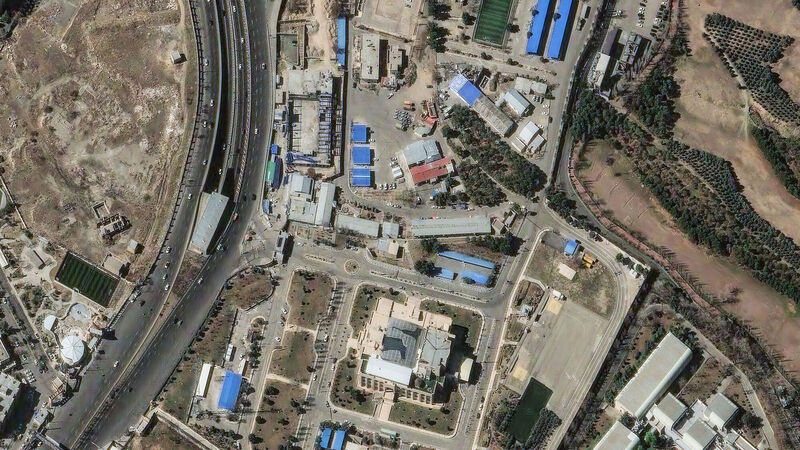
A satellite image of Iran's Revolutionary Guard Corps headquarters, in Tehran on February 27, before they were extensively damaged by US/Israeli air strikes. Picture:Vantor/AP
The language of “regime change” has long been wrapped in the reassuring rhetoric of liberation. Yet, the modern record of such interventions — particularly those driven or supported by Washington and its allies — tells a far grimmer story.
If the present confrontation between the US, Israel, and Iran moves in that direction, history offers little reason for optimism about what would follow.
The idea that forcibly reshaping another country’s political order produces stability has been repeatedly tested throughout living memory. It has repeatedly failed.
The 2003 invasion of Iraq was sold as the removal of a dangerous regime and the birth of democracy in the Middle East.
Instead, it shattered the Iraqi state, unleashed sectarian violence that killed hundreds of thousands, and destabilised the region for over a decade. Afghanistan followed a similar pattern. After the overthrow of the Taliban in 2001, a 21-year occupation ended not with a democratic transformation but with the Taliban returning to power in Kabul.
Libya offers perhaps the starkest example. The 2011 Nato intervention removed Muammar Gaddafi in the name of protecting civilians and enabling political transition. What followed was not peace or democracy but state collapse, militia rule, and a fractured country that remains divided between rival authorities more than a decade later.
Each of these conflicts began with confident predictions from those advocating intervention. Each ended with chaos that proved vastly more destructive than the regimes that had been removed.
That history matters as tensions with Iran intensify. No serious observer would claim the Iranian theocracy is benign — far from it. The clerical leadership has imposed a brutal repression at home, denying millions of Iranians basic freedoms. But the question confronting policymakers is not whether the regime is objectionable, the question is whether forcibly removing it would produce a better outcome. Experience suggests otherwise.
Iran is a large, complex country of more than 80m people, with deep ethnic, political, and religious divisions. The collapse of central authority there would almost certainly unleash internal conflict among competing factions from hardline clerics and revolutionary guards to ethnic militias and rival political movements.
Such a scenario would not produce a swift democratic transition. It would more likely produce prolonged instability, with neighbouring states drawn into the struggle and millions of civilians caught in the middle. For ordinary Iranians already living under economic hardship and political repression, the prospect of civil war would represent catastrophe rather than liberation.
The advocates of confrontation present themselves as champions of the Iranian people. That claim deserves scrutiny. The notion that Netanyahu, a leader widely accused internationally of war crimes in Gaza, is acting out of concern for Iranian citizens stretches credulity.
Likewise, Donald Trump’s posture of defiance toward Tehran comes as he faces mounting domestic political pressures at home. History shows that foreign confrontation can offer embattled leaders a convenient political rallying point.
More troubling still is the possibility that instability in Iran may not be an unintended consequence but a strategic objective. A fractured Iranian state — weakened by internal conflict and unable to project regional influence — would serve the interests of those who view Tehran as their principal geopolitical rival. If so, the people who would bear the cost are the same ones who always do: Civilians. For them, the lessons of Iraq, Afghanistan, and Libya are written not in policy papers but in graves.
Regime change, once unleashed, rarely follows the tidy script imagined by those who so aggressively sponsor it.
Far more often, it leaves behind a vacuum filled by violence, fragmentation, and suffering that can last for generations.
Universities are fond of presenting themselves as communities first and institutions second. Prospectuses, websites, and recruitment campaigns are filled with language about inclusion, wellbeing, and support.
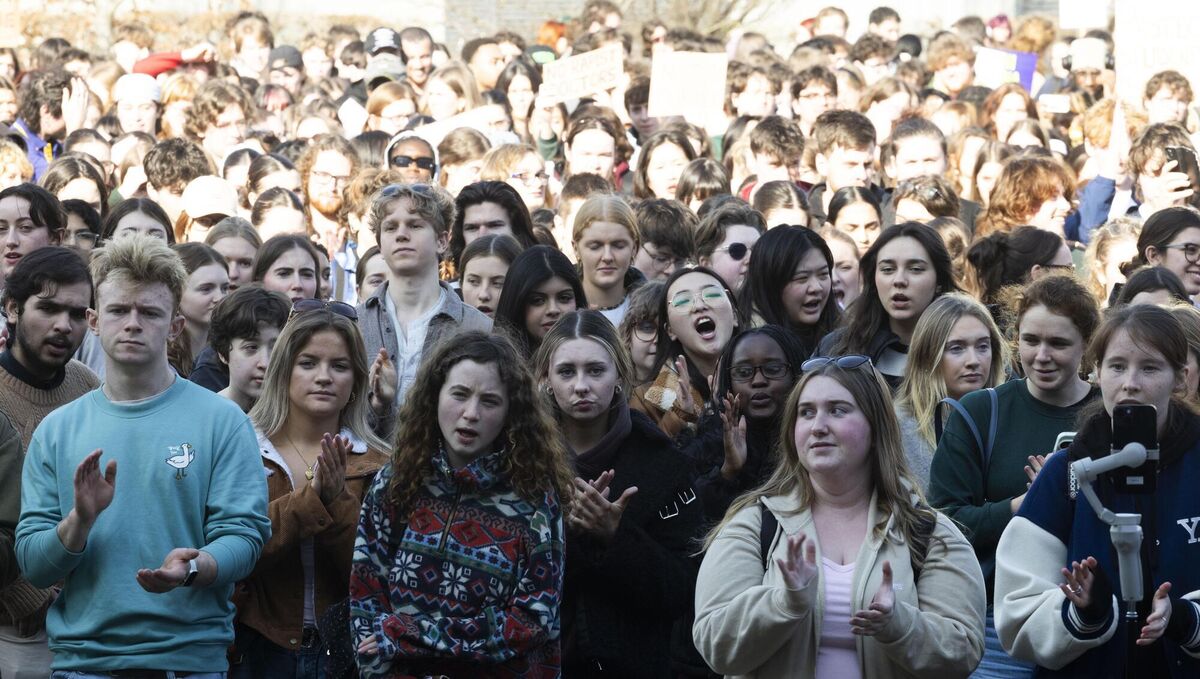
For students — many living away from home for the first time — such assurances are not marketing flourishes. They are promises. That is why the disturbing case involving a University College Dublin (UCD) medical student demands careful reflection.
Details point to a deeply troubling situation in which a graphic image of a student was circulated widely online, causing profound distress to the individual involved and concern across the university community.
UCD has said it could not conduct its own investigation while a Garda inquiry was under way. In strictly procedural terms, that may well be correct. But procedure is not the same as duty of care. Even if a formal investigation was impossible during a garda process, the university still had a responsibility to ensure that the student received meaningful support.
Universities deal with young adults navigating a vulnerable stage of life. Institutions built around students cannot afford to be mechanical when serious personal crises emerge.
Compassion, discretion, and visible care should be the minimum response, not an optional extra.
Pop culture has a habit of placing people in neat little boxes. Harry Styles — often dismissed by critics as the sugary face of manufactured pop — has quietly evolved into something rather more interesting.

His recent conversation with celebrated Japanese novelist Haruki Murakami in offered a glimpse of that transformation.
What might have seemed an unlikely pairing instead became a thoughtful discussion about creativity, discipline, and mental health.
Styles spoke candidly about the psychological refuge he finds in long-distance running. For someone whose life has unfolded under constant public scrutiny since his teens, the appeal is obvious.
Running, he said, is “a conversation with myself” — a rare space for solitude and reflection in a world that rarely allows either. He is not merely dabbling. Last year, Styles completed the Berlin marathon in an impressive two hours 59 minutes, a time many seasoned amateur runners would envy.
The more surprising revelation, however, is the depth of thought behind the pursuit. Styles credits Murakami’s writing with challenging the old romantic cliché that great art requires a “tortured soul”, arguing instead that discipline, health, and creativity can coexist.
For young men in particular — a group often reluctant to speak about mental wellbeing — that message carries weight.
Read More


CONNECT WITH US TODAY



Be the first to know the latest news and updates