Irish Examiner view: The box of delights that changed our lives
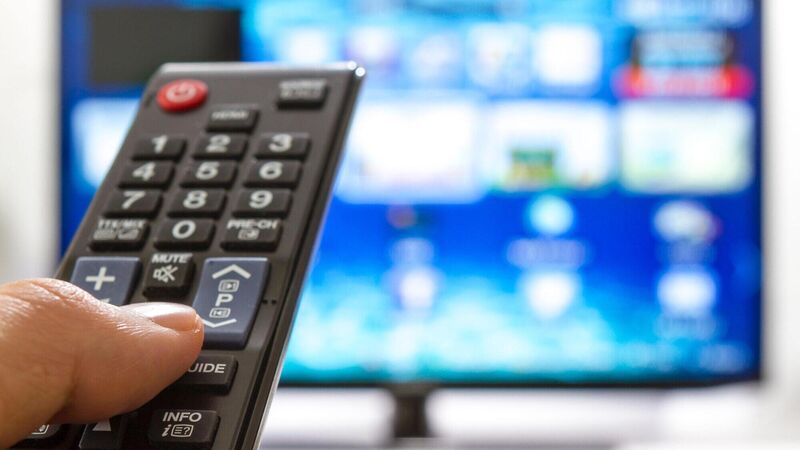
It was at the end of January 1926, that John Logie Baird gave the first demonstration of television to members of the Royal Institution in Albemarle Street in London’s Mayfair.
It was at the end of January 1926, that John Logie Baird gave the first demonstration of television to members of the Royal Institution in Albemarle Street in London’s Mayfair. His original version provided only 30 lines of definition which was subsequently upgraded to 240 lines before settling on the 405 line system pioneered by the Marconi Company and EMI.
This will be familiar to some of our readers as will its successor, the 625 line ultra-high frequency service which came on stream in 1964 with the launch of BBC 2.
Whatever you think about the current state of TV programming, it is beyond argument that it was a technical development which has profoundly changed our lives and the way in which we see ourselves and each other. It has brought us into a daily relationship with screen-based information and entertainment which may have evolved and transmogrified but which has rarely been broken.
It is worth recalling that as we consider the turn of events which have overtaken the great communications invention of the late 20th century. The arrival of the internet in the early 1980s and the establishment of its user-friendly graphical interface, the world wide web, in 1989 has spawned a myriad of new services and products which changed the way we live and work. These transitions have taken place within the memory of nearly every one of us.
For many years this seemed nothing but beneficial with all the riches of the world’s information at our fingertips. Social media gave us the opportunity to communicate, instantly, with friends old, new, and imagined. But in recent years these blessings have seemed to become less bountiful. It has dawned upon us that there are tares among the wheat, to borrow from the parable in the Gospel of Matthew 13.
The latest manifestation of this can be found in the violence and repression of the Iranian crackdown on protestors where the ruling theocracy implemented one of the most extensive internet shutdowns in history cutting some 92m citizens off from their services and limiting phone and text message access.
The restrictions cut out Elon Musk’s Starlink satellite internet service, used by ordinary Iranians while, providing a telling insight of a two tier future, allowing government officials continued access to social media such as X and Telegram.
Digital experts believe this is a precursor to a policy of “absolute isolation” where the global internet will be available only to those with a specified security clearance. Such limitations escalate the potential for repression, particularly where it is accompanied by signal jamming technology which has also been used widely in Ukraine by Russian invaders.
Most technical breakthroughs come to us on waves of optimism, but it doesn’t take too long for us to spoil that. Corruption can come through the excesses of autocracy, or those of capitalism and greed. But it remains important to recognise the signals and not become over-reliant on single providers. Choice is important in a free society.
That 1,000 post-primary teaching posts are unfilled — either vacant or operated by somebody not trained in teaching the particular subject, such as a qualified teacher of English teaching maths — will not come as a surprise to many.
Indeed, it would seem to form part of a pattern in the public service, where swathes of positions remain unfilled because qualified candidates cannot be found, though that is not to say that individuals working in these roles are without experience overall.
There is an almost annual lamentation that our trained nurses, teachers, doctors, and others are going abroad, but why would they stay when they can potentially earn more in other countries, see something of the world, and maybe, just maybe, even afford to live there?
As reported by Jess Casey in yesterday’s edition, more than 4,500 people qualified to teach here are thought to be working abroad, with about the same number qualifying annually. Another 3,350 are on a career break, which is unpaid but which means their job is available to them when, or if, they come back. They may be on leave for health reasons, family reasons, or trying their hand at an industry that shows them better prospects.
And yet it would be simplistic to say we should just go out and get our qualified teachers back from other countries. Many of them may be working in the field — perhaps in the Gulf, perhaps further afield — and the bald fact is that, as far as our public service is concerned, those years don’t mean anything when it comes to salary or service.
As the ASTI noted in yesterday’s report: “The current system, where the overseas service of many post-primary teachers is not recognised in Ireland, acts as a deterrent to many who may otherwise return.”
This is hardly “best in class” thinking, and more like rigid dogma than reconfiguring a system to make it more agile and useful for the society in which it operates.
It isn’t even limited to education — it would seem to be a blind spot in our public service thinking.
Gaps in the health and disability services remain nationwide, with some highly qualified and experienced candidates from the UK, for example, unwilling to uproot and move to Irish institutions because they, having not previously been employed here, would have to start on scales paying less than they get abroad.
Isn’t it time we, as a nation, put our money where our mouth is and actually work on reforming a system that puts people off taking up what look like good jobs? Or are we happy to sit back and wait for the next headline showing acres of vacancies when the children or vulnerable of this country are left losing out?

CONNECT WITH US TODAY



Be the first to know the latest news and updates