Irish Examiner view: South Kerry taskforce on population decline is a welcome initiative
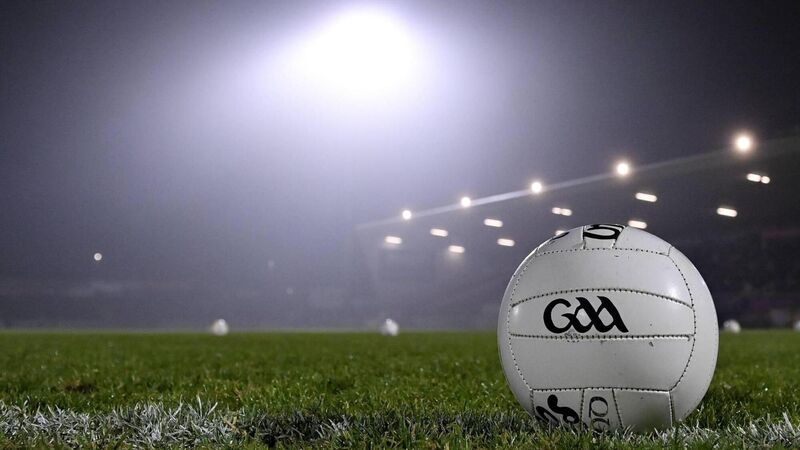
The report in the 'Irish Examiner' highlighted how some GAA clubs in Kerry's Iveragh Peninsula struggle to field team — a challenge that is being experienced everywhere from Inishowen in Donegal to Beara in Cork. Stock picture: Ramsey Cardy/Sportsfile
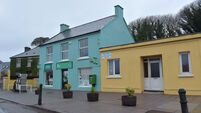
The establishment of a taskforce on the Iveragh Peninsula, South Kerry, to tackle population decline could become a welcome template for rural Ireland as a whole, attempting to arrest an invidious problem decimating communities up and down the country.
But the South Kerry case is interesting because it is a snapshot of what’s going on elsewhere. There are genuine fears that it may already be too late to reverse the decline in population across the peninsula.

The indicators are stark: The population of school-going children has almost halved between 1956 and 2011 — from 3,036 to 1,795 — and enrolment in primary schools has dwindled by 41% between the 1993/4 and 2021/2 school years.
A major driver in all this is restrictive planning regulations forcing young people to move from their native places.
There is also a lack of necessary infrastructure, particularly seen in third-level education.
Young people have little option but to move away from home because they cannot build on family land, leading them to move to other counties or to emigrate altogether.
Water is also an issue causing people to leave towns and villages. A lack of wastewater and water infrastructure is restricting the building of new homes and, even if these were built, businesses that might have been able to expand cannot do so, resulting in job opportunities being lost.
It is not just the Iveragh Peninsula and South Kerry that are suffering.Â
The same problems are emerging from the Inishowen Peninsula in Donegal right down to Cork’s Beara Peninsula.
In Kerry, a taskforce is being set up specifically to tackle rural depopulation, coming under the auspices of the Department of Rural and Community Development, and it is something which could be a model for the rest of the country in identifying the issues and trying to rectify them.
Ageing, housing, education, and infrastructure are all at issue here, and once thriving communities are suffering badly as a result. The development of urban areas has long been a concern of many governments and planners, but there is an obvious and growing need for the focus to switch to our rural towns and villages where communities, if lost, may never be able to recover.
In the not-too-distant future, we will live in a world where there are no survivors of the Holocaust to continue to bear witness to what was perpetrated on the Jewish race across Europe in the 1940s.

The lack of witnesses to the horrors of what happened during the Second World War will only exacerbate a growing trend here in Ireland, as well as elsewhere, where increasing numbers of people have concluded that the Holocaust was either a complete “myth” or greatly exaggerated.
Recent surveys here have worryingly indicated that one in 10 people aged between 18 and 29 think the whole thing was little other than a fairytale. Another 10% of that age bracket are of the belief that, while it might have happened, it was blown completely out of proportion.
On the one hand, these findings illustrate clearly the old maxim that humanity has great difficulty learning the lessons of history. On the other, they shine a horrifying light on our inability to contemplate, let alone comprehend, the meaning of the genocide of over 6m people.
This is not just a modern phenomenon. Even after the liberation of death camps such as Auschwitz, Belsen, and RavensbrĂĽck, there was an absence of public discourse across Europe. This led to a lack of knowledge about the Jewish catastrophe.

History quickly rectified that but, in this modern era, the ignorance of the Holocaust has come about because digital “facts” about it are characterised by distortion, lies, and purported truths. History has been weaponised by those who need their own truths broadcast.
In the past few days, Taoiseach Micheál Martin raised concerns about the levels of Holocaust denial in this country.
Like many others, he was convinced that our education system was robust enough to have illuminated most people here about the truth.
Not so, as those recent surveys illustrated. We need to recalibrate our thoughts on the Holocaust in terms of both education and simple public awareness.
Just last weekend, there was a Holocaust Memorial Day commemoration event in Dublin. The event remembered not just the millions of victims but survivors such as the late Joe Veselsky and Monika Sears, both of whom became Irish citizens and often spoke publicly about their experiences.
Their voices have been lost to us, but their stories remain vivid and horrific. Their truths cannot be allowed perish with them.
Growing levels of absenteeism in schools serving socio-economic disadvantaged children and young people will, inevitably, contribute to inequality later in life.

It has to be a concern that students in disadvantaged areas lose most time at schools, averaging 20.7 days per student, but an ESRI report has highlighted that 35% of children attending schools in poorer areas and special schools are experiencing higher rates of absence than those in affluent areas.
Between 2022 and 2024, there was a rise of 30% in the number of primary schools experiencing “chronic absences”.
The report’s findings have provided an important evidence base for targeting support to schools recording elevated levels of student absences.
This is an area deserving priority attention because, if growing gaps in students’ attendance records mean down-the-line inequalities, it needs addressing.
Those with poor attendance characteristics will undoubtedly face difficulties later on, so identifying them and the issues causing absenteeism will definitely prevent other issues emerging later on.