Irish Examiner view: Enjoy the post-Christmas lull to plan for a lively year
It’s not the loveliest word in the world, but there’s no room for ambiguity in what has become known as Betwixtmas, that often quiet sojourn between Christmas Day and the celebrations of New Year.
Irish Examiner view: Enjoy the post-Christmas lull to plan for a lively year

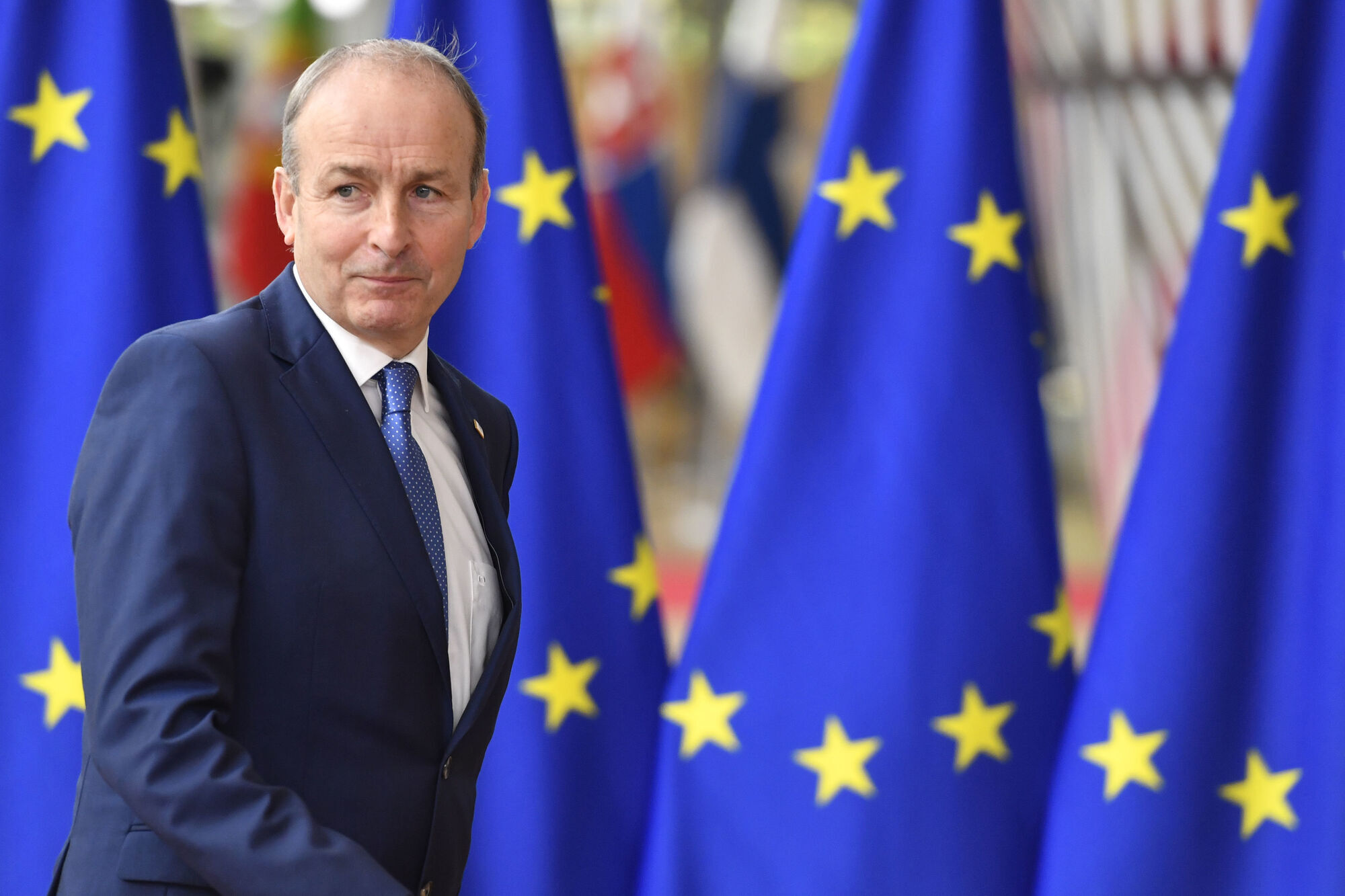
While this will be the eighth time that we have taken over the rotating presidency of the European Union, the dangers and threats to Europe are more tangible than during our previous stewardships. File photo: AP/Geert Vanden Wijngaert

It’s not the loveliest word in the world, but there’s no room for ambiguity in what has become known as Betwixtmas, that often quiet sojourn between Christmas Day and the celebrations of New Year.

For many, it’s an opportunity to plan ahead which extends beyond contemplating the holiday advertisements and major family events of 2026. We can also look at what is happening in the world, which may impact us and shape our destinies.

Major among these will be our turn to take over the rotating presidency of the European Union on July 1, following on from Cyprus. While this will be the eighth time that we have fulfilled these duties, the dangers and threats to Europe are more tangible than during our previous stewardships of 1975, 1979, 1984, 1990, 1996, 2004, and 2013.

This is particularly because of the challenges posed by Russia. While we expect to host more than 230 presidency events in Ireland and chair more than 170 EU preparatory bodies, committees and working groups in Brussels, confidence has been rattled by the drone incursion into Irish airspace during the visit of Volodymyr Zelenskyy at the start of the month.

Irish senator, former army captain, and regular defence commentator Tom Clonan, writing in the British press, said: “We’re Europe’s weakest link when it comes to security, defence, and intelligence.” He described Ireland as “completely and utterly defenceless and, I would say, provocatively weak.” 

While its EU role will be a primary matter for the Republic there are at least two other overseas events which will command attention. The second week of next month marks the deadline for Israel’s response to what has become known as the “Genocide Convention Case” brought to the International Court of Justice by South Africa. 

This deadline was extended from July this year after a request from Jerusalem. Oral hearings are likely to start late in 2026 or early in 2027.

A protest against the war in Gaza taking place in Dublin last September. The second week of next month marks the deadline for Israel’s response to what has become known as the “Genocide Convention Case” brought to the International Court of Justice by South Africa. File photo: RollingNews.ie

Next autumn will also see the mid-term elections in the United States when all 435 seats in the House of Representatives will be up for grabs and 35 of 100 senate places can be contested. This points to a volatile year for Donald Trump. The United States begins its official withdrawal from the World Health Organisation in January. 

There are major anniversaries to be marked including the 250th year of the Declaration of Independence in July; and 25 years since the September 11 attacks and the start of the war in Afghanistan. August will mark the fifth anniversary of the departure of the last US troops from Kabul as the Taliban seized the capital.

If the political winds are blowing against him, and the problems of Ukraine and Gaza remain intractable, it is easy to see that picking a political and economic row with Europe may seem to be an attractive distraction for Republicans.

Nor is it likely that the White House will be mollified by hosting the 2026 World Cup between June 11 and July 19 with rows already raging about the cost of match tickets. Should Ireland qualify, our fans face bills amounting to thousands of euro to follow our team. 

Supporters will be well advised to recall the experience of this summer’s Club World Cup where prices plummeted once it became clear that people were unwilling to stump up. Surge pricing can work both ways.

The New Year is traditionally associated with renewed hope, and the best time to contemplate that can be right now, before reality starts to crowd in on us. Take every opportunity to enjoy it while you can.

Persuasion needed about Austen at 250

If there is one thing we’re not short of as a nation it’s great raconteurs and it was fitting to hear one our own leading the tributes to arguably the world’s best this week.

Colm Tóibin gives way to no one in his admiration for Jane Austen and he spoke eloquently as celebrations of the 250th anniversary of her birth in Hampshire, England, took place this month.

Tóibín received his secondary education at St Peter’s College, Wexford, and it was there that he first encountered his favourite Austen novel, Persuasion, while studying for his leaving cert.

On BBC Radio 4, he described how his teacher, convinced that the bucolic vowel sounds would impede the progress of youngsters from the Model County, told his charges: “Boys, you have to do something about your accents.” His solution was to persuade them to read aloud from the tale of spinster Anne Elliot and her lost, and re-found, love. 

Jane Austen, whose literary works profoundly influenced Ireland's Colm Tóibin.

Tóibín movingly described how a schoolmate, a farmer’s boy, chose the famous letter from Royal Navy Captain Frederick Wentworth, which begins: “I can listen no longer in silence. I must speak to you by such means as are within my reach. You pierce my soul. I am half agony, half hope. Tell me not that I am too late, that such precious feelings are gone for ever.”

It is a memory which has stayed with one of Ireland’s finest writers forever and the Austen novel, her last, published after her death, has profoundly influenced his work including characters and plotlines in his hugely successful Brooklyn and Long Island.

In troubled times, great literature can be a haven of peace and inspiration. The work of Austen, and the insight of Tóibín, provide a plenitude.

UK’s lifting of tap limits makes life easier for fraudsters

Among the baleful anniversaries waiting to be noted in 2026 is one which falls on June 13. That will be 10 years since the British voted to leave the European Union after its then prime minister, David Cameron, and other EU leaders, miscalculated the mood of the country. The UK polled 52-48 to depart although there were wide regional differences in the result.

This has some serious consequences for our ambitions for a unified Ireland and one small example of the problems it can raise is exemplified by London’s go-ahead for its banking sector to scrap the contactless card limit, which currently stands at £100 (€114).

Its financial conduct authority says this will allow banks from March to respond to changing consumer demands, inflation, and new technology. Banks will be allowed to set their own restrictions including on cumulative spending and the number of contactless taps you can make before you are asked for verification, usually a pin number.

There are no limits on payments using digital wallets such as Apple Pay, Samsung Pay, and Google Pay because they usually require some form of biometric authentication such as a fingerprint.

The lifting of the cap will also prevail in the North because it falls within the same regulatory framework as the rest of the UK, but in the Republic the limit for physical debit and credit cards remains at €50 per transaction. Above that limit, the purchase must be completed with chip and pin. There are no plans for a review of the ceiling.

Almost nine out of every 10 in-store card payments are now contactless and there has also been widespread adoption of mobile wallets. Setting aside this dangerous over-reliance on network technologies, which increasingly show signs of creaking, the ubiquity of this form of commerce is unlikely to be rolled back. And the prospects of harmonisation with our next-door neighbours are dim.

Raising the limit brings with it the depressing prospect of making life easier for fraudsters with worries that criminals who obtain someone else’s contactless card will be able to rack up more ill-gotten gains. A single transaction limit reduces the scope to buy very expensive items and a cumulative lid presses down on total spend.

Equally, we know from increases in shoplifting and mobile phone robbery that relatively petty minor theft can soon scale up to become a major problem.

At the start of each year, the Central Bank of Ireland issues a report on illicit credit transfers, card payments, e-money, and direct debits. Around 98% of card payment fraud by value occurs when criminals use a stolen card, account or personal information.

The total value of fraudulent payments rose by 26% in 2023, increasing to €126m from €100m in 2022. Two thirds of the cases involve cross-border transfers. And while the rate is low at 0.001% of all transactions, this is no consolation to a victim. 

This holiday season and beyond, we should practise an updated fin-tech version of the old Michael Corleone aphorism: Keep your friends close, and your cards closer.

More in this section

Revoiced

Newsletter

Sign up to the best reads of the week from irishexaminer.com selected just for you.

Cookie Policy Privacy Policy Brand Safety FAQ Help Contact Us Terms and Conditions

© Examiner Echo Group Limited