Irish Examiner view: Christmas is our time to be together
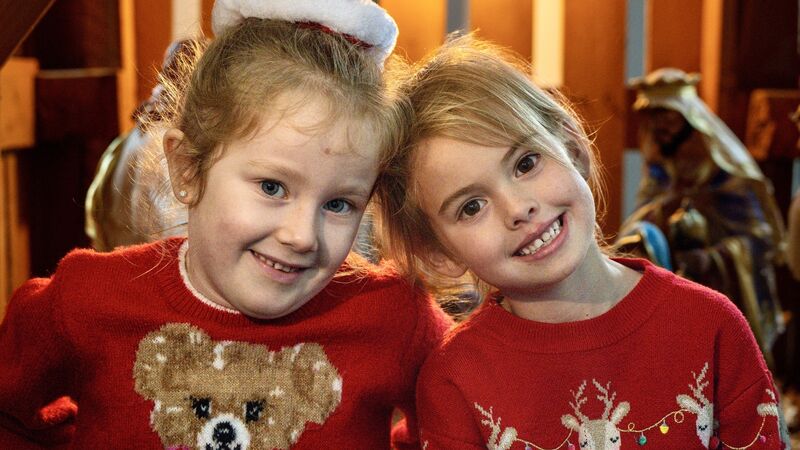
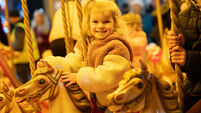
Ellie Young and Aoibheann Dunlea at the crib during the Christmas celebrations at Eglantine School in Ballyphehane earlier this month. Far from being 'all over', the season continues until Little Christmas, the feast of the Epiphany, on January 6. Picture: Chani Anderson
It is only natural around Christmas to evaluate and assess, in both the general and specific senses. This time of year offers most of us some respite from the hurly-burly and the headlong rush, a vantage point from which to consider where we are, and what is truly important.
For many readers, this is a season for family and togetherness, though it should also be a time to remember those who are struggling or less fortunate. In recent days, reports in these pages have outlined the ongoing scandal of homelessness, and the fact that thousands are unhoused at the exact time of the year most associated with home and family than any other is truly appalling.
What makes this scandal all the more piercing is the way it runs counter to the joy of shared experience, a common theme in many cherished Irish traditions which feature at this time of year.
“Focusing on the true meaning of Christmas” is of course a clichéd phrase. But it is worth pointing out that while an Irish Christmas features traditions both new and long-standing, it is striking how many of those emphasise the positive impact of simply being in the company of friends and loved ones.
Long before December 25 even dawns, Irish people gather together in anticipation. Online shopping may have had an impact on the bricks-and-mortar retail sector, but December 8, the feast of the Immaculate Conception, still holds a strong appeal for those keen on making a day trip to our cities and towns for presents, and the crowds are part of the experience.

Another marker of the approach of the season is The Late Late Toy Show, which has also become a communal experience for families the length and the breadth of the country.
Mass attendance may have declined steeply in recent years, but Midnight Mass on Christmas Eve still exerts a strong pull, even for those who are less than diligent in attendance the rest of the year: Again, the sense of being with fellow worshippers at a special time of year is surely one of the most powerful elements in the draw of Midnight Mass.
When the presents are exchanged and the carcass of the turkey picked clean, we still long for connection. One of the oldest Irish Christmas traditions is the Wren Boys’ hunt through towns and villages for the eponymous bird, a custom which survives still in some parts of the country. What is this tradition but a round of visiting and socialising together, a means of meeting with friends and neighbours?
Even as the particular holiday of Christmas itself begins to fade from view we stay in groups and celebrate together.
The Feast of the Epiphany on January 6 may not resonate as much in a country which is less overtly Catholic than it once was, but that date’s other significance is still powerful. It is also, of course, Nollaig na mBan, or Women’s Christmas, when the work done over the holiday season by women of the house was supposed to be recognised by the men of the family, who would do the housework for the day.

Whether those roles are as fixed now in modern Ireland as they were in bygone generations is dubious, but many women still use the date as an opportunity to get together and celebrate the end of the holidays.
Christmas is many things to many people, but above all it is a time for being with those we care about. And for caring about those who cannot have that experience.
Another Christmas tradition which is now a mainstay of the festive season — and one which proves the point made above — is the Christmas Day swim.
The willingness of hardy souls to take to the water at this time of year may be surprising to some, but there has been an explosion in ‘wild swimming’ in recent years, with intrepid bathers visiting all sorts of remote or inhospitable locations.

It is possible that the popularity of ‘wild swimming’ has helped to spread the gospel of the Christmas Day swim, though for some it has been a yearly activity for decades.
This is the 50th annual Broadstrand Christmas Swim in West Cork for instance, where participants — some of whom have never missed a swim in that time — can opt for hot soup or a hot toddy when they emerge from the sea.
It should also be pointed out that many of these swims double up as fundraisers for very worthy causes.
The Broadstrand event supports Cope/Horizons in Clonakilty and the paediatric cystic fibrosis unit at CUH, for instance.
In Waterford, the Michael Power Christmas Day Memorial Swim at Kilmurrin Cove is benefitting The Pine Grove Day Centre in Waterford City, which looks after people in the community with Alzheimer’s and dementia.
In Ballinskelligs in Kerry, proceeds from the Snámh Lá Nollag are going to The Gavin Glynn Foundation in support of local hero John Dillon. The list goes on and on.
For readers who took the plunge, then, a hearty well done on raising money for good causes, and make sure to spoil yourself today. You earned it.
It has been a horrifying 12 months for journalists around the world. According to research by press freedom advocates Reporters Without Borders, 67 media professionals were killed between December 1 of last year and December 1, 2025.
Unsurprisingly, conflict zones have proven extremely dangerous for journalists. The Russian army has targeted Ukrainian and non-Ukrainian reporters alike as war in the latter country continues unabated, while there are more journalists missing and unaccounted for in Syria than in any other country.
Criminal gangs have also been cited in this research, with the killing of nine journalists in Mexico in the period covered by the research linked directly to the powerful drug cartels in that country.
However, the starkest figure in the research is the finding that almost half of the journalists slain in the past 12 months — 43% — were killed in Gaza by the Israeli Defence Forces (IDF). The disregard for human life shown by the IDF is now well known — they have shown no compunction about killing children in Gaza, for instance — and the sheer scale of death in that region is difficult to comprehend. As late as this week, a final toll of 70,000 deaths was estimated.
It is no surprise, then, to learn that Israeli forces have killed so many of those bearing witness to their atrocities. The bravery of media professionals who died while publicising what is being done to the people of Gaza deserves to be remembered.