Irish Examiner view: Guinness and co are in need of a masterplan
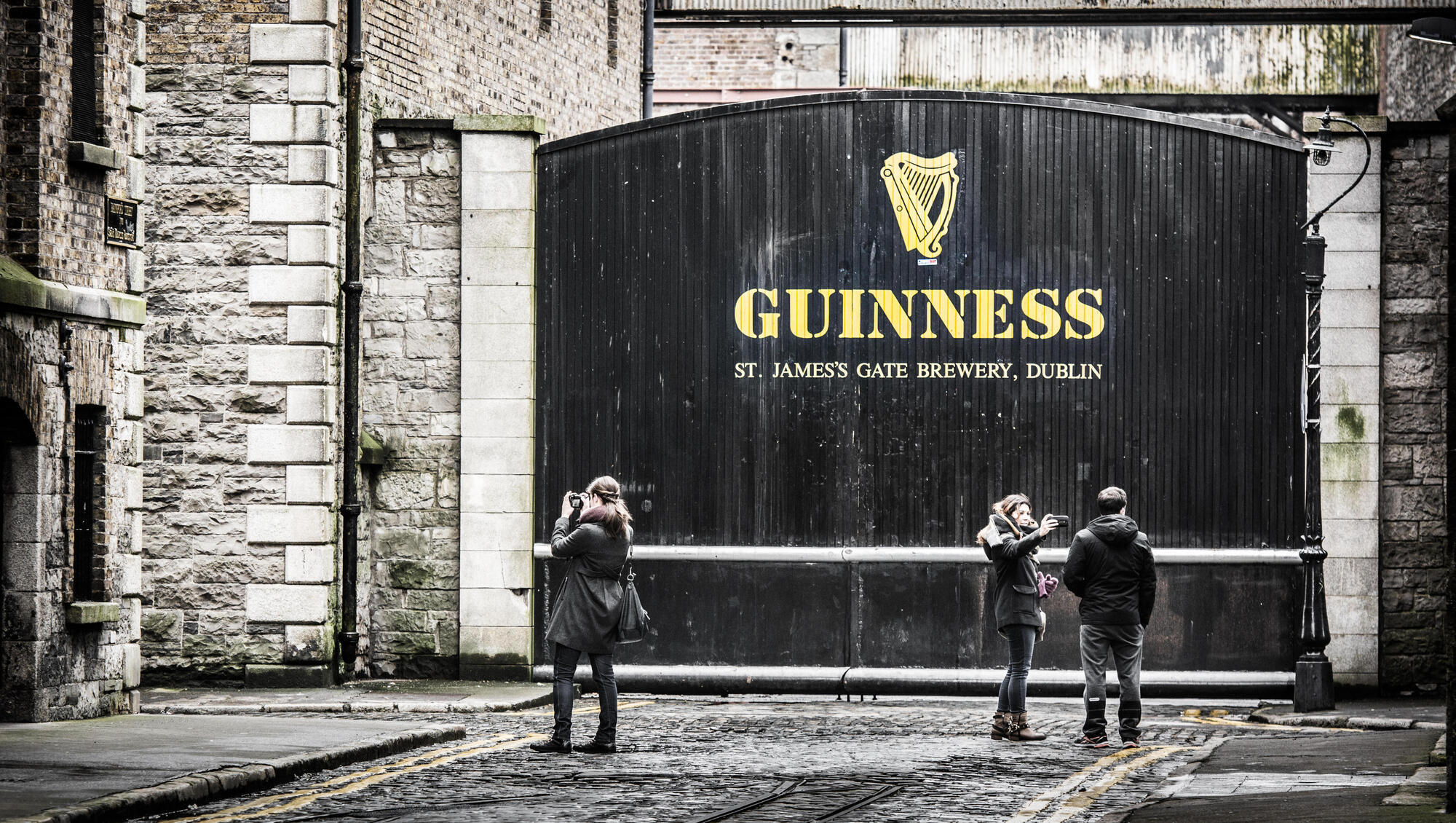
'The House of Guinness' is set in 19th-century Dublin and New York and unfolds the complexities of a Succession-style plot following the death of Benjamin Guinness and the Machiavellian impact of his will on the lives of his four adult children: Arthur, Edward, Ann, and Ben. File picture: Alamy
Netflix may have its critics, but its sense of timing is usually good. Whether that is positive news for the Guinness brewing dynasty, and the brand’s parent company Diageo, is something we will discover next month.
That’s when a new eight-part drama hits our screens recounting the creation of a global business empire which has become synonymous with Ireland.
The House of Guinness is set in 19th-century Dublin and New York and unfolds the complexities of a Succession-style plot following the death of Benjamin Guinness and the Machiavellian impact of his will on the lives of his four adult children: Arthur, Edward, Ann, and Ben.
The vice-president in charge of content at Netflix explained the attraction of the story: “...wealth, poverty, power, influence, and great tragedy are all intertwined to create a rich tapestry of material to draw from. I’ve always been fascinated by their stories, and am excited to bring the characters to life for the world to see.”
That responsibility falls to someone with an impressive CV in shows with cult potential — the writer Steven Knight who has delivered memorable scripts for SAS Rogue Heroes and, of course, Peaky Blinders, the iconic six-instalment series which showcased the adventures of a mixed heritage Birmingham, Romany, and Irish gang in the UK in the years following the First World War.
There’s an impressive cast, with a major role undertaken by James Norton, who played the chilling sociopath Tommy Lee Royce from Happy Valley, exchanging his (natural) West Riding accent for training in the tones of 19th-century Dublin.
Norton plays Seán Rafferty, a company hardman whose job it is to keep the Guinness workforce on their toes. Other cast members include Dervla Kirwan, Anthony Boyle, and Cork-born actor Jack Gleeson, memorable for his portrayal of the sinister and sadistic Joffrey Baratheon in Game of Thrones.
Knight has a ready plotline should he be tempted to use it with the emergence of southern rivals, Beamish and Murphy’s, who bridle against the dominance of the capital city’s favourite tipple.
But perhaps he has already been there and done that with his account of the power struggles between the Shelbys, the Sabinis, and Alfie Solomons’s Camden Town gang.
Whether Guinness benefits from this publicity, and whether it is brand-enhancing, we will be able to discern more clearly by late autumn. But it comes during a period when there have been some uncharacteristic lapses in the company’s usual stately progress.
On the plus side, it ousted Budweiser in 2024 to commence a four-year stint as “the official beer of the Premier League”. It is also the “official beer” of the Six Nations international rugby competition. This week it moved further into club competition by agreeing separate partnerships with Arsenal and Newcastle, the latter in a city which has its own legendary beverage, Newkie Broon ale.
While Guinness may be everywhere, with countless memes about “splitting the G”, there are signs of shareholder discontent with its parent company. It is less than a month since its CEO Debra Crew stepped down without a succession plan.
Ms Crew, who had been in place since June 2023, received a total pay package equivalent to €4.17m for the financial year ending June 30. The company’s shares have lost a third of their value since the summer of 2023. Diageo reported a drop in both sales and profits in the six months ended December 2024, according to figures released this week. This was despite growth in demand for Guinness which resulted in supplies running out or being rationed in the UK last Christmas.
We all noted the news that spending by Cork’s hurling fans plummeted by 13% on July 20, the day of the All-Ireland defeat by Tipperary. No doubt the reason for raising a glass by some visitors to Dublin was undermined by that dispiriting defeat. It’s down to Oasis fans to make up for that shortfall with the concerts in the city today and tomorrow, and there’s every chance that they will. But for Guinness and Diageo, a renewal of confidence requires, in the words of Noel Gallagher, a masterplan.
And just like that, soccer is back
It may stick in the throat of GAA diehards but there won’t be many Irish sports fans who haven’t noticed that, with the appearance of champions Liverpool at Anfield last night, the Premier League is back..
And so, after one apparently interminable season, we are about to commence on another which will finish on July 19, 11 months from now, with the World Cup final at MetLife Stadium in New York and another photobomb opportunity for US president Donald Trump.
Before then, there will be 380 games in the Premier League plus countless subsidiary divisions; the League of Ireland; the Champions League; the Europa League; the Conference League; assorted cup competitions; and internationals, friendly and otherwise. Plus the burgeoning and increasingly popular women’s game.
No wonder Sky is pioneering a new multi-view service which allows you to watch four games at once.
A small hint to broadcasters. This isn’t enough for computer game veterans who are adept at multitasking.
And where’s the soco-bot which can be sent out to watch all the matches the viewer doesn’t want ... those 0-0s on a rainy night in Stoke?
Arguments over identifying ethnic origins
There is no indication, as yet, of any great support for the proposition that the ethnicity or nationality of suspects should be drawn to the attention of the general public at the point at which they are charged and enter the criminal justice system.
Indeed, the whole issue of court procedure is one on which there are wildly varying opinions. One contributor to the Irish Examiner this week took the view that defendants should not be named until a trial has ended, and only when a conviction is secured.
The media (and social media), he wrote, “could lead the way by doing the right thing and have a shred of humanity and not name or identify any suspect unless or until they have been found guilty of the crime with which they were charged”.
While it is possible to construct mighty arguments around this proposition, it is enough to note that ordinary people are thinking about the administration of justice and whether it can be made better. Or, given the law of unforseen consequences, worse.
In Ireland, An Garda SĂochána does not usually release the ethnicity of individuals charged with crimes. Sometimes restrictions are cited for reasons of privacy or data protection, although these arguments are increasingly governed by the law of diminishing returns for some citizens.
There are exceptions where it is deemed necessary to assist investigations or head off potential public order problems stimulated by the circulation of misinformation.
In Britain, the College of Policing and National Police Chiefs’ Council says forces should consider releasing the ethnicity and nationality of suspects at the point of charge.
This follows mounting public concerns and is part of a review to ensure processes are fit for purpose in an age of rapid information spread.
The touchstone was last year’s knife murders of three small children and serious injuries to 10 others at a Taylor Swift dance class in Southport. The murderer, 17-year-old Axel Rudakubana, was born in Cardiff to an evangelical family from Rwanda.
In the information vacuum which followed his arrest, Britain experienced serious rioting. That data blackout is now perceived as a serious error of judgement.
The complexities were underlined this week when the family of six-year-old Bebe King, one of the three girls killed, urged ministers to reconsider their support for disclosing the ethnicity of serious crime suspects.
Michael Weston King, the victim’s grandfather, said such information is “completely irrelevant”, and that “mental health issues and the propensity to commit crime happens in any ethnicity, nationality, or race”.
This is true, but we would be naïve to think that such demands for “disclosure” and “transparency” will not gather strength in our own country.
Each one of us, rather like our letter writer on Monday, must decide where we stand.

Cancel anytime
CONNECT WITH US TODAY
Be the first to know the latest news and updates