Irish Examiner view: Unpaid warehoused tax is a €100m scar in Ireland's post-covid economy
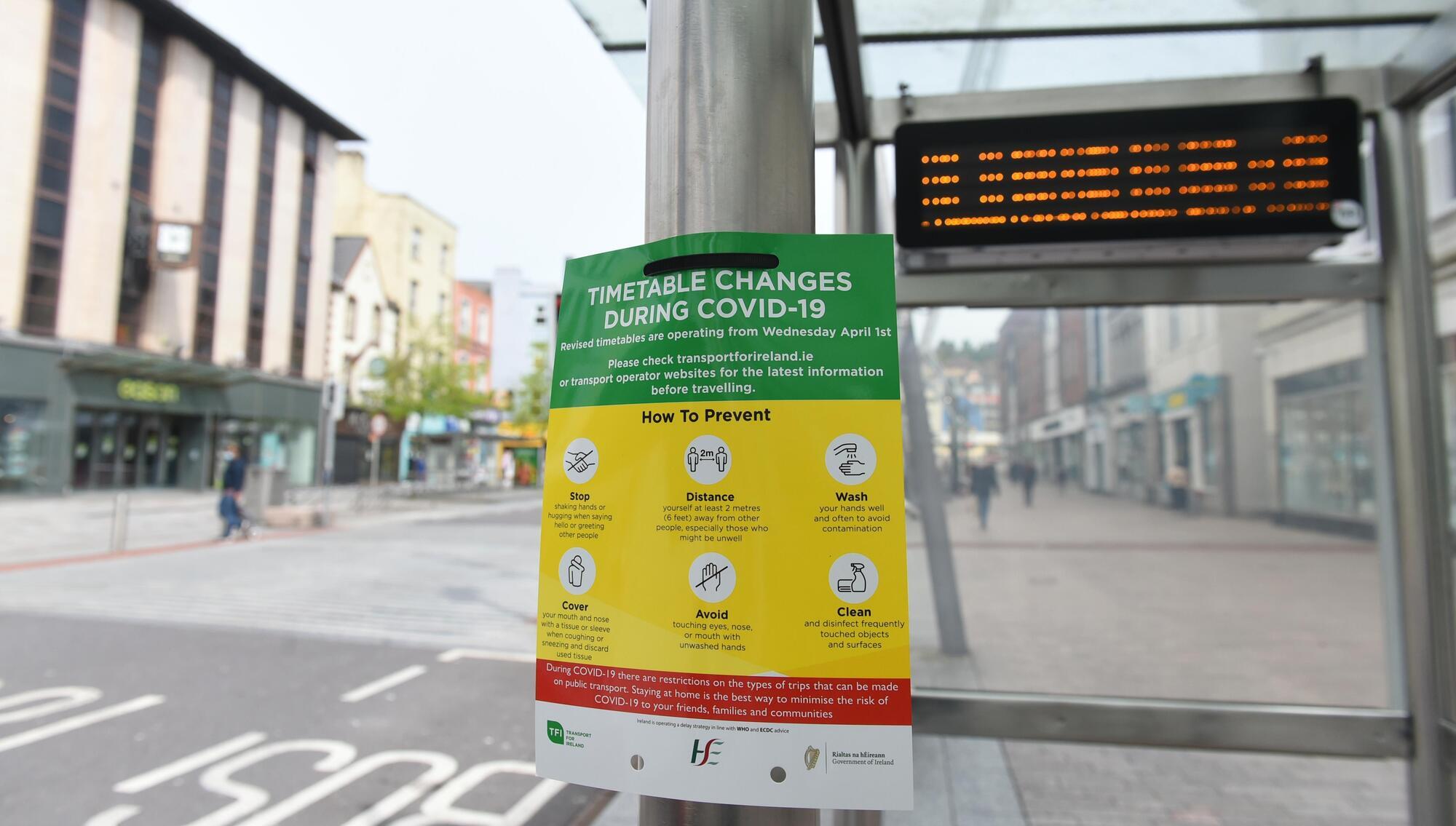
The way we were: St Patrick's Street in Cork practically empty due to covid lockdown around noon on Wednesday April 22, 2020. This was a background to the State's debt warehousing scheme. File picture: Larry Cummins
More than €3bn in business tax debts under the debt warehousing scheme has now been settled or secured, according to the State’s tax authority. However, Revenue is now looking to reclaim some €100m in unpaid money. While some 97% of those who utilised the scheme were in compliance with its terms and responsible for some €30m in monthly collections, an alarming number are still in default.
The warehousing of tax debt was introduced to allow businesses to sustain the massive fall-off in trade during the pandemic and the cash flow issues it caused. Under the scheme, they were allowed to defer tax liabilities until in a financial position to meet them.
Many businesses, it would appear, made a conscious decision to shut their doors rather than meet those liabilities. While many will have never wanted to close and been forced to do so, others may have thrown in the towel more willingly and secured income that will never be repaid, making something of a mockery of the generosity of spirit afforded to them by both the government and the Revenue.
Thousands of businesses failed to engage with Revenue when the deadline for doing so came nearly 12 months ago. These were largely removed from the scheme and normal collection practices applied to them. Some of the debt has been settled and some is being actively pursued; but much of it has been deemed uncollectable due to insolvency, liquidation, bankruptcy, or cessation of business.
Revenue has long held that the publication of tax defaulter lists and prosecutions are pointed deterrents to non-compliance. Should it now consider publishing a list of those who have defaulted under the debt warehousing scheme?
To some, he may be the poster boy for rampant capitalism.
To others, he was a hero who personified the art of making money from shrewd, unemotional investments. As the lead investment manager and CEO of Berkshire Hathaway, Warren Buffett was so stunningly successful that he was accorded the honorary nickname “the oracle of Omaha”.

A company that started out in the 1960s as a failing manufacturer of linings for men’s suits was transformed into one of the world’s most formidable economic entities.
Having announced he is standing down from a role he has occupied for over 70 years, 92-year-old Buffett heads into the sunset with an unsullied reputation for shrewdness and perspicacity. He is also, according to Forbes magazine, the fifth-richest man in the world.
He earned his reputation — and much of his money — from shrewd long-term investments in a variety of mainly US companies such as Domino’s Pizza and Coca-Cola, along with railways, insurers, and oil companies.
He strictly avoided investment fads and cast a sceptical gaze on corporate claims that sounded too good to be true. His ethos was unique and his success differed greatly from most — not only in how he accumulated money, but also how little it affected his personality.
Mr Buffett has lived in the same five-bedroom house in the state of Nebraska, which he bought for $31,500 in 1958, and has famously modest tastes, eating breakfast from McDonalds most mornings and only buying his first computer in 1994 — at the behest of close friend Bill Gates.
Mr Buffett also held off buying tech stocks for longer than most, although 20% of Berkshire Hathaway’s holdings in 2024 were made up of Apple stocks.
A proponent of value investing, or finding companies overlooked by other investors, he was distrustful of market inventions such as “adjusted earnings” or financial engineering designed to make company earnings look better than they might.
Mr Buffett was, and is, a financial guru. However much anyone might seethe at his accumulated wealth, they cannot but admire the methodology utilised in getting it.
It has been little other than thin gruel for Irish soccer fans in recent times, and successive failures to qualify for major tournaments have signalled a dearth of talent coming through the game’s ranks — particularly in the men’s game.

However, there are signs that young Irish players are once again becoming a sought-after commodity internationally.
This is especially true in the English Premier League, where the sums of money sloshing around are eye watering.
Post-Brexit there appeared to be a complete absence of desire for clubs to nurture young Irish talent in the Premier League. However, in recent weeks, that picture seems to have altered radically.
A template was laid down last February when Tottenham Hotspur agreed to pay €1.8m for St Patrick’s Athletic’s teenage star Mason Melia, who will move to White Hart Lane in January when he becomes 18.
Another teen star, Cork City’s Cathal O’Sullivan, is expected to transfer to a British club when the summer transfer window opens on July 1. He celebrated his 18th birthday in March and clubs such as Newcastle United, Crystal Palace, and Everton are all said to be in the running for his signature.
That he will cross the water for substantial money is not in question; if Cork City insist on him seeing out his contract until the League of Ireland season ends in October, it would only be entitled to “training compensation” of some €300,000.
A straight transfer deal on or after July 1 would net the club substantially more.
Melia and O’Sullivan are the vanguard for a new generation of Irish players — Shamrock Rovers’ Michael Noonan is another — who will hopefully star in the Premier League soon and boost the Irish international team in doing so.


CONNECT WITH US TODAY



Be the first to know the latest news and updates