Irish Examiner view: The trouble with numbers is that they are prone to change
With Budget 2025 on the way and the air heavy with talk of a general election, recent polls here — and events in the US and Britain too — might concentrate the minds of the Coalition
Irish Examiner view: The trouble with numbers is that they are prone to change

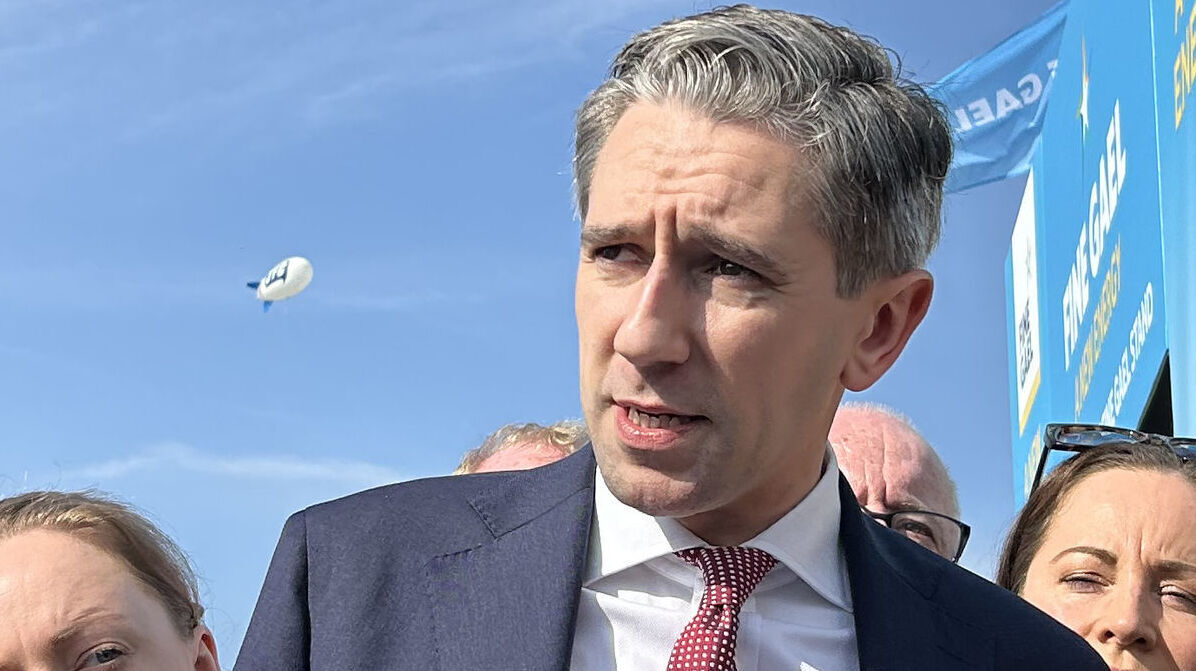
Taoiseach Simon Harris might desire more of a cushion in the polls before he decides to go to the country. Picture: Cillian Sherlock/PA

If the opinion polls are to be accepted and, ahead of what is being trailed as a generous personal and investment Budget 2025 on Tuesday, it might seem an ideal moment for Taoiseach Simon Harris to break cover and call a general election.

Sinn Féin has apparently fallen back, and support for Fianna Fáil looks soggy. What analysts like to describe as ‘Big Mo’ — political momentum — appears, for now anyway, to be with Fine Gael.

Mr Harris might reflect, however, how quickly sentiment, and figures, can change. It is less than two months since Donald Trump was clearly ahead in the race to the White House, which is to be decided in five weeks. Now he is either behind, or neck-and-neck with, his opponent, Kamala Harris. In such circumstances, even the debate between vice presidential candidates — usually a non-event — assumes significance when JD Vance and Tim Walz face off at 9pm in New York City (2am Wednesday Irish time).

Circumstances in Britain could be even more of a mind concentrator. 

It is not 100 days since Keir Starmer won a landslide victory with 411 seats and a simple majority of 174, the second largest in Labour Party history behind Tony Blair’s “a new day has dawned” triumph of 1997.

That dominance began to reduce immediately when seven left wingers had the party whip withdrawn after rebelling against the king’s speech because of a failure to remove the two-child limit on tax credit, illustrating the dangers to discipline of an overwhelming majority.

In his biography of Starmer — assisted but not authorised by the Labour leader — Tom Baldwin says that the electoral appeal of the former Director of Public Prosecutions lay in a simple comparison with Tory opponents: “I am not them.”

That lustre has already worn thin, with stories about clothing allowances for the party elite from millionaire benefactors and an embarrassing list of freebies including the best tickets to Taylor Swift concerts and private boxes at Arsenal’s Emirates Stadium. One MP has already resigned over what she described as “sleaze, nepotism, and apparent avarice” that is “off the scale”.

That this has coincided with a decision to withdraw winter fuel payments from pensioners and with predictions of a swingeing budget to come at the end of October is not a good look for a premier who entered Downing Street promising to “tread lightly on people’s lives”. 

With disappointment has come a collapse in personal approval ratings. Net satisfaction with Britain's new prime minister was at plus-seven after polling day. Ipsos say he is now, after 87 days, down to minus-21. The Opinium international research agency has him at minus-26, below Rishi Sunak during his lowest ebb as Tory leader.

Harris can also say “I am not them” but with predecessor Leo Varadkar on what looks like an existentialist farewell tour offering off-the-cuff opinions on immigration, Irish reunification, even Eurovision, then he might want more of a cushion in the polls before he decides to go to the country. We will soon know if Budget 2025 is designed to deliver that.

Covid inquiry

In their melancholy mid-’60s ballad ‘April Come She Will’, folk duo Simon and Garfunkel reflect on the rapidity of changes in personal commitments. It’s a sad number. 

“August, die she must,”, they proclaim. And, in September, “a love once new grows old”. 

It would be a perfect theme tune for the multiple promises made about announcing the terms and timetable for an inquiry, an evaluation, a review — call it what you will — into Ireland’s management of covid.

At the last time of asking, Taoiseach Simon Harris pledged that we would hear details in “early September”. Tánaiste Micheál Martin undertook that there would be some action “before mid-September”. 

Tomorrow (Tuesday) is October 1, and a budget day. 

Election talk hangs heavily in the air; it is hardly a propitious day to launch a series of questions which might provide uncomfortable answers.

Across the Irish Sea, England’s chief medical officer, Chris Whitty, has been in customarily lugubrious form while warning that a similar future pandemic was “a certainty”. Amidst the angst and anxiety over which politicians beat themselves up — the possibilities that voters might hold them accountable for wrong decisions — there are some sound suggestions emerging from the British process which could fruitfully be discussed on the island of Ireland as a whole.

Prof Whitty stressed that greater importance had to be attached to the capacity to conduct “lightning-fast scientific research”. Among other topics tabled during the British hearings have been the vexed subjects of staffing levels and intensive care unit availability; the exposure of people with pre-existing conditions or from deprived areas; and, perhaps, most importantly, the suggestion that one organisation must be given overall responsibility for the management of civil emergencies. This must produce regularly updated plans, and the Treasury has to be locked into the process.

It would be reassuring to hear these subjects ventilated openly in Ireland with the perspective and experience of recent history in the “the gravest and most multi-layered peacetime emergency”. It is a scandal that this debate has not yet started.

That Simon and Garfunkel song was the B-Side to a much better-known track, ‘The Sound of Silence’. Perhaps officials and ministers in Merrion Square and Leinster House have that on permanent repeat in their offices?

Streaming costs

Do you remember when streaming was the future of TV, asks the journalist and novelist Stuart Heritage. Now, he comments presciently, it feels more like a prison.

The core of discontent is the number of services that demand a monthly payment including Amazon, Now, Apple, Disney, Paramount, Britbox, Hayu, Shudder, BFI Player, and Mubi. ITV has a paid tier, as do Channel 4 and YouTube. On some, you can pay for an ad-free service; on others the offering is cheaper if you accept frequent, and intrusive, adverts. To access all the channels and all their whistles and bells,
calculates Heritage, takes in the region of €1,750 a year.

Streaming is a reason most frequently quoted by dissenters who object to making a financial contribution to public service broadcasting. It is beginning to make the television licence fee look like a bargain.

x

More in this section

Revoiced

Newsletter

Sign up to the best reads of the week from irishexaminer.com selected just for you.

Cookie Policy Privacy Policy Brand Safety FAQ Help Contact Us Terms and Conditions

© Examiner Echo Group Limited