Irish Examiner view: E-scooters are a hazard
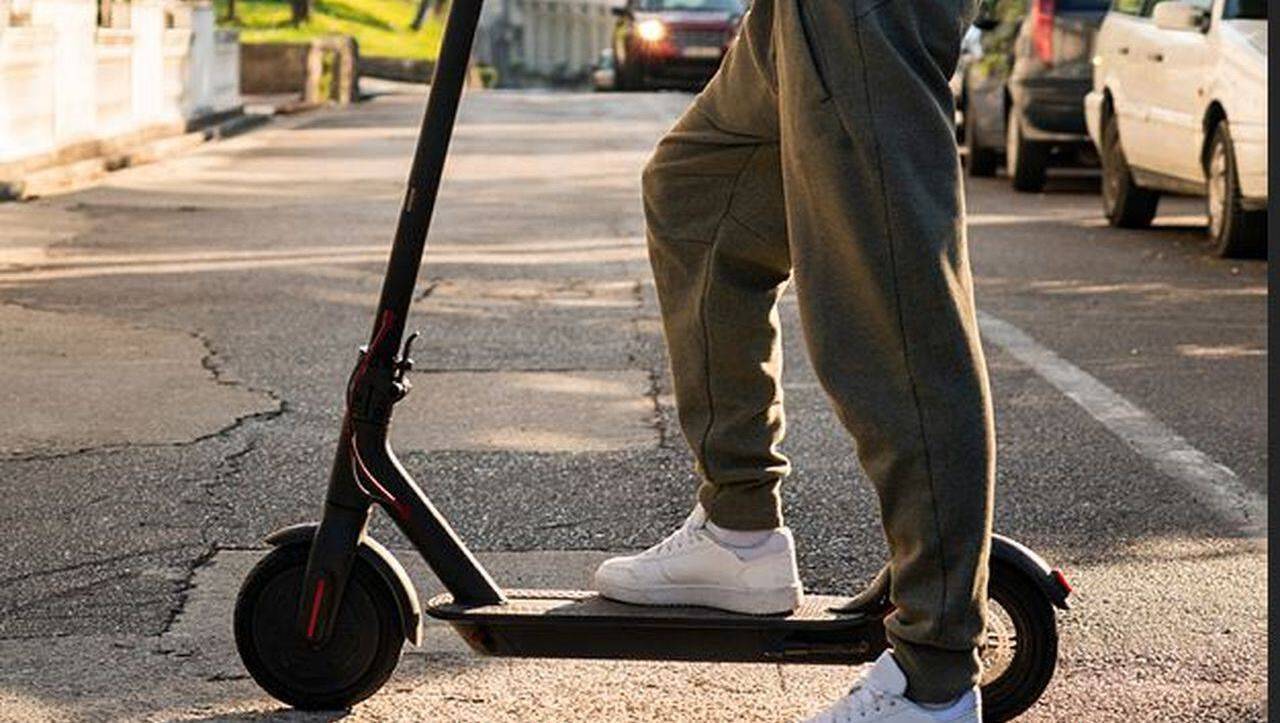
Instead of appealing to the better angels of our nature, e-scooters are natural companions to our inner demons
Irish Examiner view: E-scooters are a hazard

E-scooters have been banned from footpaths since May 2024.

One of the questions facing all citizens interested in the subject of local transport — and our political representatives — is just how much rope we are prepared to give electronic bikes and e-scooters and the companies which provide them before we declare that enough is enough.

The best hopes for the low-cost, easily accessible, personal transport system that they represent is that they would provide a popular alternative for short journeys to the demonised internal combustion engine with its unfortunate environmental side effects.

The reality is that they have become a hazard, a danger to pedestrians, and, as we reported this weekend, a more efficient and speedier distribution network for gangs providing recreational drugs through a fleet of young couriers. Instead of appealing to the better angels of our nature, they are natural companions to our inner demons.

Legislation to control their use suffers from a common problem with regulators, the one-beat-behind-the-band syndrome, whereby experience and knowledge has moved on by the time the good intentions ever reach the statute books. In addition, it has frequently been drafted with insufficient recognition of what has happened in other jurisdictions.

Driving e-scooters on pavements is illegal. New laws to regulate their use in May stated that users must be 16 or older and that the maximum speed limit is 20km/h. This is despite their average speed being 24-48km/h, with more powerful machines capable of faster trajectories. 

Gardaí declare themselves reluctant to pursue them in a chase in case a suspect is injured and the officer held criminally responsible

Similar arguments were initially heard in London, where conflict between e-scooter users and cyclists riding on pavements and angry pedestrians is now commonplace.

However, even more ire is reserved for the antisocial behaviour of some electronic bike users whose heavyweight machines can pose another obstacle to the innocent and unwary. The city has some 30,000 machines available for rent.

The US tech firm responsible for the Lime e-bike, which weighs 32kg, likes to proclaim that 97% of Londoners are only ever two minutes from a Lime. Since its launch six years ago, Britons have made 12m journeys. They are particularly popular during peak hours for commuting.

Part of the company’s appeal is that you can pop on the saddle and dismount pretty much anywhere. Lime says its top priority is to ensure that the system works for everyone.

“Only park in designated areas without blocking access to walkways and roads,” it urges. “Your vehicle must be upright and with the kickstand down, not blocking pedestrian pathways, building entrances, or driveways.”

Sadly, human nature being what it is, rules are not regularly followed. Residents complain about bikes blocking footpaths, lying on the ground, and discarded in bushes. Complaints are particularly vociferous from older people, parents with pushchairs, and wheelchair users.

Now Brent Council, the home of Wembley Stadium, has become the first local authority in London to tell Lime to shape up or ship out. The e-bikes are causing “havoc” says the local authority, and placing “unsustainable pressure” on staff forced to carry out retrieval. 

Lime has until the end of next month to resolve the issues.

Other London councils are to follow, and big metropolitan and city authorities are also gearing up to demand high levels of enforcement and penalties. There is a lesson here for Ireland: Being laissez-faire is not a good starting place. Registration, licensing, and meaningful penalties must be in place before new, and disruptive, systems are approved or grow.

Exporting glaciers

One person’s misfortune is someone else’s opportunity. Or so the old saying goes. And the same might apply to nations and states.

With fresh water becoming increasingly scarce in some countries that have to commit large investments to desalination, those locations that are rich in the resource have sensed an opportunity for profit.

Leading the way is Greenland, whose ice sheet contains around 6.5% of the world’s fresh water. With the impact of global warming, some 350tn litres are estimated to run into the ocean annually, a figure which is forecast to increase inexorably.

Now, in a scheme which is partially backed by Greenland’s government, a start-up company, Arctic Water Bank, plans to harvest glacial meltwater and export it in bulk water carriers.

Greenland ice has already been exported to Dubai for use in drinks, attracting criticism

The company says that, in this case, the natural resource is simply washing into the sea and that its project will be carbon neutral. It will involve the construction of a dam near the town of Narsaq. In return, the company will obtain the rights to 21.3bn litres of water each year.

While it is tempting to scoff or sneer at a plan which places a luxury price on water when much of the world struggles to obtain reliable and secure supplies, importation is something which might become more prevalent by 2050.

However, shipping finite amounts of meltwater from glaciers which are diminishing in size to developed nations, which are primarily responsible for the emissions which are creating climate change, looks like an uncomfortable and unbalanced equation. And one which is likely to make people angry.

Kamala Harris

First Taylor Swift, then Oprah Winfrey and friends. You can tell that we are reaching the serious phase of an American presidential campaign when the celebrity endorsements start to flow.

Vice president Kamala Harris joined America’s leading interviewer for a livestream event — Unite for America — which was joined by other stars including Meryl Streep, Ben Stiller, and Chris Rock as part of a campaign strategy aimed aimed at influencing voters in battleground states. 

Guests included the mother of a 28-year-old who died after waiting 20 hours for a hospital in Georgia to treat her complications from an abortion pill. 

Ms Harris also spoke off the cuff about immigration, gun violence, drug addiction, reproductive rights, and her opponent

With some six weeks to go to voting and postal ballots already under way in some states, the latest New York Times/Siena poll showed that while the vice president was significantly more convincing in the TV debate, the race remains even with both candidates returning 47%.

The results are within the margin for error, but we are now at that stage where neither candidate can afford to blink.

x

CLIMATE & SUSTAINABILITY HUB

More in this section

Revoiced

Newsletter

Sign up to the best reads of the week from irishexaminer.com selected just for you.

Cookie Policy Privacy Policy Brand Safety FAQ Help Contact Us Terms and Conditions

© Examiner Echo Group Limited