Irish Examiner view: Democrats seek swing in momentum
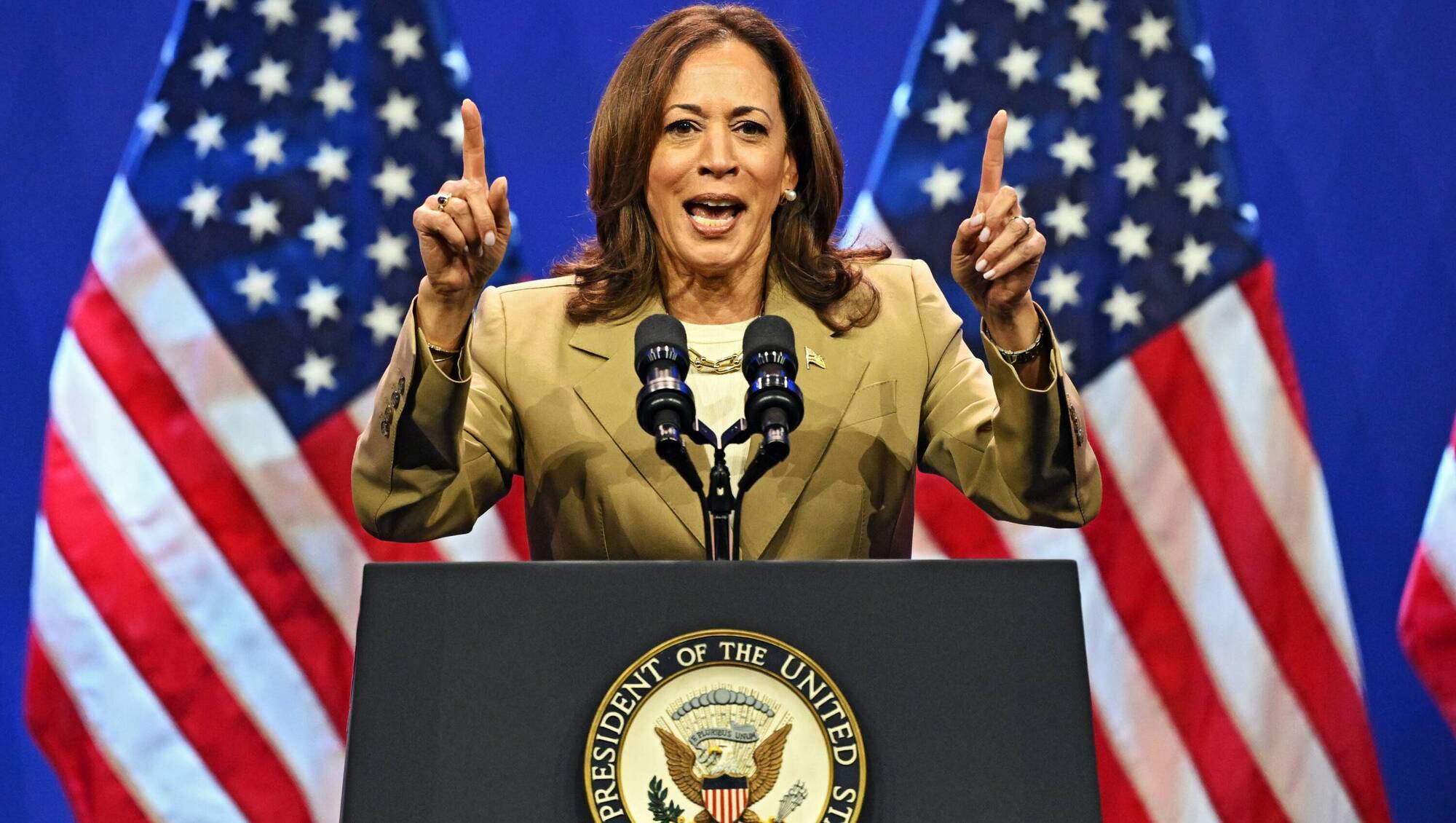
US vice president Kamala Harris has been endorsed by Joe Biden and Nancy Pelosi. Picture: Drew Hallowell/Getty
The initial shockwaves that rippled across the world after Joe Biden’s decision not to stand for a second term have begun to die down. The decision was appropriate and Mr Biden is now being subjected to the usual platitudes the president neither wants nor needs in his final six months in office.
The biggest questions are now being asked of Kamala Harris, specifically her ability to win the Democratic nomination and then beat Donald Trump in November’s election.
While the early rush to endorse Harris was as impressive as it was widespread — while former president Barack Obama is yet to back her, former House speaker Nancy Pelosi last night voiced her “enthusiastic support” — her ability to tackle Mr Trump remains her biggest challenge.
Predictably, Mr Trump and his Republican cohorts led a barrage of criticism against the Democrats’ potential nominee.
“She’ll be easier to beat than Biden,” was a typical refrain from within the GOP. The truth of the matter is that they have reason to be concerned about their new challenger.
Not least of their worries is that Ms Harris is a) a woman; b) a person of colour and of South Asian descent; and, c) some 20 years younger than Mr Trump. They fear, as Ms Harris stated in a 2020 campaign ad, Mr Trump will be facing “the Anti-Trump”.
While the vice presidence (the first woman and the first person of colour to hold the office) has no automatic right to the nomination, the endorsements of Mr Biden and a majority of Democratic governors, as well as over $80m of donations raised after Mr Biden’s announcement, make her a sure bet to secure the Democrats’ unambiguous backing.
At best, Ms Harris will run unopposed or, at worst, be hot favourite if someone does decide to stand against her. Her biggest test will come in November when she faces down the master of deceit, Mr Trump.
As the Republicans scramble to pivot their campaign away from Mr Biden, his standing down has flummoxed them as they try to focus on Ms Harris. While they will run immediate attack ads on her record as vice president and as a senator and attorney general for California, the millions they have spent on a campaign solely focused on Mr Biden have been wasted.
The Trump campaign fears their best anti-Biden attack lines, on mental acuity and age, may now be turned on their man as the oldest candidate. That Ms Harris is an ex-prosecutor and he a convicted felon is also a concern which will surely see Mr Trump back out of further presidential debates.
Ms Harris is the presumptive opponent to Mr Trump, but can she win? As donations surge and momentum — which had been sorely lacking this year — grows, so too will belief.
The final and absolute defrocking of Bishop Eamon Casey may have come as a surprise to some, but not to many of those for whom he was only ever a sexual predator.
Those who can remember the visit of Pope John Paul II to Ireland in 1979 will shudder at the thought of him lording it throughout papal Masses in the Phoenix Park, Drogheda, Galway, and Limerick, along with other then luminaries of the Irish Catholic Church — like the subsequently disgraced Fr Michael Cleary.
Those victims will be nothing other than sickened.
They will also remember 1992, when the details of his affair with Annie Murphy were first exposed and it emerged he had fathered a child. They will remember that as the time when the autocratic hold of the Church on the nation lost its grip.
However, they will also remember that it was 10 years later before details of his child sexual abuse emerged — noted by a Vatican hierarchy which doled out little by way of punishment to Casey or any other of their former Irish golden boy heroes.
It may now be cathartic for Casey’s victims to see his crimes come to light, but their pain remains vivid to this day.
We can be thankful that his deeds put an end to the religious chokehold on this country, but we can only be saddened it has taken until now for the full extent of the depravity of such crimes to emerge.
Putting his own interests ahead of those of his country or its people is nothing new for Israeli prime minister Benjamin Netanyahu. However, as he heads to Washington this week, he will face many challenges related to his barbaric war in Gaza.
Oddly though, while he will face anti-war protesters on the streets and when he addresses Congress, he will be looking over his shoulder at a ruling by the International Court of Justice (ICJ) last week, which could have a profound effect on his country for many years to come.
The court ruled that Israel’s occupation of Palestinian territory and settlement building there was illegal. It is a judgement Mr Netanyahu will find hard to ignore, as he has done with so many other UN resolutions and reports.
Describing Israel’s long-term annexation of parts of Palestine as “unlawful,” the court called on Israel to speedily exit from occupied territories. The ruling represents a devastating defeat for Israel in the world court.
It also pulled together multiple strands of international law, including various Geneva conventions and the Hague Convention, to make a case that has been obvious to Palestinians as well as critics of Israel for many years.
While the ruling represents a severe challenge to Israel itself, it also poses questions for those governments across Europe and that in the US which have for years criticised Israeli occupation policies but done little else.
However, for Mr Netanyahu, the fear now is that — after a recent raft of international sanctions against settlers and given the severity of breaches of international law — further sanctions could be applied Israeli ministers, including himself.

CONNECT WITH US TODAY



Be the first to know the latest news and updates