Irish Examiner view: British voters will take their chance for revenge

Keir Starmer's Labour Party is tipped to defeat the Conservatives led by Rishi Sunak. Picture: PA
In doing so they will end 14 years of ‘Tory misrule’, bringing up to date a catchphrase popularised by the impressionist Mike Yarwood and attributed to the bluff Yorkshireman and four-times Labour prime minister Harold Wilson.
Wilson didn’t invent that insult, although he wished he had, but there are coincidental similarities between the circumstances the Socialists face now with those they encountered in 1964.
Then, as now, they faced a government with an unconvincing leader. The starchy and blue-blooded Alec Douglas Home, 13th Earl of Home, an Old Etonian, was easily dismissed by Labour as being out of touch with the concerns of ordinary people. Even worse for a generation which had served in the Second World War, he had the reputation as a Munich appeaser, having served Neville Chamberlain as a parliamentary aide.
Then, as now, their opponents were riven by scandal, with Home’s predecessor, Harold Macmillan, the epitome of noblesse oblige, forced into retirement through ill health by the discovery of spy rings and colourful controversies involving government ministers and call girls Christine Keeler and Mandy Rice-Davies.
The notoriety of gangsters such as the Kray Twins and the escapades of the Great Train Robbers all contributed to the sense that the country was in moral decay, with declining industrial performance and waning overseas influence running along parallel tracks. Then, as now, Britain was not part of what was known as 'The Common Market'.
There are multiple reasons why British voters want to see the back of a government which took up office in 2010 under David Cameron, ushering in a period of rule disproportionately influenced by ex-public schoolboys and philosophy, politics, and economics graduates from the University of Oxford.
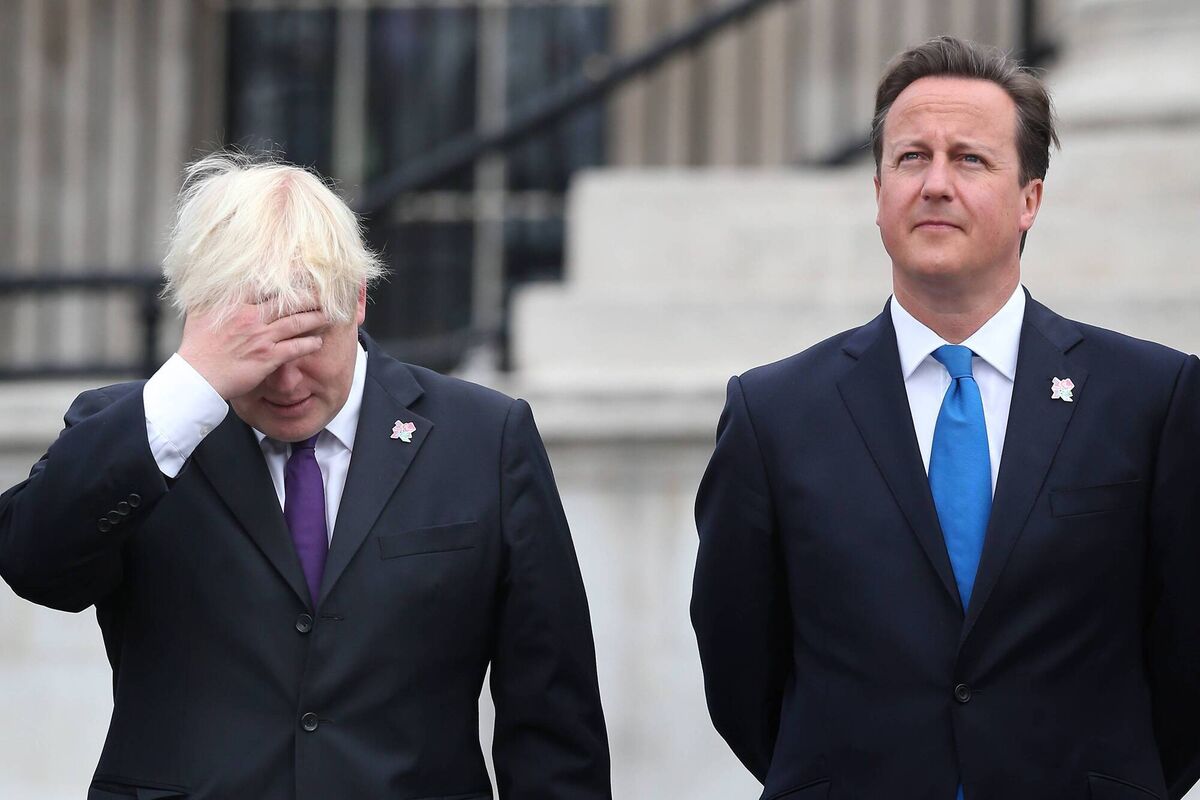
Disenchantment with politicians has its roots in the MPs’ expenses scandal which emerged in the dying days of Gordon Brown’s premiership. It was fanned by the impact of austerity following the 2008 financial collapse, which had a major impact on the 2016 Brexit vote.
Since then, it has been accelerated by various factors. It may be disgust over the behaviour of wine-swilling political aides during lockdown; examples of evident corruption through cronyism and sleaze; the failures of managerial classes as epitomised by the Post Office/Horizon farrago; sewage contaminating the country’s rivers while privatised companies take dividends; the inability of young people to enter the housing market; fatigue over high taxation; the lack of any discernible resolution of immigration policy; repeated cover-ups such as the contaminated blood scandal and the Windrush controversy. And even, in the dying days of a moribund government, the pantomime of its members trying to make a few quid by betting against themselves to continue.
On Thursday, voters will punish those who they hold responsible at the ballot box. They will do so, not because there is a great belief in the policies of the alternative. Keir Starmer has been short on detail. The central plank of his party’s campaign has been one word: “Change”. And in this there is a danger that an overwhelming mandate will be taken as carte blanche for sweeping transformations.
The big results of the past century have been Tony Blair’s majorities of 179 and 167 in 1997 and 2001; Margaret Thatcher’s 144-seat advantage in 1983, and Clem Atlee’s 145-seat defeat of Winston Churchill in 1945.
But the warning for Labour about the dangers of overwhelming power and the annihilation of an opposition can be found in 1906 when Henry Campbell-Bannerman won a landslide, with the Conservative Party returning its fewest recorded seats in history. It was, said the author George Dangerfield in one of the great political books of the ages, “a victory from which the Liberal Party never recovered”. Within seven years, after attempting to implement sweeping structural changes and with the world on the eve of war, its hopes turned to ashes. It has never been in power since.
We don’t know whether the Citizens’ Assembly on drugs use gave any consideration to the views of the Pope in reaching their recommendations for reform. Or whether the Oireachtas will attach any weight to the thoughts from the Vatican in making their final set of proposals.
But Pope Francis does have the merit of being consistent. When he spoke last week against the legalisation of drugs and denounced traffickers as “assassins”, it was the sentiment he espoused 10 years ago, shortly after being elected as successor to Pope Benedict XVI.
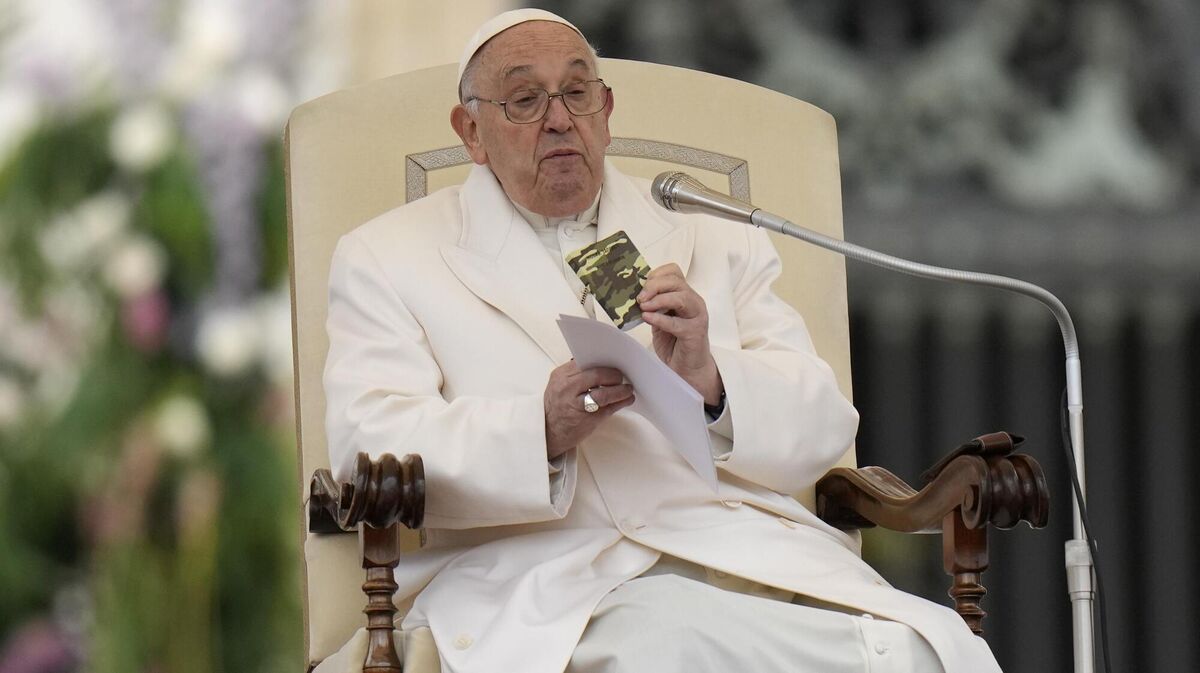
Pope Francis, who in his youth worked as a bouncer and a janitor in his native Argentina before training to be a chemist, told crowds in St Peter’s Square on World Drug Day: “A reduction in drug addiction is not achieved by liberalising drug use — this is an illusion — as has been proposed, or already implemented, in some countries.
“We cannot ignore the evil intentions and actions of drug dealers and traffickers. They are assassins,” he added.
It was the same message a decade ago after Uruguay became the first country to legalise the production, sale, and consumption of cannabis.
“Drug addiction is an evil, and with evil there can be no yielding or compromise,” he told an enforcement conference in Rome.
Since then, cannabis has become stronger and opioids ubiquitous. No wonder Pope Francis hasn’t changed his mind.
You don’t have to be old and curmudgeonly to agree with Roy Keane that VAR has irrevocably changed soccer “from the game we grew up loving.”
Following a torrential thunderstorm — the appropriate adjective of choice on this occasion for commentators being “Wagnerian” rather than “biblical” — Cork’s favourite pundit was left to bemoan another intrusion from technology as Germany defeated Denmark through a disputed penalty.
We agree with him, but the argument is long lost. Hoping to change it is like asking for to be rewritten with a happy ending.
CONNECT WITH US TODAY



Be the first to know the latest news and updates