Irish Examiner view: South Africa's new coalition is an example of pragmatic politics
For now, South Africa's focus will be on building stability and creating growth. But the test of all coalitions comes not in the commonalities but in the differences
Irish Examiner view: South Africa's new coalition is an example of pragmatic politics

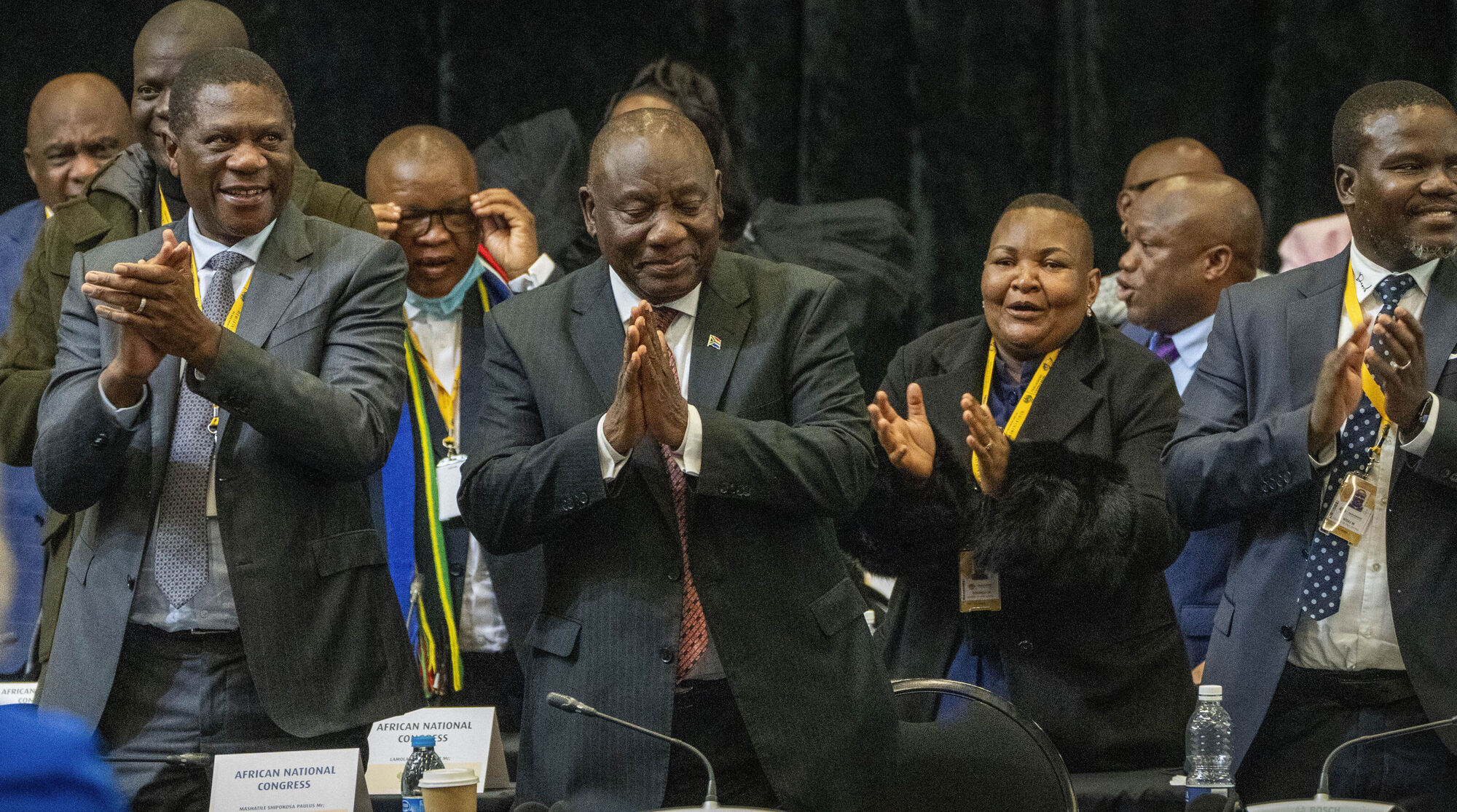
South Africa's president Cyril Ramaphosa was reelected on Friday. Picture: Jerome Delay/AP


That Old Testament reference to the “wolf dwelling with the lamb” may not be a full parallel with what has just happened in South Africa, but there are shades of it in the deal struck by the ruling African National Council (ANC) party to keep itself in power.

The coalition pact between the Democratic Alliance (DA) — predominantly white, pro-business, and less enthusiastic about the influence of Moscow and Beijing — and its one-time antagonist, the ANC, is another example of the contemporary importance of pragmatism in politics.

The DA has its roots in the struggle against apartheid of white liberals, such as Helen Suzman and civil rights lawyer Harry Schwarz. But its new partners, in what is being declared “a government of national unity”, are unused to sharing power since Nelson Mandela led his party to control in 1994.

A principal attraction of the DA is that it is the second-largest party in the republic, having gathered 22% of the vote, while the ANC collapsed to 40.2%. The electorate is increasingly disillusioned by unemployment, economic failure, corruption, serious crime, and critical problems with the energy and water supplies.

But they possess another appeal to Cyril Ramaphosa. They are willing to work with the president while Jacob Zuma’s uMkhonto weSizwe (MK) party and Julius Malema’s Marxist Economic Freedom Fighters want to see the back of Ramaphosa, the Sowetan who has run the country since 2018.

The new ruling group will bring its own tensions. The DA has wrung a commitment from the ANC to a “merit-based, nonpartisan, and professional civil service” to counter what it sees as the endemic corruption of political appointees placed in public-sector positions.

The DA, led by John Steenhuisen, campaigned on the slogan ‘Rescue South Africa’ and published advertisements showing the national flag in flames. In a television broadcast, Steenhuisen told the nation that multi-party government was “the new normal”. Other participants in the new government — it can muster more than two thirds of the seats in parliament — include the Inkatha Freedom Party (IFP), which has a Zulu ethnic base, and the Patriotic Alliance, which wants to bring back the death penalty and deport illegal immigrants.

There are significant foreign-policy differences between the ANC and the DA, which sees a contradiction in Pretoria’s decision to take Israel to the International Court of Justice over Gaza and its neutrality in the Russia-Ukraine war.

For now, the focus will be on building stability and creating growth domestically. But the test of all coalitions comes not in the commonalities but in the differences. South Africa has taken a historic step. Now it must take a long walk forward.

Bizarre larceny case   

There are some stories that, if they emerged from the creative mind of a Martin McDonagh or the pen of a John B Keane, would be dismissed as stretching the limits of credibility and requiring too much of a suspension of disbelief.

One such example occurred this week at Portlaoise Circuit Criminal Court, when a 73-year-old mother of three pleaded guilty to 10 sample counts of theft and five sample counts of larceny. The judge described the matter as “an extraordinary case” and it is impossible not to agree.

The Laois woman claimed the pension of her dead father-in-law for nearly 29 years, a sum which eventually totalled over €270,000.

The matter only came to light when an amateur gerontologist from Cork contacted Áras an Uachtaráin in March 2022 to enquire about records which indicated a 110-year-old man was living in Mountrath. His birth date of July 2, 1911, would have made him Ireland’s oldest man.

Several attempts were made by the Department of Social Protection to visit the centenarian but these were cancelled by the accused. Ultimately, department officials called unannounced and were given access to a bedroom after being told that the old man was “deaf and confused”.

Their suspicions were aroused because the individual in the bed looked too young and bore no resemblance to a photo they had of the pensioner. He also seemed to be fully clothed and was wearing boots or shoes under the bedsheets. There any medical aids in the room ,which might be expected to support such an elderly person. The man in the bed was, in fact, the husband of the accused woman.

A detective also discovered silver coins given every year by the President to people who have reached 100 years, an uncashed cheque, and Mass cards sent to the family at the time of the funeral of the dead man. 

An undertaker confirmed that the accused’s father-in-law died in November 1993, aged 82.

While the bizarre details of the case reveal failings in our processes for recording deaths, it is possible to feel some sympathy for someone who had, in her own words, dug a hole and didn’t know how to stop. And to recognise, once again, that truth can be stranger than fiction.

Gory glory days

No one has really come up with the definitive recipe for the way that Hannibal Lecter cooked liver, though it’s believed to include a hint of chilli flakes and some mustard alongside the fava beans. And the nice chianti, of course.

Full details weren’t shared with Clarice Starling in 1988’s Silence of the Lambs. Nor were they on offer in the best-selling follow-up, Hannibal, published 25 years ago this month.

That he continues to resonate with the public can be noted from Donald Trump’s recent reference to the “late, great” Dr Lecter. 

Our question: How does the former Potus know that the celebrated serial killer has passed on? 

After a quarter of a century, surely it’s time for one more comeback performance. And some new additions to the cookbook?


x

More in this section

Revoiced

Newsletter

Sign up to the best reads of the week from irishexaminer.com selected just for you.

Cookie Policy Privacy Policy Brand Safety FAQ Help Contact Us Terms and Conditions

© Examiner Echo Group Limited