Irish Examiner view: This may be a social media watershed
Irish Examiner view: This may be a social media watershed

Banning TikTok is an intriguing prospect on several levels. There is a growing awareness of the damage done by smartphone use, particularly in spreading anxiety and isolation among younger users — TikTok’s specific target audience. Picture: Damian Dovarganes/AP

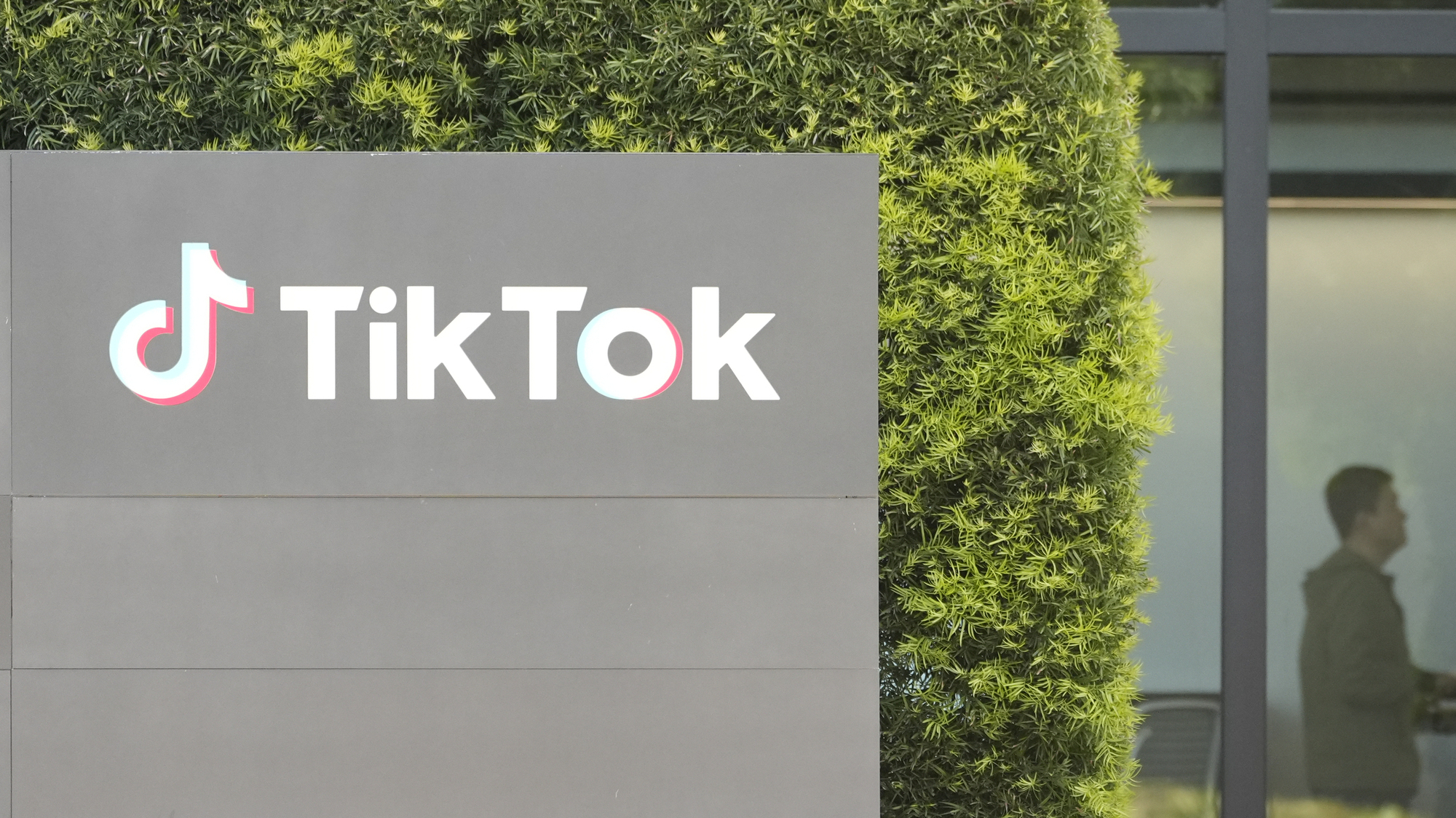
Interesting developments in the US Congress, which voted this week to order TikTok’s Chinese owner to divest itself of the company’s US assets or to face a ban.

Banning TikTok is an intriguing prospect on several levels. There is a growing awareness of the damage done by smartphone use, particularly in spreading anxiety and isolation among younger users — TikTok’s specific target audience. A potential ban could be seen as an effort to address that damage, however belatedly.

However, the close links between TikTok and the Chinese state offer a more pressing reason for this action. The US itself has been quite clear on this point — according to a report from the Office of the Director of National Intelligence in the US, the Chinese government is using TikTok to expand its global operations to promote pro-China narratives and undermine democracy in America.

Ireland has not been blind to the threat of TikTok either. Last April, government ministers, civil servants, and State employees were asked to delete the app from their phones and other devices. Guidance to do so came from the National Cyber Security Centre after weeks of scrutiny of the app’s collection of data: The guidance applied to all devices unless there was “an exceptional business need” for it to be installed.

For all that, Taoiseach Leo Varadkar said yesterday regarding TikTok: “We have some concerns around security and we’ve put in place advice and protocols around that.

“But there are no proposals to have a ban in the European Union or Ireland.”

How any ban would operate, given the way the online world transcends traditional national boundaries, is not quite clear. The US proposal has some way to travel yet before it gains the force of law in any case.

However, the corrosive effect of social media apps, whether on young minds or the democratic process itself, can hardly be denied. In years to come, will we look back on this period as the watershed moment in which the dangers we face were finally recognised, or is it already too late to counteract those dangers?


Cross-border co-operation 

Last week, Northern Ireland’s First Minister Michelle O’Neill and Deputy First Minister Emma Little-Pengelly engaged in photo ops fostering a welcome sense of normality. O’Neill attended a soccer match in Windsor Park, standing for ‘God Save The King’, and Little-Pengelly visited a GAA club, trying her hand at wielding a hurley.

This week, when Irish visibility in Washington DC is at its annual high high, both ministers attended the Ireland Funds national gala in the US capital.

Ms O’Neill told the function: “We’re also here with a clarion call to all US investors that we’re open for businesses, that government has been reinstated — it’s functional again.”

Ms Little-Pengelly added: “We want to work hand-in-hand, shoulder-to-shoulder in terms of that investment and building that amazing future we know that Northern Ireland has.”

It is good to see that the normality generated by the reopening of Stormont extends to the bread and butter work of governing, such as economic development, as well as photo ops.

However impolite it may sound, though, this development also raises a simple question: What does this mean for the Republic, and specifically our hunt for foreign direct investment? In recent weeks we have seen the Government make a substantial commitment to improving the infrastructure of Northern Ireland.

In February, €1bn was promised to projects in Northern Ireland as part of the Shared Island initiative, including €50m towards the redevelopment of Casement Park in Belfast as well as €600m to the long-delayed A5 road which links Monaghan with Derry.

At the time, it was pointed out that significant investment was needed for key infrastructural projects within the Republic.

Now the North is declaring itself “open for business” to US investors, and its attractiveness to such investors is bound to be bolstered by the Republic’s contribution to improving its infrastructure.

It is difficult to think of another European country which is improving the prospects of one of its neighbours in securing investment opportunities that both countries are seeking.

Political runners

There appears to be a well-worn path for British politicians who decide to step back from the grind of daily politics (or who are dumped out of office). That path leads to the reality TV show, whether it’s I’m A Celebrity (the likes of Nigel
Farage and Matt Hancock) or Strictly Come Dancing (Ed Balls and Ann Widdecombe).

According to the Taoiseach, however, that sequence is being reversed in Ireland. Leo Varadkar hinted strongly
yesterday that a winner of Dancing With The Stars is considering a run for political office: “Even though I will never be entering Dancing With the Stars, don’t underestimate the ability of people who have been winners to enter politics.”

There is a finite number of possible candidates involved — past winners of the competition include Aidan O’Mahony, Nina Carberry, Carl Mullan, Jake Carter, and Mairéad Ronan — but the Taoiseach refused to elaborate further. He did show an impressive level of knowledge of the quality of runners and riders in the current series, however.

Of course, given the week that’s in it, he might have been better advised offering some tips on the runners and riders in an entirely different competition — one being run on a race-track in Gloucestershire rather than an RTÉ studio.

x

More in this section

Revoiced

Newsletter

Sign up to the best reads of the week from irishexaminer.com selected just for you.

Cookie Policy Privacy Policy Brand Safety FAQ Help Contact Us Terms and Conditions

© Examiner Echo Group Limited