Irish Examiner view: Revelations cast doubt on system
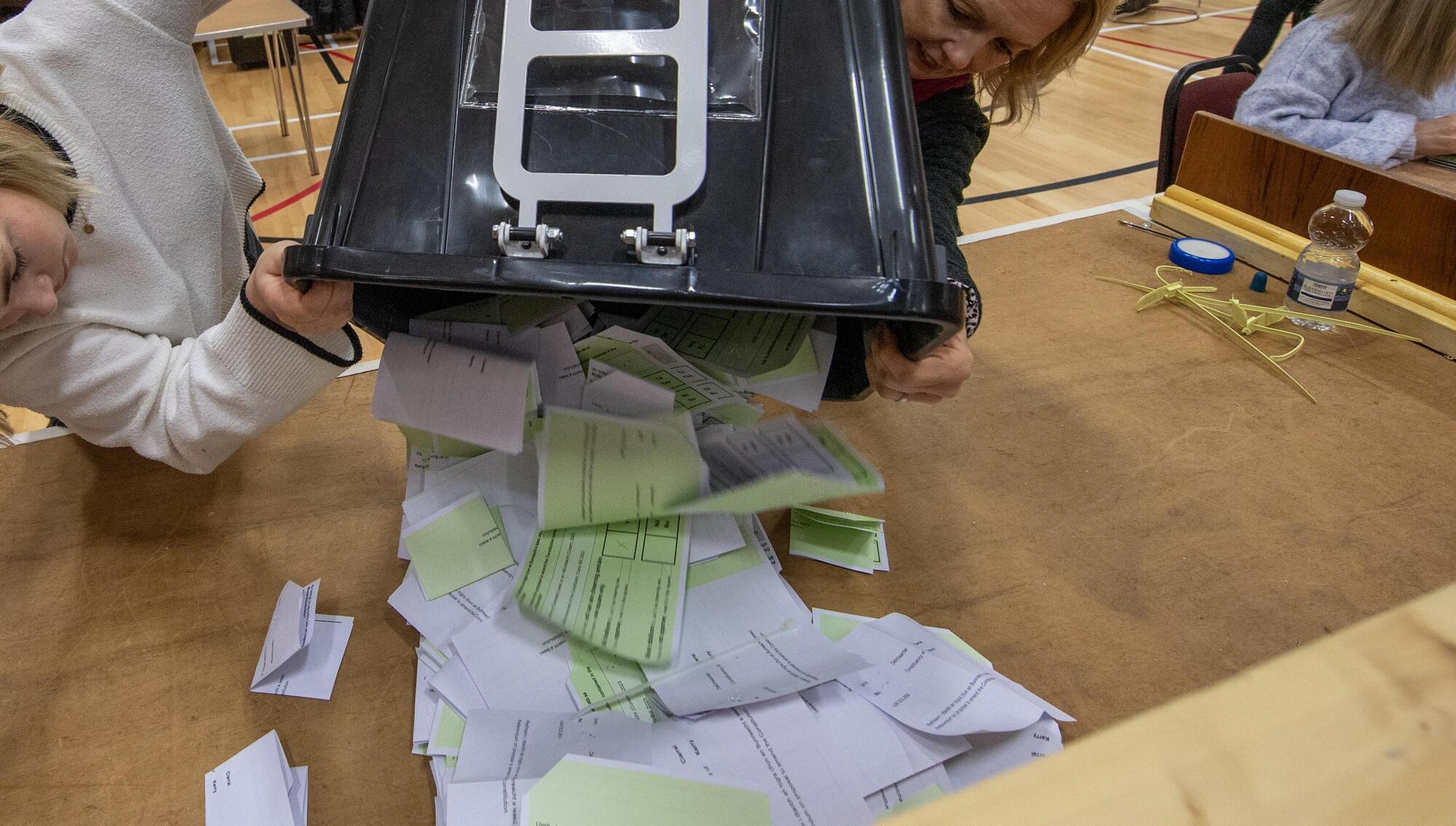
The referendum results were a blow to all the parties which supported them, but the political system has been further damaged by politicians’ revelations of 'do as I say, not as I do'. Or in this case: Do as I canvass, not as I vote. Picture: Domnick Walsh
The aftershock from last week’s referendums continues to reverberate, and interventions from individual politicians are not improving matters for their various parties.
Sinn Féin’s Mary Lou McDonald and Labour’s Ivana Bacik have tried to distance themselves from the results, while senior Fianna Fáil figure Willie O’Dea has called on his party to “stop playing to the woke gallery”.
Inconsistency and opportunism are often encountered in politics, but the contradiction offered by Fianna Fáil senator Lisa Chambers since last weekend’s results are of a different order.
Ms Chambers canvassed for a yes-yes vote, but has since admitted she voted no in both referendums. Little wonder Taoiseach Leo Varadkar had some pointed comments to make when asked about Ms Chambers’ admission: “If I ask people to vote yes, then I vote yes. If I ask people to vote no, I vote no.”
A public rap across the knuckles is only to be expected when a politician breaks with the party line, but there is an issue here which goes far beyond internal discipline.
At a time when distrust of the State and its intentions is being manipulated and weaponised, a revelation such as Ms Chambers’ is a blow to the credibility of the political system.
A politician who blithely admits that they canvassed for people to vote one way, but decided to vote the other way invites one simple question: What does that politician believe?
The reversals, retreats, and revelations of recent days add fuel to the fires being stoked by agents provocateurs about the Irish political system. They offer substance to the wildest allegations, because they suggest a hollow space which should be occupied by core beliefs.
The results were a blow to all the parties which supported them, but the political system has been further damaged by politicians’ revelations of “do as I say, not as I do”. Or in this case: Do as I canvass, not as I vote.
Drink driving complicates bill
As recently as last week, the Taoiseach expressed his keenness to see legislation passed which would provide for late-night bar opening — saying he had been “pressing” Justice Minister Helen McEntee to progress the bill.
The legislation would provide for nightclubs to stay open until 6am, and pubs until 2.30am, and is seen as a step away from a licensing regime which is not fit for purpose in the 21st century, not to mention a welcome boost for the night-time economy. In the latter case, recent restaurant closures have illustrated the difficulties across the hospitality sector.
However, as revealed in this newspaper yesterday, Road Safety Authority (RSA) head Liz O’Donnell has written to the Taoiseach and other ministers to express concerns about the new bill. Ms O’Donnell has pointed out that Ireland’s “significant problem with drink-driving” means road fatalities can be expected to rise if the bill is enacted.
It is difficult to argue against the RSA’s case, particularly when that is buttressed by statistics — whether it is the recent survey showing one in 10 participants drink and drive, or the fact that 37% of driver fatalities between 2015 and 2019 had tested positive alcohol.
Those facts offer conclusive proof of an Irish problem with drink driving, if such proof was needed. Despite the years of public awareness campaigns, the stark advertisements showing the consequences of drink driving, and the public ignominy associated with being caught doing so, 10% of Irish drivers are still happy to sit behind the wheel of a car after drinking.
In that context, it is difficult to support this legislation.
It is framed as an aid to the revival of the night-time economy, but the RSA has pointed out that the estimated cost of a single fatal road traffic collision is €3.6m.
The cost to a bereaved family, of course, is immeasurable.
An advocate right to the end
The death was announced yesterday of Charlie Bird, a mainstay of RTÉ’s current affairs and news coverage for decades.
Bird’s urgent tones were the overture to some of the biggest news stories of the past 40 years — from exposing the National Irish Bank scandal along with George Lee in 1998 to locating disgraced banker David Drumm in the US in 2010.
Bird came to national attention covering the Stardust nightclub fire which killed 48 people in Artane, Dublin, back in 1981. In a neat counterpoint to his early career, last year he addressed a vigil held by relatives of those killed in the Stardust fire and expressed his support of their ongoing search for justice.
That support was of a piece with Bird’s latter years, when he became as well-known as a spokesman and advocate for charities and medical research as he had been for his journalism. Though suffering from motor neurone disease, he maintained a high public profile and often spoke of his disease in an attempt to raise awareness. However, his advocacy also had a practical bent.
In April 2022, he led a climb of Croagh Patrick in Mayo in aid of the Irish Motor Neurone Disease Association and Pieta, the national suicide prevention charity, and raised over €3.5m for both organisations. As late as last April, he led yet another walk — this time to raise funds for the Samaritans.
The President paid tribute to him yesterday as “a remarkable man”.
Ar dheis Dé go raibh a anam dílis.

Subscribe to access all of the Irish Examiner.
Try unlimited access from only €1.50 a week
Already a subscriber? Sign in
CONNECT WITH US TODAY
Be the first to know the latest news and updates