Irish Examiner view: GAA's values ring hollow amid Páirc Uí Chaoimh renaming row

Pádraig Ó Caoimh, after whom Páirc Uí Chaoimh is named, helped transform the GAA into a truly national organisation on a sound financial footing. Picture: GAA Museum, Croke Park
As revealed in recent days in the 'Irish Examiner' and on IrishExaminer.com, Cork GAA has struck a sponsorship deal with SuperValu for its main stadium, Páirc Uí Chaoimh, which is likely to be rebranded as SuperValu Páirc.
Dónal Ó Caoimh, grandson of Pádraig Ó Caoimh, after whom the stadium is named, yesterday said: “The fact that the Cork County Board meeting tonight that will debate the proposal will be held behind closed doors for the first time is profoundly undemocratic.”
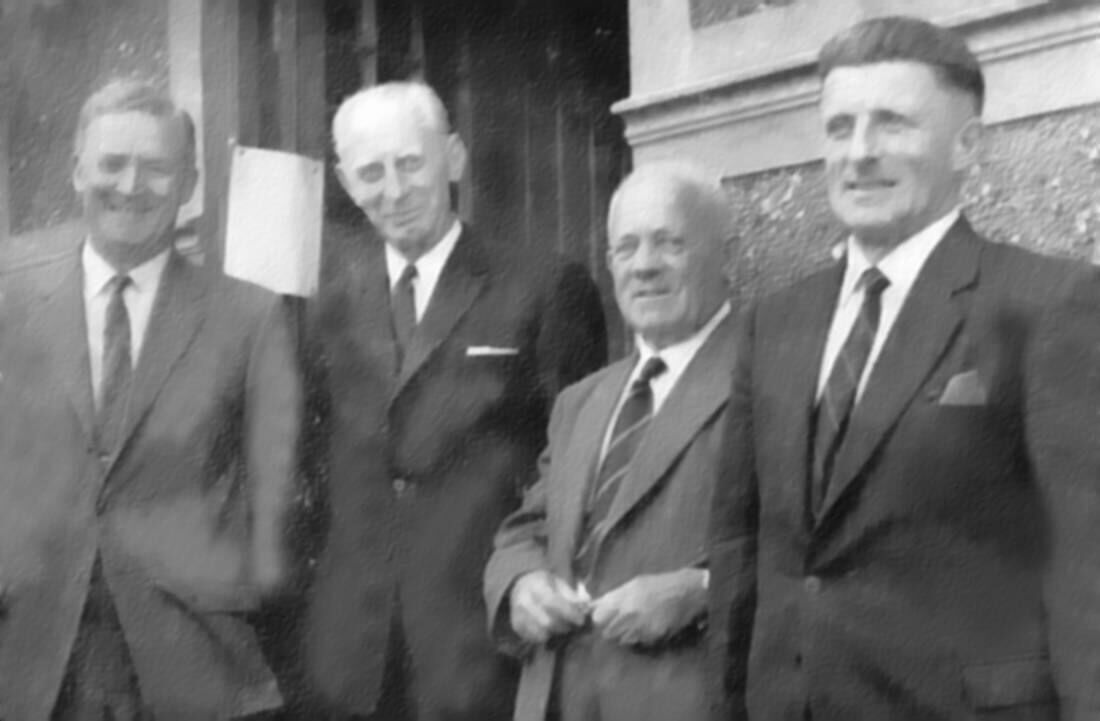
Ó Caoimh was general secretary of the GAA from 1929 to 1964. One of his main achievements was the transformation of the GAA into a truly national organisation on a sound financial footing: When he took office, the GAA owned a handful of grounds and premises around the country, and when he died 35 years later it owned over 400.
There is a rich irony in the fact that the local branch of that organisation is prepared to strip his name from its main ground because it is far from a sound financial footing — not to mention shutting down wider debate on that decision.
The GAA’s emphasis on volunteerism and inclusivity rings very hollow this morning.
The scenes in Roscrea this week have been disturbing to witness, and more than one commentator has pointed to similarities between the abuse of children attending Holy Cross School by loyalists in Belfast over 20 years ago and the abuse of refugees arriving at the Racket Hall Hotel in the Tipperary town earlier this week — the latter situation resulted in scenes which would have been unimaginable just a few months ago.
Gardaí clashed with anti-migrant protesters in ensuring safe passage for refugees to the hotel, and sources told this newspaper that the clash may mark a “new starting line” in terms of garda engagement with such anti-migrant groups.
It is a welcome move if the laws of the land are to be enforced. For months, it appears that some people or groups have been able to act with something verging on impunity in various parts of Ireland — blocking roads, intimidating individuals, and trespassing on private property, all matters which would bring most individuals to the immediate attention of the gardaí.
If the gardaí are to police such breaches of the law from now on in a more robust manner, however, an obvious question must also be raised — why has it taken so long for this change to come?
The rationale behind the previous approach was surely a desire not to escalate matters and raise tensions, or to avoid confrontations which could be manipulated by the far right to discredit the gardaí.
It is reasonable to point out that the light-touch approach has not worked, whether one takes the Dublin riots or the arson in Galway as evidence — or the abuse of women and children seen in Roscrea this week.
The garda response still needs to be measured when dealing with these fraught situations, but arson and intimidation cannot be allowed to continue unchecked either. If not, we face an unprecedented breakdown in law and order.
Readers are sure to be well wrapped up when venturing out the last few mornings as the cold snap takes a hold. In the last few days, all of us have encountered sub-zero temperatures and adjusted our behaviour accordingly, whether that means taking care negotiating slippery footpaths or driving at slower speeds than normal.
Such weather extremes are now occurring more and more frequently, which means those modifications in our behaviour also occur more often.
One change which many of us should embrace is checking in on those who may be vulnerable, particularly older individuals or those living alone.
Met Éireann has pointed out that the sub-zero temperatures we are currently experiencing can be particularly challenging for the vulnerable, and more of us should take that to heart.
Recent events in Roscrea and Galway have indicated a latent darkness in the Irish character which can be discouraging to consider. It is important to remember that, despite some of the confrontations we have witnessed recently, neighbourliness is still a powerful currency in this country.
There is a reason people still use ‘we never died a winter yet’ as a prop to fend off the darkest time of the year, and the sense of facing testing times together is a valuable support at any time.
Checking in on one’s neighbours is a help to them, and a restorative boost to those who do the checking also.

CONNECT WITH US TODAY



Be the first to know the latest news and updates