Irish Examiner view: Overdue safety initiative
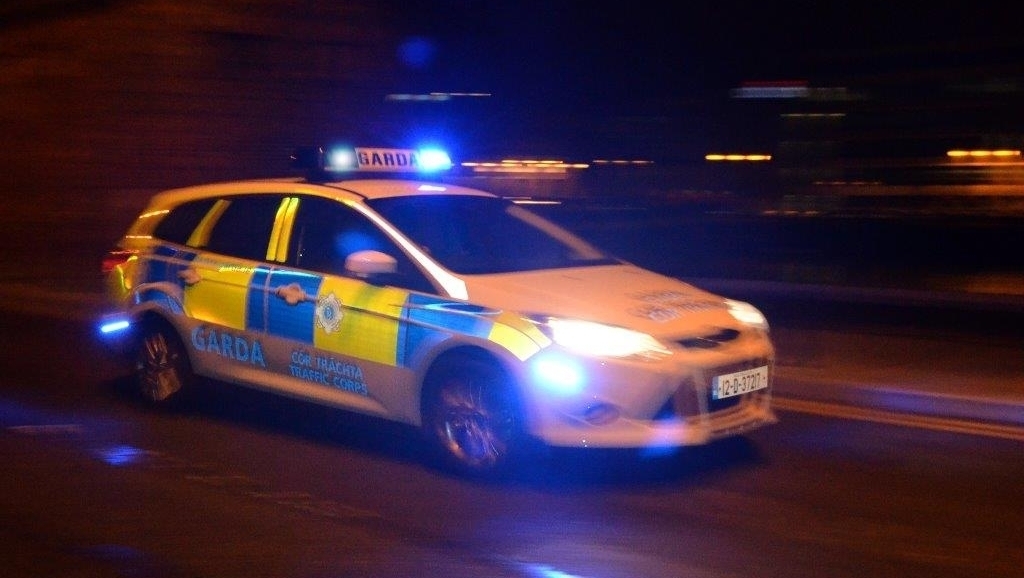
Challenge of reducing road deaths
Irish Examiner view: Overdue safety initiative

There have been 20% more fatalities so far in 2023 than in the same period last year — and 40% more fatalities than in 2019.

State agencies are to come together in an effort to reduce road deaths, and not before time.

The statistics for this year make for grim reading. 
There has been a spike in road deaths.

There have been 20% more fatalities so far in 2023 than in the same period last year — and 40% more fatalities than in 2019.

So far this year 27 pedestrians, 43 drivers, 26 passengers, 17 motorcyclists, three pedal cyclists, three e-scooter riders, and one pillion passenger have been killed — last weekend alone, two motorcyclists died on Sunday evening and four young people were killed in a crash near Clonmel on Friday. 

As the Irish Examiner was going to print, more fatalities had occurred in a crash in Tipperary.

Little wonder junior transport minister Jack Chambers announced plans to meet both the Road Safety Authority and An Garda Síochána this week in an effort to halt the carnage on the roads. 

As primary and secondary schools all over Ireland reopen for the autumn term, traffic levels will rise in the coming days and weeks, and it is imperative that everything possible is done to ensure the safety of road users including examining speed limits where appropriate.

However, it must be acknowledged that even the most stringent legal regime is still dependent on personal responsibility regarding the rules of the road — not to mention an acknowledgement of the potentially catastrophic impact of ignoring those rules.

As an illustration of the challenges facing regulatory authorities when it comes to changing behaviour on the roads, consider the fact that a drone was flown over the scene of last Friday’s fatal crash in Clonmel, presumably to film the aftermath. 

Such behaviour may be difficult for many to understand, but the attitude indicated by this disregard for the lives of others is also illuminating.

It demonstrates just how difficult it is to keep the roads safe in a society where a horrifying crash such as this is seen by some as simply an opportunity for filming.

Concerted effort by State agencies on road safety is welcome, but how can any agency find a remedy for a value system which conceives of filming a fatal car crash?

Approval for development

At a time when accommodation and housing are challenges all over the country, it is encouraging to see Cork City Council sign off on the biggest housing project in the city’s history.

Leeside Quays Limited, a subsidiary of O’Callaghan Properties, lodged an application with Cork City Council earlier this summer seeking permission to develop over 1,300 residential units at the Goulding’s site, Centre Park Rd, and Monahan Rd, in the city’s docklands — a development likely to be worth over €600m.

As Cork expands along its quaysides this development has the potential to transform a part of the city which was once an industrial zone, while also relieving some of the pressure on the housing sector. 

One of the council’s 51 planning conditions for the developers requires that the homes be sold to either individual buyers or used as social or affordable housing: They must not be sold to hedge funds and other corporate entities.

This is an acknowledgement of the reality facing people all over Ireland as they bid for homes against faceless corporations with vast financial reserves, and this planning condition is certainly well-intentioned.

However, is it legal? While the motivation behind this condition is clearly aimed at taking hedge funds out of the equation, it remains to be seen if this condition will stand up to legal challenge from those same organisations, which certainly have the resources available to them to test this provision to the limit.

It will also be interesting to see how other local authorities view the measure. 

They will presumably watch with interest to see if this provision can be enforced. 

It is not beyond the bounds of possibility that the corporate entities mentioned above could use individuals to purchase homes on their behalf, surely.

The local authority in this situation deserves credit for attempting to tackle this aspect of the housing crisis. 

It will become clear later, however, whether this is a viable answer to the problem.

Pauw’s future career

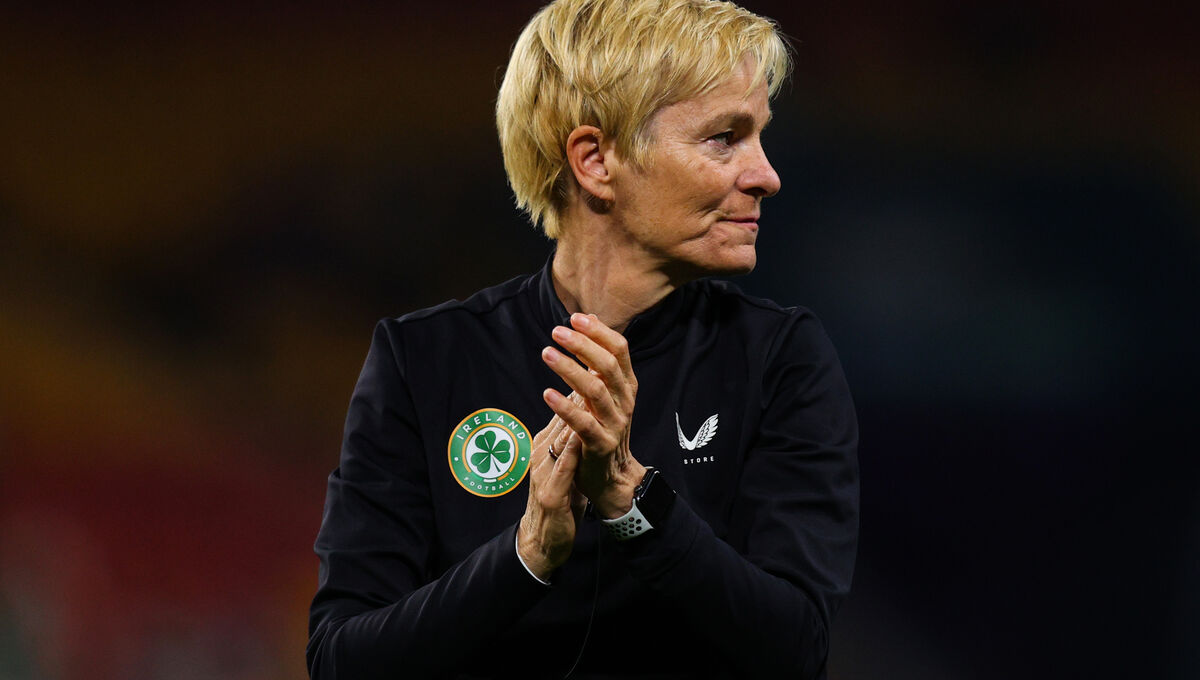
The starting point when discussing Vera Pauw’s departure as manager of the Ireland women’s team is surely the excitement and enjoyment generated around the country by the team’s appearance in the Women’s World Cup this summer.

The team’s games in Australia form a watershed in the growth of women’s sport in Ireland, and Pauw’s role in creating that watershed should not be forgotten. 

The generation of girls empowered and enthused about sport owe her a debt for guiding the Ireland team to its first appearance in a World Cup.

The mood music about Pauw’s tenure turned ominous at the tournament itself and tensions came to the surface in the final game against Nigeria, when Ireland player Katie McCabe had a disagreement with Pauw on the sideline about the manager’s tactics. 

Vera Pauw. 
Vera Pauw. 

The manager asserted her authority at a post-game press conference and McCabe tweeted a zipped-mouth emoji, perhaps the most 21st-century retort one could imagine.

Going on past experience across all sports, once players demonstrate a lack of faith in a coach or manager then the authority figure is on borrowed time. So it proved here.

A detailed dissection of Pauw’s approach to management can be expected in the coming days, but that shouldn’t cloud our appreciation of what the Dutch native did for Irish women. We can expect to enjoy a dividend from her hard work for years to come.

x

More in this section

Revoiced

Newsletter

Sign up to the best reads of the week from irishexaminer.com selected just for you.

Cookie Policy Privacy Policy Brand Safety FAQ Help Contact Us Terms and Conditions

© Examiner Echo Group Limited