Irish Examiner view: Homes crisis needs many compromises
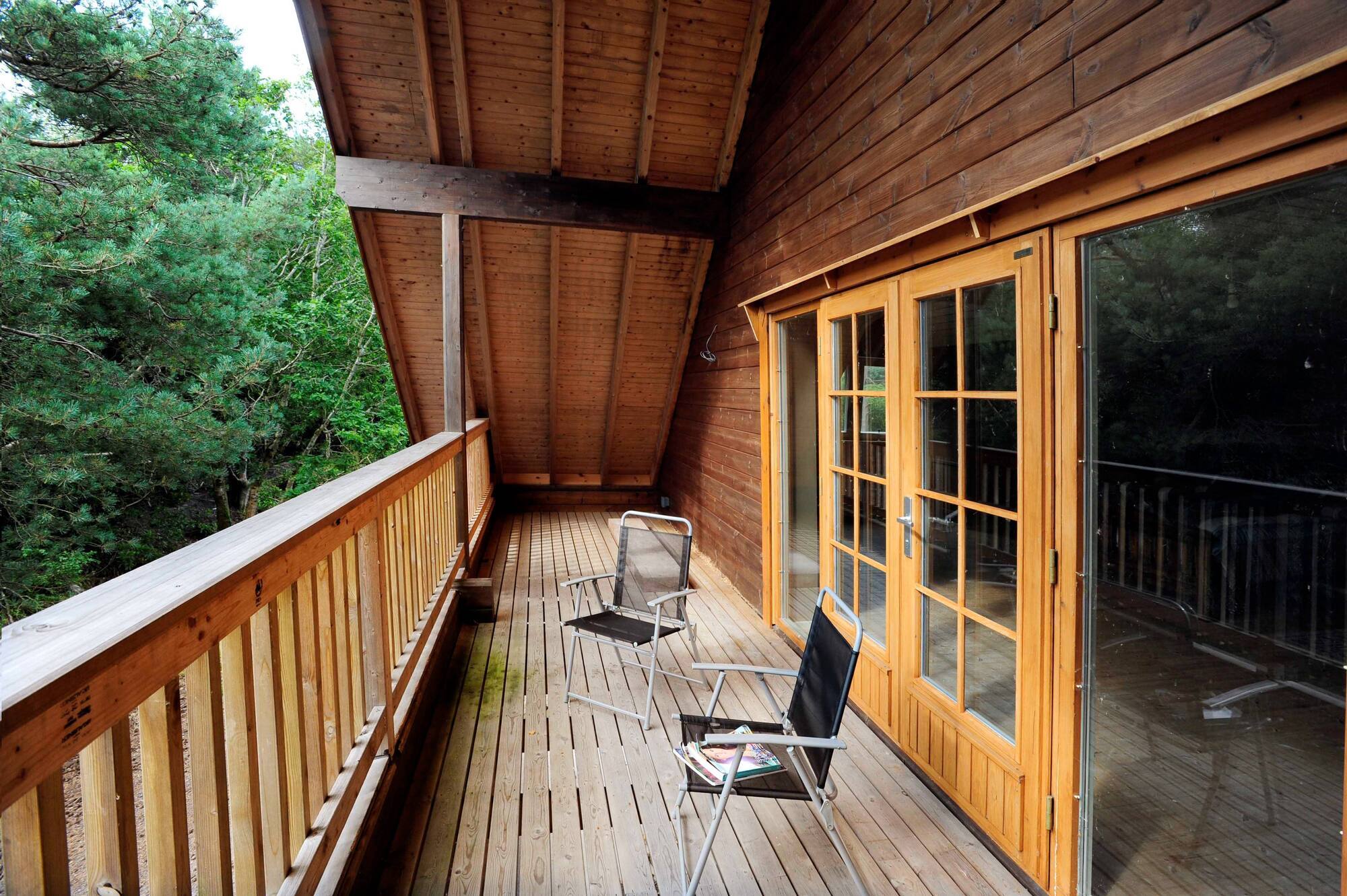
Cabins cost €60,000-€80,000 to construct, are eco-friendly, and are relatively economic to heat. Picture: Denis Scannell
Desperate times drive innovation. The covid-19 pandemic provided a great leap forward for the science of virology, not least because of the transfer of resources — human brainpower and financial — to researching and implementing new vaccines at speed.
The grisly war in Ukraine has regularised the mass use of drones, which will inevitably accelerate peaceful civilian applications across the world.
Although more prosaic, the housing crisis will also drive the hunt for solutions with an urgent need to find ways of providing homes more quickly.
Many developed nations are struggling to meet their affordable housing targets without sacrificing the building standards and social norms, which can produce the shanty towns, the sink estates, or rookeries of the future.
In Co Cork, people are hoping to build log cabins to use as homes and are lobbying for the rules governing where such structures can be erected to be relaxed.
Typically, the county council only grants permission for such homes to be constructed on the edge of forestry.
There has been a sharp rise in the number of planning applications for log cabins in Ireland’s largest county, while the Republic generally needs to build around 50,000 new homes a year from public and private sectors. We are currently achieving around 30,000.
Cabins cost €60,000-€80,000 to construct, are eco-friendly, and relatively economic to heat.
Young couples who cannot afford traditional concrete/brick-built homes, which are on average four times more expensive, are increasingly seeking this cheaper option to get a foot on the property ladder.
Fianna Fáil councillor William O’Leary said: “We need to relook at our ‘Rural Design Guide.’ Who do you think is applying for them, Little Red Riding Hood?”
But why stop at the forests? Cabin development is a common feature of towns and cities in Australia and the US. Why not here if attention to planning detail is scrupulous and sensitive?
Other than planning restrictions, other factors which drive the housing crisis are rapidly escalating construction costs, and shortages in the workforce.
And in the UK, which has a requirement to build between 200,000 and 300,000 homes annually, it is an Irishman who is in the forefront. And he has a remarkable comeback story to tell.
The British are placing some of their bets on modular housing overcoming a chequered history and being able to deliver 25,000 units annually within two years. Already, hundreds of fully kitted-out two and three-bedroom apartments and houses leave factories on the backs of lorries.
One of the main modular housing makers in the country is Legal & General, the nation’s biggest insurance and pension firm.
Modular housing is built on an assembly line like a car, and in the minds of the British, is often associated with the prefab homes of the post-war period which were hastily assembled to cope with a crisis, and originally intended to last only for a decade.
That was on the watch of Harold Macmillan whose success in building 300,000 homes annually brought with it, among other things, the right to succeed Winston Churchill as prime minister. Not all of them were the best houses.

Some of the most shocking tower block monstrosities were built in that era and Macmillan houses were also smaller than those introduced by the previous Labour administration. Both experiences point to the downside of pursuing targets at the expense of standards.
Now there is an impetus to reposition modular, which is more energy efficient and often comes equipped with solar panels, as the lower cost solution for the future. One which can be delivered and assembled within 14 weeks of order.
In the vanguard of the movement is Irish businessman and developer John Fleming, whose Vision Modular Systems company completed a 44-storey steel-frame tower in Croydon in the autumn. It is the tallest modular building in the world.
Mr Fleming was one of the first Irish property developers to avail of British bankruptcy during the property bust.
He formed his Tide Construction company in 2013 and has experienced strong growth through its ability “to embrace the revolution taking place in off-site construction and the deployment of modular technology.”
Manufacturing is carried out by a related company, Vision Modular Systems at Bedford outside London, and Merthyr Tydfil in South Wales. The company claims to be able to produce a one-bedroom apartment in a fortnight.
There is no silver bullet to resolving the vexing issue of housing, but it will be necessary to find solutions which go outside the four walls of the box. Like many other challenges we face, it may involve us abandoning our old preconceptions and prejudices. And making compromises.

CONNECT WITH US TODAY



Be the first to know the latest news and updates