Irish Examiner view: Housing stock conundrum
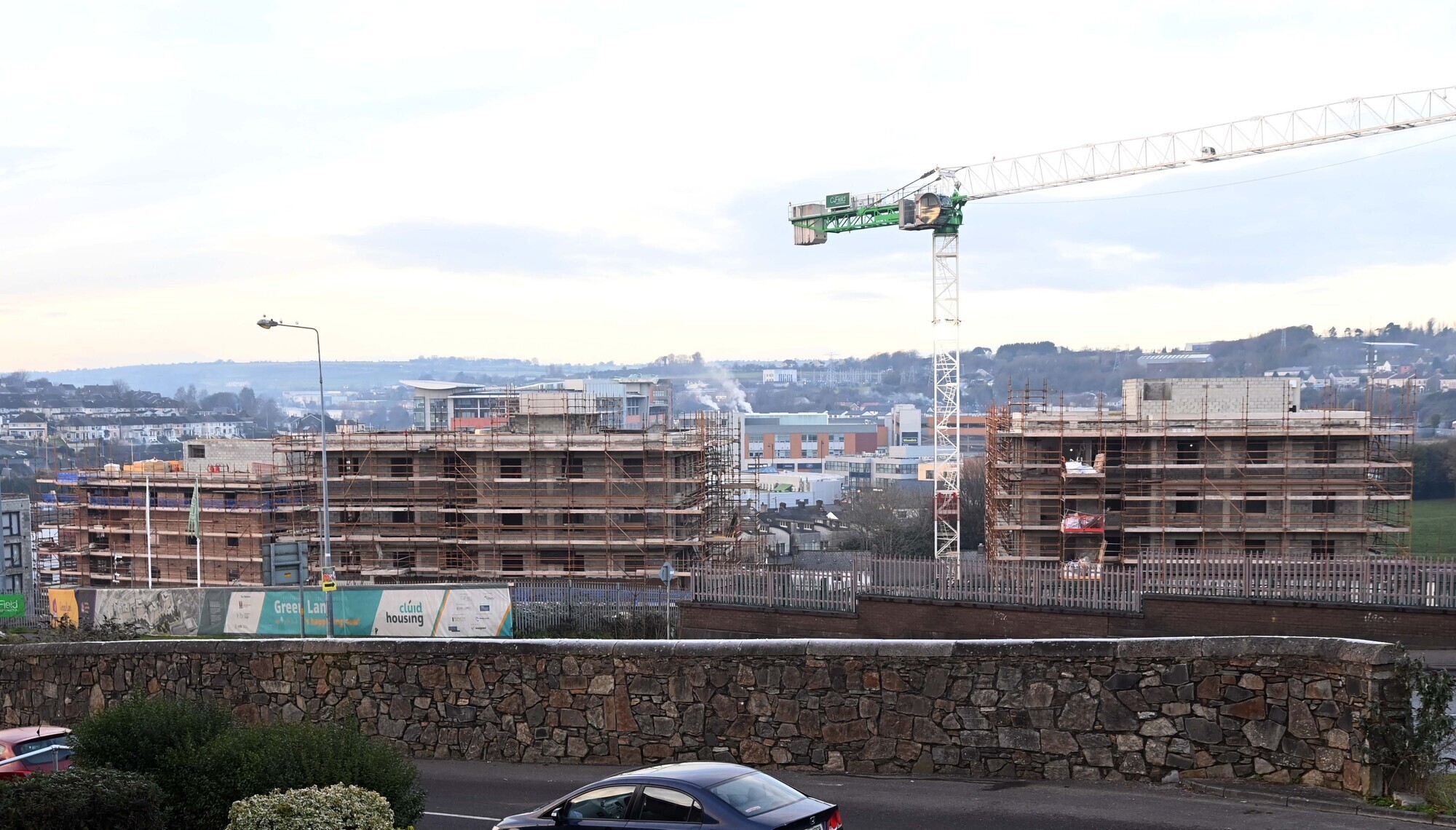
Micheál Martin said that 30,000 houses were built last year — 9,000 of those in the last quarter alone. Picture: Denis Minihane
The contradictions of the housing problem surfaced all over again in the last 24 hours.
On the one hand, Tánaiste Micheál Martin said that the State has turned the corner when it comes to building houses, stating that 30,000 houses were built last year — 9,000 of those in the last quarter alone.
On the other hand, ohn Maxwell of developers Lioncor pointed outJ that a deficit of 250,000 homes in the country, on top of an annual required run rate of 50,000 to 60,000 units, means it would take “decades” for housing delivery in Ireland to be fixed.
Which is it? When it comes to housing in Ireland there is such a swirl of vested interests, political agendas, point-scoring and bad-faith actors that it can be all but impossible to evaluate claims objectively.
Even the best-informed observer can sometimes feel the entire subject of housing is a Schrödinger's cat situation, where every statement can be seen as true and false depending on where the observer is standing.
However, it’s very difficult to agree with the Tánaiste’s claim that the country has turned a corner in any sense in terms of housing.
If anything his comments have the power to lower spirits further still, because if 30,000 new homes have such a negligible effect on housing then one has to incline towards John Maxwell’s point on the timeframe for a resolution.
Yet there are concerns here also. The impatience of developers and builders, along with failures in regulation, has led to catastrophe in the very recent past.
The rush to build, and reluctance to regulate, has had disastrous consequences for taxpayers, who have ultimately been left with the bill for the mica redress scheme and the proposed apartment remediation scheme.
We need to change our housing delivery model and build and bring back into use as much stock as we can. If the Tánaiste’s assertion is correct then the taxpayer is stumping up for housing.
But if the lessons of the past are not learned, and private developers are not incentivised and regulated properly, the taxpayer will end up footing the bill again.