Irish Examiner view: EU must not become surveillance state
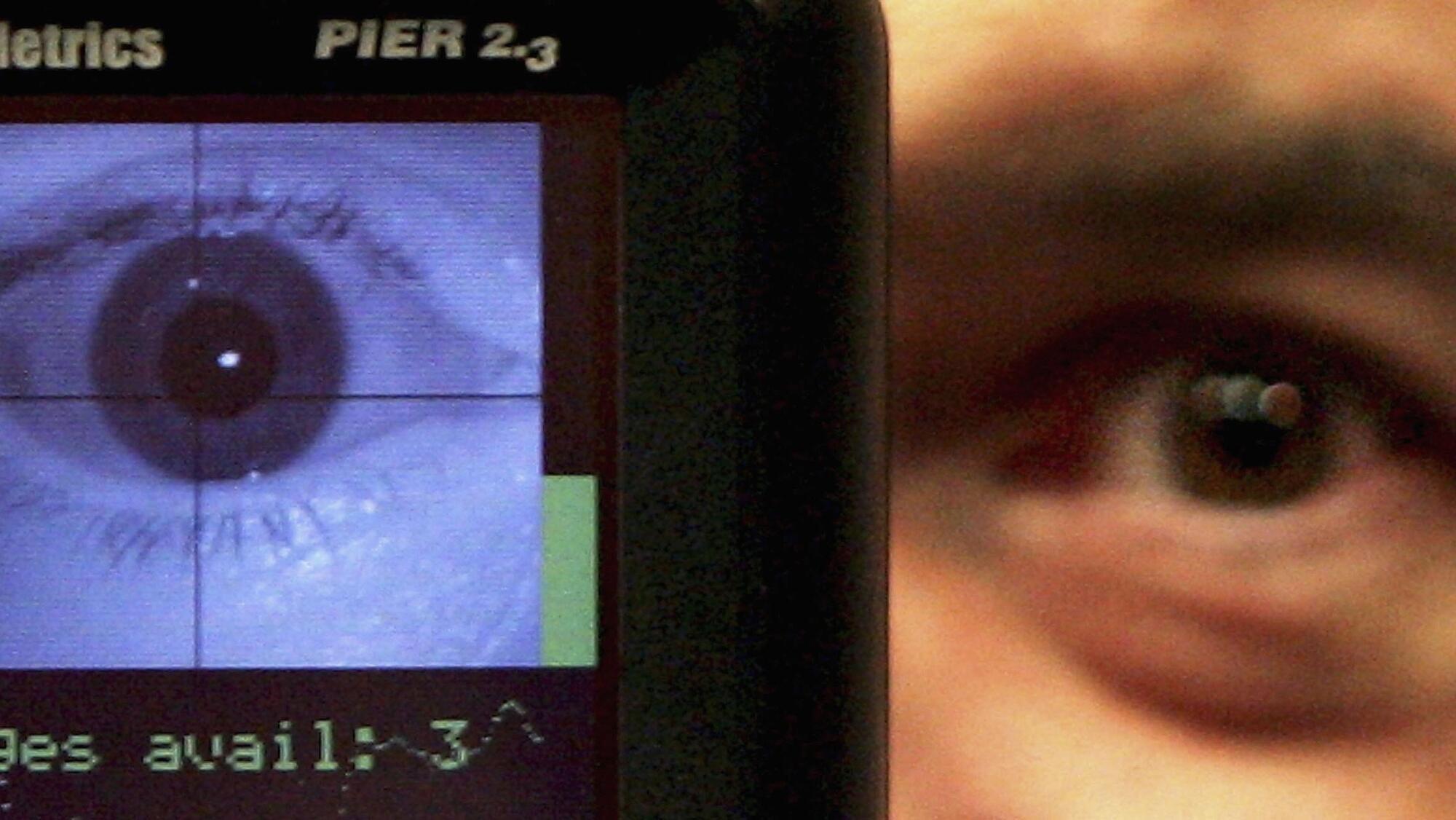
From next May, anyone entering or leaving the EU will be biometrically identified and their details logged in a database
Irish Examiner view: EU must not become surveillance state

Facial recognition technology has many advocates, among them Justice Minister Helen McEntee, but that does not mean we should not be apprehensive about its use. File picture: Ian Waldie/Getty

It is the end of October, with a potentially long winter ahead. Is it too early to be thinking about next summer’s holidays? Obviously not, given that advertisements are already ubiquitous on digital platforms. We can expect the numbers to increase rapidly on TV, radio, and print as the clocks go back and the dark nights are upon us.

Happily, as fully fledged European citizens, we can travel and work anywhere within the EU without the need for visas, permits, and other controls. Not so with our neighbours.

While we might think this is poetic justice for a nation that voted for Brexit, we might pause for a moment to consider what the impact may be on people already feeling sensitive about their frontiers. People in the North, for example.

Little general debate has taken place about the latest developments in what is euphemistically described as “smart borders”, although it is a useful rule of thumb to start worrying when compound nouns of this type gain currency — “smart” motorways; “smart” bombs; “smart” cards. They often have unintended consequences for the rest of us.

From next May, the European Union is going live with a new mass data-gathering scheme which will demand that all travellers over the age of 12 entering EU countries be biometrically logged and their details entered into a vast data store. Not only do authorities want a set of four fingerprints, already a requirement for visiting the US, but facial images too. These will be subjected to recognition algorithms.

The automated Entry-Exit System (EES) will be used to register travellers from third countries each time they cross an EU external border, registering the person’s name, type of travel document, biometric data, and date and place of entry and exit. In addition, it will record refusals. 

The data will be gathered at land crossings, seaports, and air terminals and then shared with the relevant government agencies.

Facial recognition technology (FRT) has many advocates, among them Justice Minister Helen McEntee, who has been quick to support An Garda Síochána in its own rollout plans. But this does not mean that we shouldn’t be apprehensive.

As we warned last May, once such technologies are in place, they are subject to extensive mission creep. More than 1.7bn digital health certificates were issued during the pandemic. One report calculated that 40% of countries used FRT during the Covid-19 crisis for creating contactless services, to track those in quarantine, to monitor social distancing and to check mask-wearing. Other countries use it in stations, schools, workplaces, banks, and airports.

Is it really beyond our imagination to visualise scenarios in which “smart borders” could be used for other purposes which cover all citizens? To date, the most enthusiastic advocates for a data-collection superstate have been China, Russia, and the United Arab Emirates. To which, it seems, we can add the EU from next year.

Big Brother Watch frets that we are sleepwalking into the worst kind of surveillance state. The creation of “smart borders” does little to persuade us otherwise.

More in this section

Revoiced

Newsletter

Sign up to the best reads of the week from irishexaminer.com selected just for you.

Cookie Policy Privacy Policy Brand Safety FAQ Help Contact Us Terms and Conditions

© Examiner Echo Group Limited