Irish Examiner view: Counting down on Truss premiership
Irish Examiner view: Counting down on Truss premiership

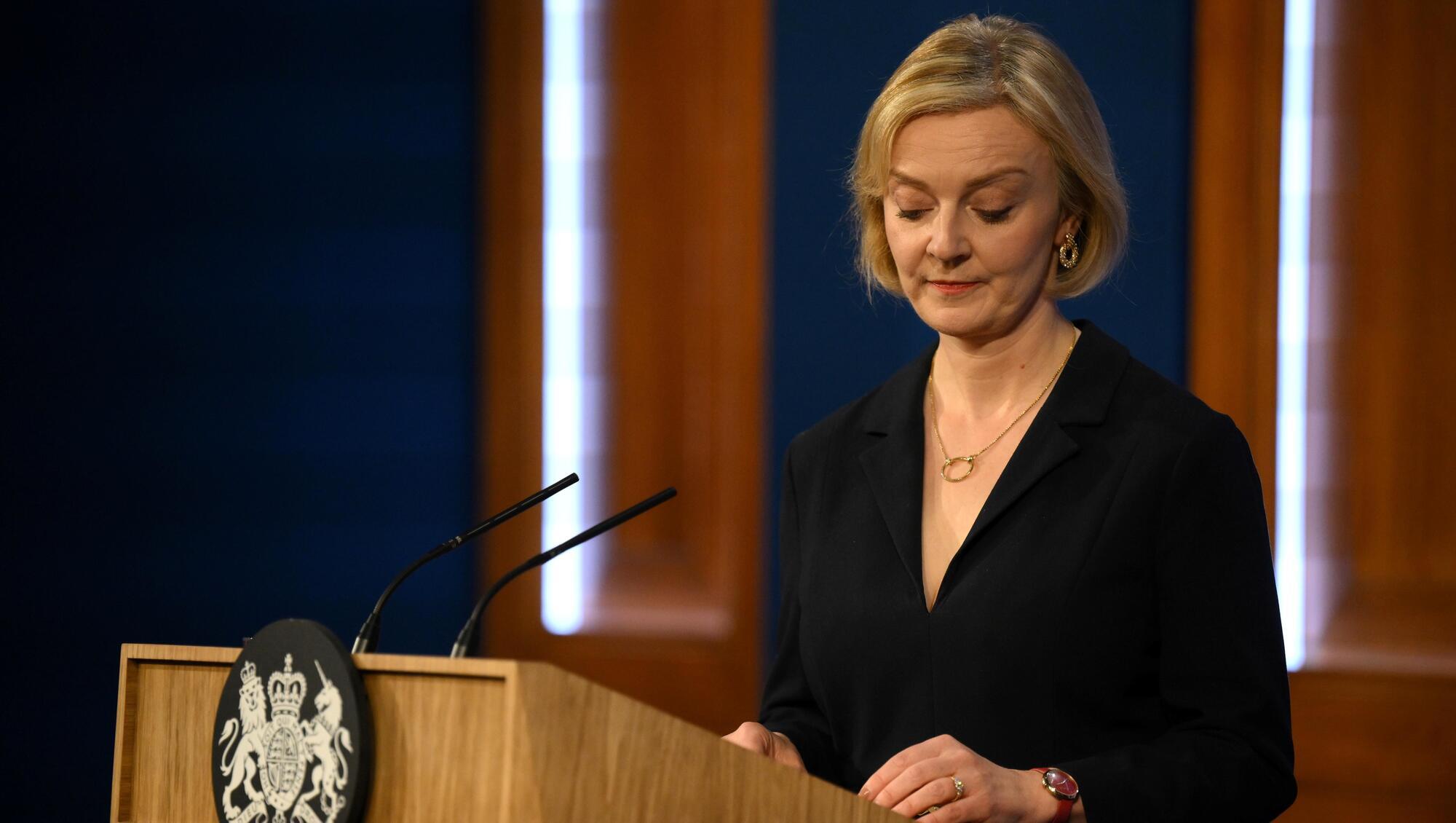
Prime Minister Liz Truss during a press conference at Downing Street, London. Market makers and citizens were hoping for a safe pairs of hands, not the reckless throw of a gambler’s dice.

If history is any yardstick, the British prime minister Liz Truss (39 days in office and counting) is not so much in the last chance saloon as staggering her way towards the swing doors marked “this way out”.

Residents of 10 Downing St rarely survive falling out with their chancellors. It was this that led to the downfall of Margaret Thatcher, firstly with the departure of Nigel Lawson and then the resignation of her deputy, Geoffrey Howe, who had loyally led the treasury during her difficult first ministry. Norman Lamont carried the blame for Britain’s involvement in the exchange rate mechanism, although he was highly Eurosceptic. His departure allowed John Major to limp through until a 1997 election which ushered in 13 years of Labour dominance under Tony Blair and Gordon Brown.

The resignation of Kwasi Kwarteng does not make him the shortest-serving chancellor in British political history. That was Iain Macleod, who died in office from a heart attack after 30 days in 1970. But Ms Truss has a long time to serve if she is to avoid the label of being her country’s leader with the briefest term in charge. That falls to George Canning, who lasted 119 days before succumbing to tuberculosis. For Ms Truss to match that, she will need to stay in power into the first week of January 2023. Bookies were laying 8/13 yesterday that she would be gone by Christmas.

When all this is untangled, historians might suggest that the Truss administration may have known what the right solutions were but chose, disastrously, the wrong time to place them before the markets, with insufficient preparation and explanation. It is correct that British financial problems will not be solved by ever-increasing levels of austerity and that there must be a growth strategy. 

But the jaunty insouciance with which plans to fund tax cuts through unscheduled borrowing were presented startled nearly everyone and started a financial run not seen since the 1990s. With a European war becoming more possible by the day, an unprecedented energy crisis, inflation still rampant, the threat of recession, and an unpredictable winter ahead, what market makers and citizens were hoping for were safe pairs of hands, not the reckless throw of a gambler’s dice.

It is difficult to see Ms Truss escaping from this slough of despond, which in some ways is a pity, given that the mood music about the North has sounded more promising than for several years. It will not be helpful for the British financial crisis to accelerate, given the levels of Irish investment in the UK and the overlapping markets for our goods, though a 25% corporation tax there may have beneficial consequences here. Contagion could lead to higher interest rates, with the European Central Bank already heading in that direction.

Strange as it may be for many to contemplate, we could do with Westminster getting something right.

More in this section

Revoiced

Newsletter

Had a busy week? Sign up for some of the best reads from the week gone by. Selected just for you.

Cookie Policy Privacy Policy Brand Safety FAQ Help Contact Us Terms and Conditions

© Examiner Echo Group Limited