Irish Examiner view: A world on permanent alert
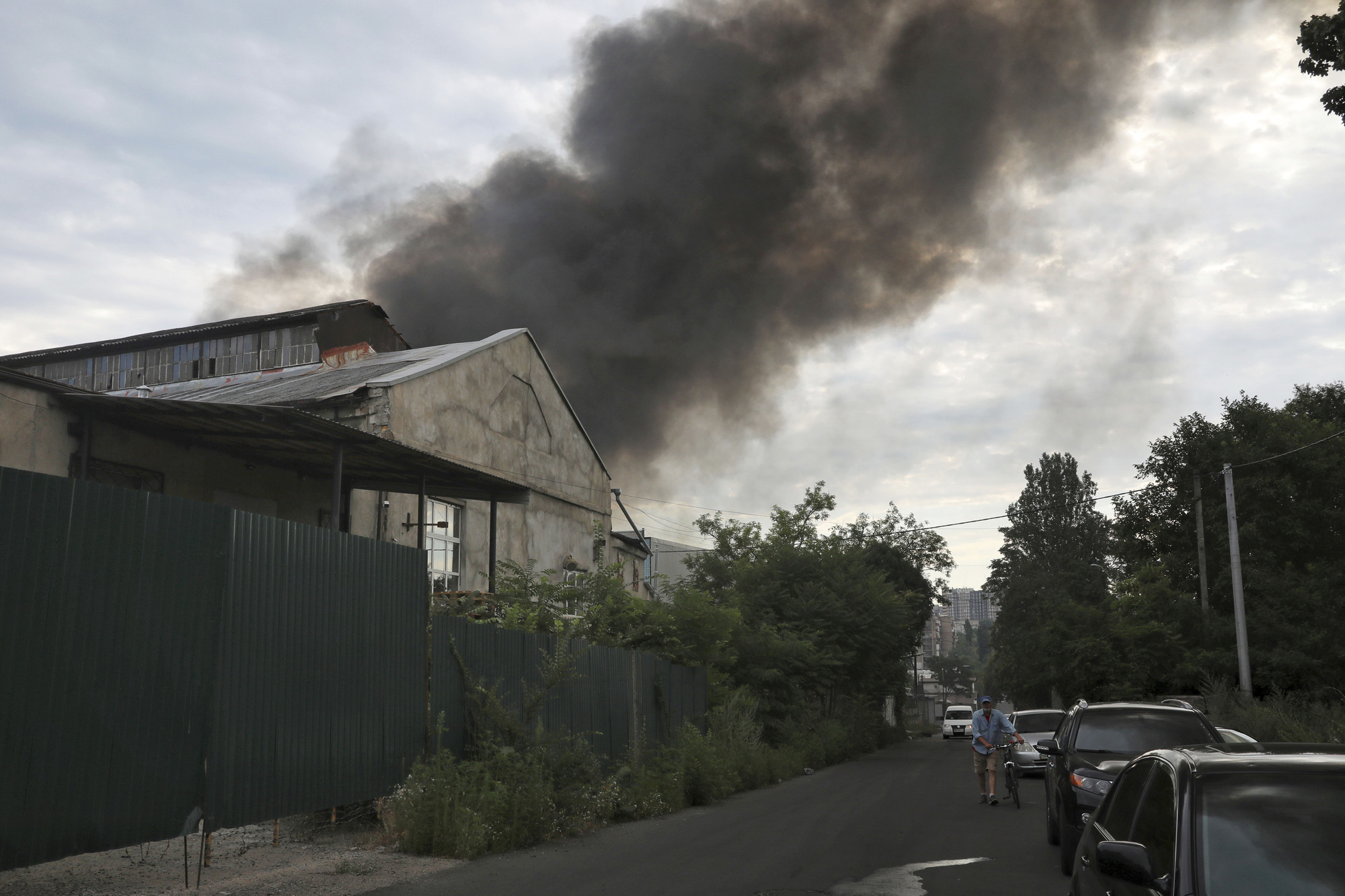
Smoke rises after shelling in Odesa, Ukraine, this month. Daily vigilance in a fragile world, made much more dangerous by Russia’s attack on Ukraine, is now a necessity. Photo: AP/Nina Lyashonok
It is 65 years since the first great novel of nuclear apocalypse shook the world. , written by Nevil Shute after he emigrated to Australia, foresaw the aftermath of mutually assured destruction in the Northern hemisphere “with the last seismic record of explosion on the 37th day”.
World War III, caused by a superpower escalation after a nuclear attack on Italy by Albania, has polluted the atmosphere with fallout. People are still around in Melbourne, using ox carts. Suicide pills have been issued as the radiation clouds drift southwards.
There’s a love story, but themes are grim, and are bookended by quotes from the TS Eliot poem 'The Hollow Men': “We grope together and avoid speech gathered on this beach of the tumid river.”
Shute’s fictional year for global destruction was 1963, and the astonishment is that we have made it through to 2022 without a major incident. But daily vigilance in a fragile world, made much more dangerous by Russia’s attack on Ukraine, is now a necessity.
This was the message within a landmark speech made by Britain’s national security adviser Stephen Lovegrove in Washington when he warned the West must not stumble into a conflict with Beijing and stated that China’s “disdain” for arms control agreements was a “daunting prospect”.
Lovegrove told the Center for Strategic and International Studies in the US capital that the world was entering a “dangerous new age of proliferation”, with threats from genetic weapons, space-based systems and lasers.
The Cold War back-channels which previously maintained a balance of power between Nato and the Kremlin were not in place with the PRC, enhancing the risk of sudden conflict through “escalation wormholes.”
Russia, China, North Korea, Iran: the number of unpredictable players in geopolitics is increasing. Lines of communication have, somehow, to be kept open in worrying times.