Irish Examiner view: Putin’s nuclear swagger a worry
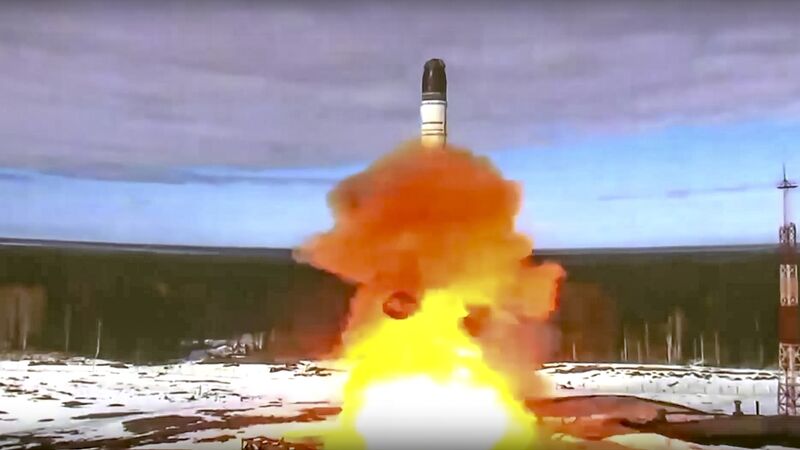
Russia has conducted a test launch of its Sarmat intercontinental ballistic missile, a new and long-awaited addition to its nuclear arsenal which President Vladimir Putin said would make Moscow's enemies stop and think. Picture: Roscosmos Space Agency Press Service via AP
For those who lived through the Cuban missile crisis of 1962, there’s a wry old joke which says that we can all remember the day that JFK nearly killed us.
That day was October 24, 60 years ago, when Soviet ships approached the naval “quarantine” that the US had thrown around Cuba as an alternative to bombing the missile sites which Russia had established in Fidel Castro’s country or launching a full-scale invasion.
Any attempt to breach the blockade was likely to trigger a military confrontation up to and including a nuclear exchange.
The Russians turned around and the founding myth of nuclear brinksmanship was created. US secretary of state Dean Rusk was reputed to have said: “We’re eyeball to eyeball, and I think the other fellow just blinked.”
That famous quote now appears apocryphal, and the more significant factors in halting the ships carrying the essential equipment to arm the SAM ballistic missile sites may have been undertakings offered by Bobby Kennedy not to invade Cuba, 90 miles away from the American mainland, and to withdraw Jupiter intermediate nuclear rockets from Turkey. In other words, a compromise brought about by secret, back-door diplomacy.
Vladimir Putin opened his war by warning that interference “from outside” would result in “consequences greater than any you have faced in history”. An overt nuclear threat.
On Wednesday, he boasted of the first successful test of a new multi-warhead missile, nicknamed Satan II, which could be used against his opponents around the world. It should be regarded, said the Kremlin, as a “present to Nato”.
While the Pentagon had been notified in advance of the test launch of the new superweapon, this nuclear swagger implies an increasing level of desperation and insecurity against a highly motivated enemy who shows no signs of capitulating on the conventional battlefield.
Russia’s latest objective to gain “full control over the Donbas and southern Ukraine” is not any nearer, and heavier weapons are on their way to Ukrainian president Volodymyr Zelenskyy. Larger war aims carry with them the potential for bigger setbacks.
We must prepare ourselves for the possibility that Putin’s next move will be to make limited use of field nuclear capability or deploy chemical weapons, particularly in the face of further military setbacks.
Grim thought though this is, it is a prospect we must contemplate. The nature of the West’s response will be a defining moment for civilisation.
CONNECT WITH US TODAY



Be the first to know the latest news and updates