Irish Examiner view: Putin must be encouraged to climb down from his position on Ukraine
Visits of the German chancellor to Kyiv and Moscow are important links in chain united Europe's reaction to Russian aggression
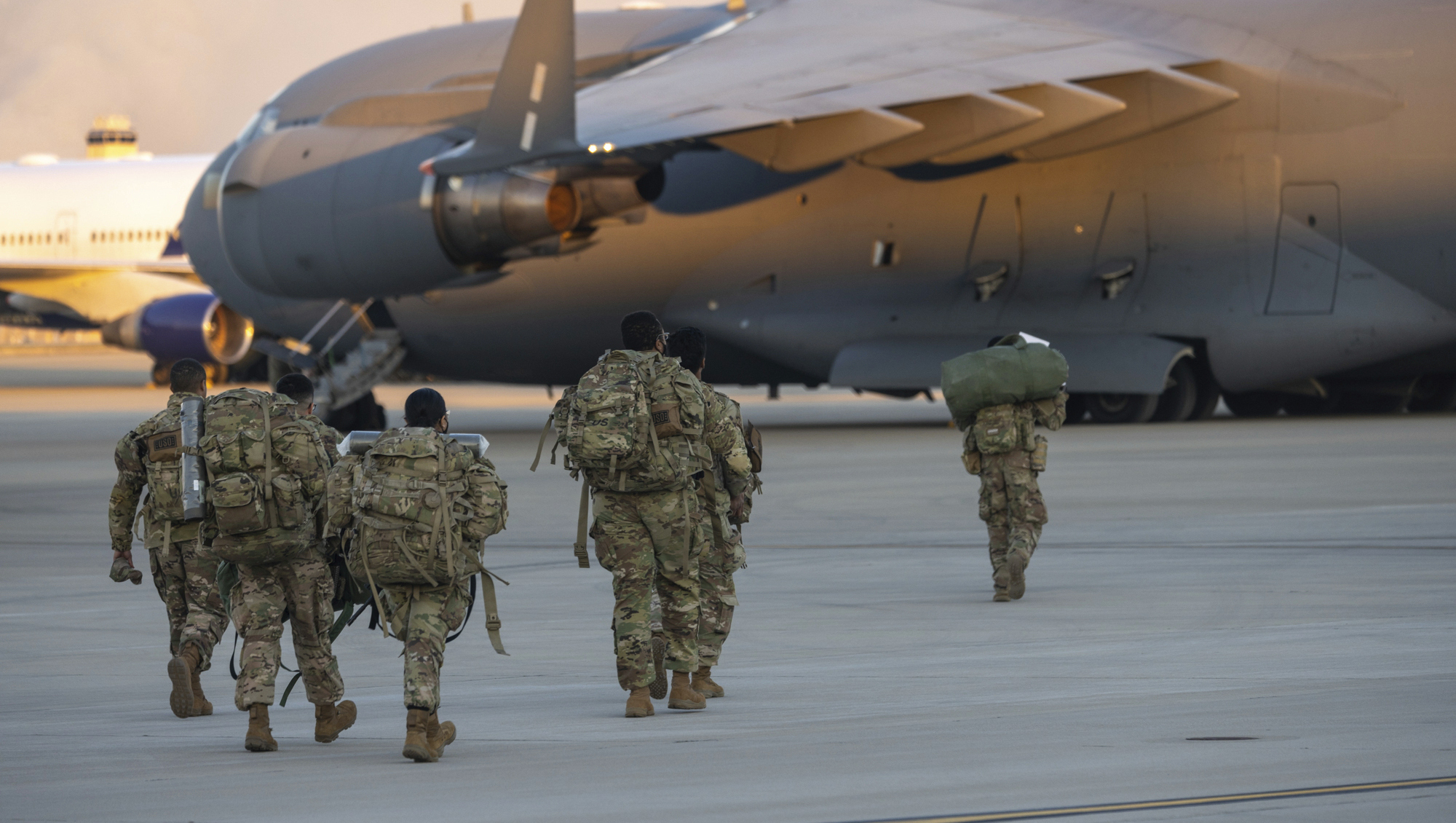
Members of the 82nd Airborne Division of the US Army walk on the tarmac at Pope Field ahead of deployment to Poland from Fort Bragg, North Carolina. They are among soldiers the US Department of Defence is sending in a demonstration of American commitment to NATO allies worried at the prospect of Russia invading Ukraine. AP Photo/Nathan Posner

Members of the 82nd Airborne Division of the US Army walk on the tarmac at Pope Field ahead of deployment to Poland from Fort Bragg, North Carolina. They are among soldiers the US Department of Defence is sending in a demonstration of American commitment to NATO allies worried at the prospect of Russia invading Ukraine. AP Photo/Nathan Posner

The visits of German chancellor Olaf Scholtz to Kyiv yesterday and Moscow today are important links in the chain uniting western Europe’s reaction to Russian aggression on the Ukrainian border.

Underlining that last week’s visit by French president Emmanuel Macron to both capitols was not a solo run, and attempting to douse the flames of controversy ignited by criticism of Germany’s thus far limp response to Russian threats, Scholtz yesterday highlighted Europe’s steadfast support for Ukraine and his own country’s financial support of the beleaguered country. Today he will need to stress to Russian president Vladimir Putin that there are still no guarantees about the future of the controversial Nord Stream 2 east-to-west gas pipeline.

Scholtz’s task has not been made any easier by the fact that one of his predecessors as chancellor and leader of his Social Democrats party, Gerhard Schröder, has become a lightening rod for criticism at home and abroad because of his close links with the Putin regime and the Russian energy industry, and Germany’s ambivalent stance in this conflict.

Despite this — and Ukrainian president Volodymyr Zelensky’s warning that Russia intends to use the Nord Stream 2 pipeline as a “geopolitical weapon” — Scholtz yesterday doubled down on his country’s support for Ukraine and, without naming the pipeline project specifically, said no one should “doubt the determination and preparedness” of Germany to punish Russia if it attacks its neighbour.

This position is not exactly music to Putin’s ears, but it was important for Scholtz yesterday and again today to underline Europe’s solidarity to the Russian leader and to highlight Germany’s intention to not allow itself get pushed around.

That said, he also needs to offer the Russian supremo some sort of ladder for him to climb down from his current position without publicly losing face. That may come in the form of some sort of time derogation on Ukraine’s proposed entry to Nato, which can be thrashed out in due course. A potential moratorium on the issue seems the easiest and swiftest way to end the current stand-off.

Scholtz’s ability to sell this to Putin may well have been aided by Russian foreign minister Sergei Lavrov telling his boss yesterday that, while EU and Nato responses to the crisis had not been satisfactory, the possibilities for a diplomatic solution had not been exhausted.

More in this section

Revoiced

Newsletter

Had a busy week? Sign up for some of the best reads from the week gone by. Selected just for you.

Cookie Policy Privacy Policy Brand Safety FAQ Help Contact Us Terms and Conditions

© Examiner Echo Group Limited