Irish Examiner View: Dementia forecast points to tough choices
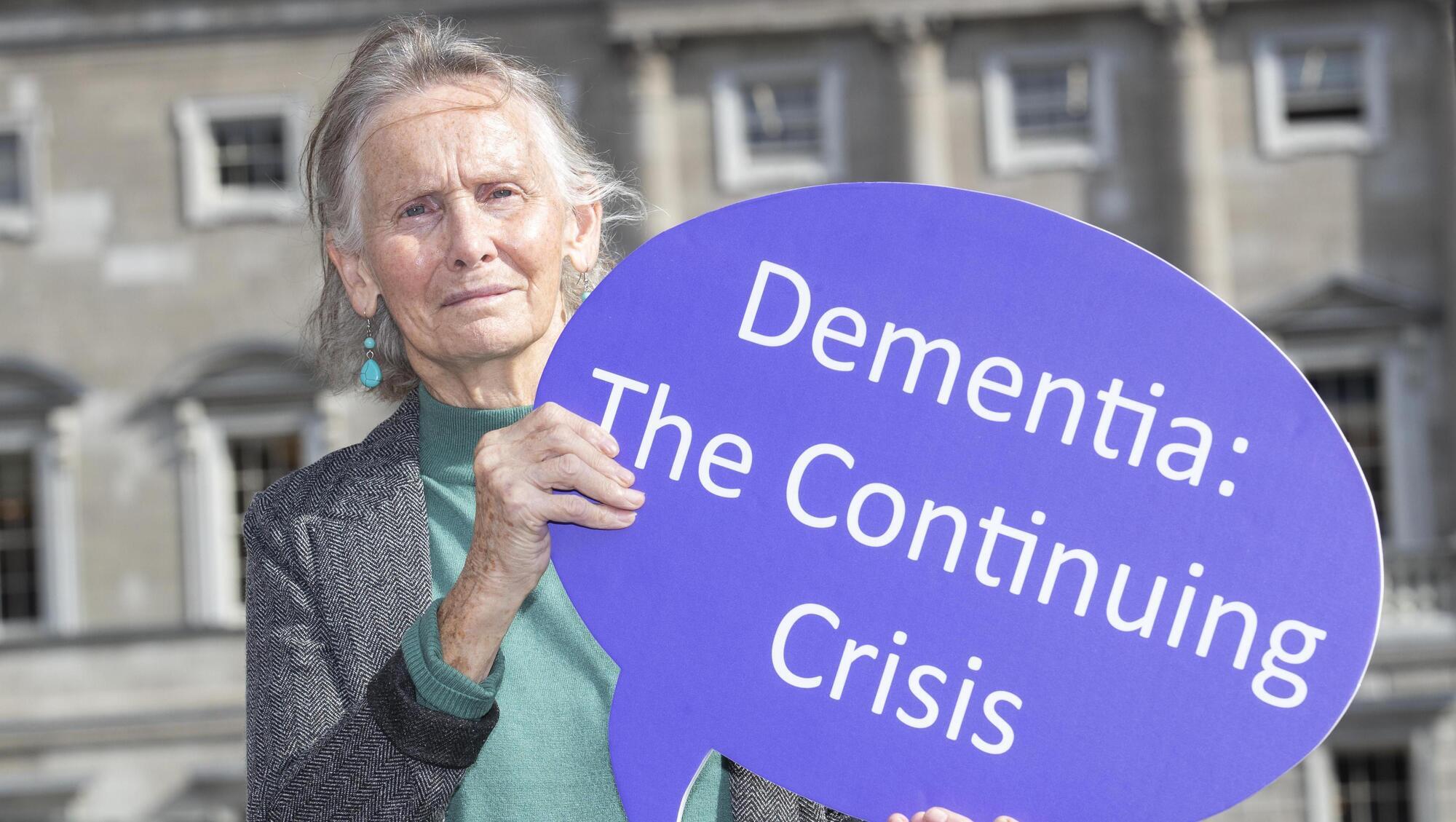
Jacinta Dixon, who lives with dementia, highlighted the crisis in dementia services as The Alzheimer Society of Ireland launched its pre-budget submission last year. Picture: Finbarr O'Rourke
It is difficult to contemplate anything other than the short term while Omicron continues to increase the toll on hospitals, health, and a wide range of public services.
The eye-catching news this week that the majority of people in Irish intensive care units are suffering from the Delta version of Covid means that we are still dealing with lagging indicators and the true impacts of the most recent variant are yet to be parsed.
Information about a significant long-term health worry for Ireland has had to compete for attention because of more pressing concerns about the pandemic and how to contain it.
Yet the figures in The Global Burden of Disease study, published by , about the increasing rates of dementia here and overseas require serious study and a review of strategic plans.
The forecast is the first to provide estimates for adults aged 40 and over across 195 countries and it makes a stunning projection that the number of adults living with dementia — a broad term covering a range of loss of cognitive functions — will treble in the next 30 years from an estimated 57m in 2019 to 153m in 2050.
Research suggests that part of the increase relates to both population growth and increasing longevity and it identifies four factors for more detailed research: Smoking, obesity, high blood sugar, and low educational standards. While improvements in education should reduce global dementia prevalence by 6.2m cases by 2050, that benefit is wiped out by higher trends in the three other health factors which will result in an additional 6.8m cases.
In 2019 more women than men suffered from dementia, and this pattern is projected to continue into 2050.
In Ireland, the 2019 median figure moves from just under 54,000 cases to a little over 142,000 patients, an increase of some 164%, higher than Greece, Italy, Finland, Germany, Sweden, and the Western Europe average. The highest level of modelling produces 170,000 cases. In the UK, the figure goes from 907,000 to 1.6m, the highest projection being 1.9m.
The Alzheimer’s Society of Ireland’s own current estimate is that there are 64,000 people with dementia in the Republic of Ireland. As two thirds of them live at home, this means that some 200,000 people are involved in providing support.
It calculates that the overall cost of care is just over €1.69bn per annum; 48% of this is attributable to family care and 43% is accounted for by residential care.
Changes to demography will have an impact on the numbers available to look after elderly relatives and we should not be surprised, either, if young people, who have shouldered much of the lockdown burden of the past two years, start to think that life owes them something more in the future than being a caregiver.
In BBC Radio 4 series , journalist Robert Colville suggests Britain is already well on its way to becoming “an elderly care system with a state attached”.
As the Alzheimer’s Society points out, dementia is progressive. There is currently no cure. It proclaims that dementia is “not simply a health issue, but a social issue that requires a community response”. This will affect everyone.
Only 9% of the current cost is met from normal health and social care services budgets. This is manifestly unsustainable for the future.
The latest figures are one more warning that we cannot kick this can down the road indefinitely.