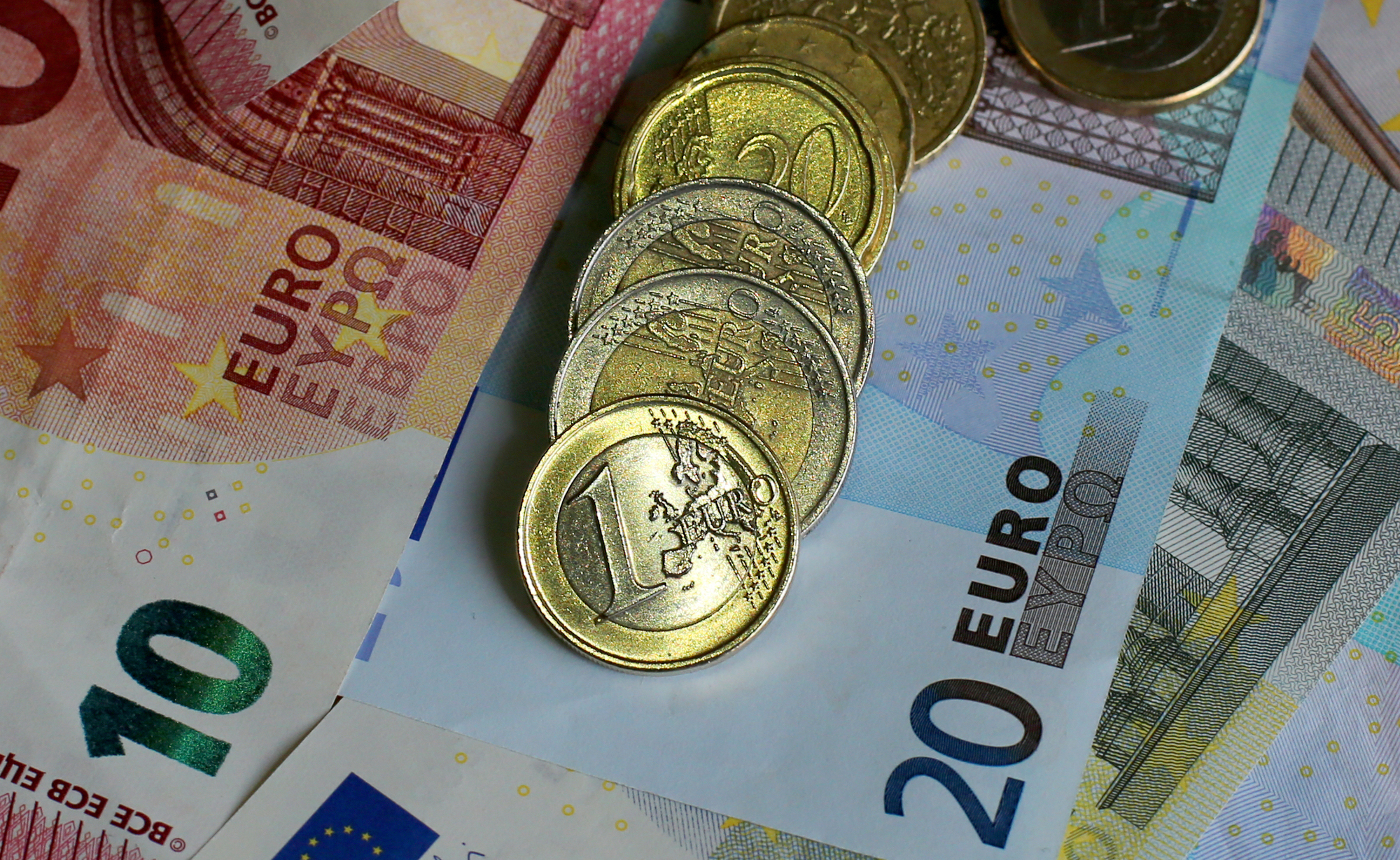
Back in this week in 2002, the Irish Examiner marked the arrival of a new currency on its front page with a typographical device no doubt considered highly innovative.
“Dawn of a new €ra” it proclaimed, making eloquent use of the new symbol positioned five keys in from the left at the top of a qwerty keyboard.
Some 300m people in 12 countries (Austria, Belgium, Finland, France, Germany, Greece, Ireland, Italy, Luxembourg, Netherlands, Spain, and Portugal) started to use the new coins and notes, in the hope that it would boost economic confidence and promote international trade and prosperity.
The then finance minister, Charlie McCreevy, one of the architects of the Celtic Tiger, told us that Ireland’s participation was a sign of the country’s economic maturity.

He said that 15 years ago, few observers could have predicted that Ireland could join a currency with 11 other nations.
“It shows great change in our fortunes . . . that we could join without the UK,” the minister added.
Mr McCreevy rejected the notion that increased political union and collective tax policies were concomitant with a shared currency.
Unconvincing argument
But that sounded a thin argument then and is even less convincing now.
As in 1979, when the Irish punt formally separated from the English pound, the primary concern of consumers about this transition was its potentially inflationary impact.
But an analysis of the intervening period from 2002 shows it ranging from 0.5% to 4.9% per annum.
Unwelcome, but hardly back-breaking compared to the tearaway years of the late 1970s to the mid-1980s.
Britain has followed a similar, although slightly lower, pattern. Germany, the overall winner of monetary union, is lower still in the inflation league and has maintained that position ever since it squeezed the spending increases associated with the 1990s reunification programme out of its financial system.
But for the countries of Europe, while inflation is to be feared, particularly by those citizens on fixed incomes, stagnation, which is what we have experienced in the past decade, is also a negative.
Turbulence
With mounting debt, shortages of skills and goods, a power crisis, green policies to fund, and potential military instability involving China and Russia, the euro, and the European Central Bank, may be about to experience a higher level of turbulence than when the new currency emerged, shiny and blinking, into the world.
Seven other countries within the EU are still obliged to join the euro (only Denmark retains an opt-out), but at a convergence time of their choosing. With all the uncertainties lining up, that time is unlikely to be 2022.

Subscribe to access all of the Irish Examiner.
Try unlimited access from only €1.50 a week
Already a subscriber? Sign in
CONNECT WITH US TODAY
Be the first to know the latest news and updates