The disturbing report by our Security Correspondent Cormac O’Keeffe on the international cartels supplying Europe’s booming cocaine trade presents a grim picture of the cross-border challenges facing enforcement agencies.
With an unholy alliance of gangs or DTOs (drug-trafficking organisations) to use a particular Line of Duty descriptor drawn from Ireland, Britain, Holland, the Balkans, and Italy collaborating to control the market, investigators face a formidable array of difficulties.
United Nations and European Union experts describe the trading levels as unprecedented and point to Italy’s Camorra as being particularly enthusiastic proponents of establishing new criminal consortia.
Cocaine use in Europe “can only be expected to grow”, says Europol and the UN, and concerted efforts are needed to rein in cocaine supply and prevent further expansion of demand.
Those efforts include the need to be able to intercept communications and produce them as evidence of wrongdoing.Â
This runs directly into data protection legislation which exists to safeguard individuals from the heavy hands of state intrusion and regimes with a taste for authoritarianism.
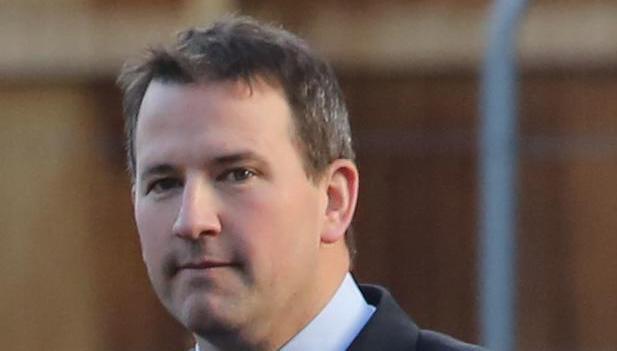
Graham Dwyer
The current appeal being fought by lawyers on behalf of Graham Dwyer, convicted in 2015 for murder, relies heavily on the admissibility or otherwise, of evidence gathered from his mobile phones, the length of time it was retained, and the use to which it was later put.
Recent European Court judgments against Britain, Belgium, and France have maintained that neither governments, nor service providers, have a broad right to retain data on citizens.
This cannot be a surprise in the Republic, because the state lost a landmark case in 2014, a year before the Dwyer trial, brought by Digital Rights Ireland. Legislation was not updated to reflect that decision.
If Ireland, and other European countries, are to have an effective defence for intercepting and holding communications, then new and specific rules will have to be introduced into an already complex area.Â
That is one of the reasons that Spain, France, and the Netherlands are supporting Ireland in the arguments it is presenting to the ECJ in Luxembourg.
A victory for Dwyer does not automatically make him free. The Irish Court of Appeal has to hear his main plea and decide whether other evidence makes his conviction safe or requires it to be set aside.
But this is not necessarily how the public will view it, or how politicians will represent it.
One of the prominent issues in Brexit concerned the remit of both the European Court of Justice and Europe-wide data protection rules. Pronouncements that appear to favour perpetrators over victims will undermine faith in EU law.
And if a ruling is applied retrospectively to other cases involving harvesting of data, then all the ingredients exist for a full-blown crisis in crime detection and the telecoms industry.
CONNECT WITH US TODAY
Be the first to know the latest news and updates