Irish Examiner view: Attitudes to ageing have to change
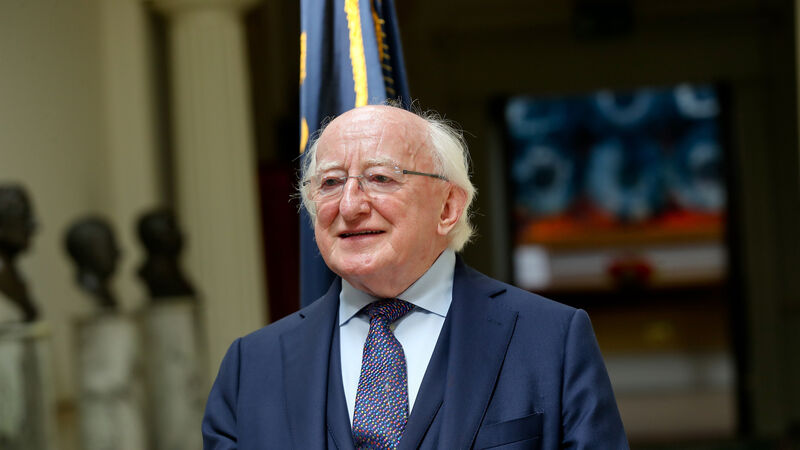
President Michael D Higgins: Still energetic and a valued contributor on the national and international stage. File picture
Club and inter-county GAA players who were part of Micheál Ó Muircheartaigh’s star-studded training sessions at University College Dublin in the 1980s reunited on Tuesday.
They had travelled from Kerry, Mayo, Monaghan, and Galway to remember old times and pay tribute to their former trainer, who was photographed among them. The legendary broadcaster is now 91 and he plays golf daily when he is in Dingle.
It seems almost invasive to mention his age, but, in a society so obsessed with numbers, it is a timely reminder that neither a person’s worth nor working life should be dictated by an arbitrary figure.
That point was illustrated clearly in a recent Workplace Relations Commission ruling that obliged a nursing home to pay €85,000 compensation to a senior staff nurse for discrimination after ‘retiring’ her at the age of 66.
At the time of her dismissal, she had an exemplary work record and was capable of doing the work required. The case has rightly been seen as a significant warning to employers on age discrimination, and a reminder that the days of forced retirement at age 65 are well and truly over.
There will be much debate in the coming days and weeks about the State pension age, particularly as the Pensions Commission has recommended delaying an increase to age 67 by seven years. Discussions will certainly focus on cost and the so-called ticking pensions timebomb. These are vital and urgent issues, but they are not the only ones.
We also need to start a conversation about our attitude to age and ageing, not least because we are all living longer. In January, Unicef estimated that Irish babies born this year will live to be 93 years old. That should be seen as an advantage rather than a liability, even if we too often consider adults over a certain age as a drain on resources.
It is not the case. When the over-70s were told to cocoon in the first lockdown, for instance, it shone a bright light on how much they contributed to society.
The public health measure — although it was well-intentioned — made active and healthy over-70s feel old and vulnerable, but it also exposed the gaping void left in society by their absence. The workers, volunteers, child-minders, and carers, who once participated so fully, were suddenly locked in at home.
It was an exceptional measure for an exceptional time. As society opens up again, it is worth thinking of our over-70s, over-80s, and, indeed, over-90s, and counting not the cost of healthcare or pensions, but the depth of their contribution.
Consider President Michael D Higgins and two of his predecessors, Mary McAleese and Mary Robinson. Between them, they are 31 years beyond the once-traditional retirement age of 65, yet they are still energetic and valued contributors on the national and international stage.
Some people may want to retire at 65 or 67, but there are many thousands more who either can’t afford to or simply don’t want to.
In any future discussions, we must consider them.


CONNECT WITH US TODAY



Be the first to know the latest news and updates