Irish Examiner View: Adopt Merkel's ‘We can do it’ spirit
Refugee crisis
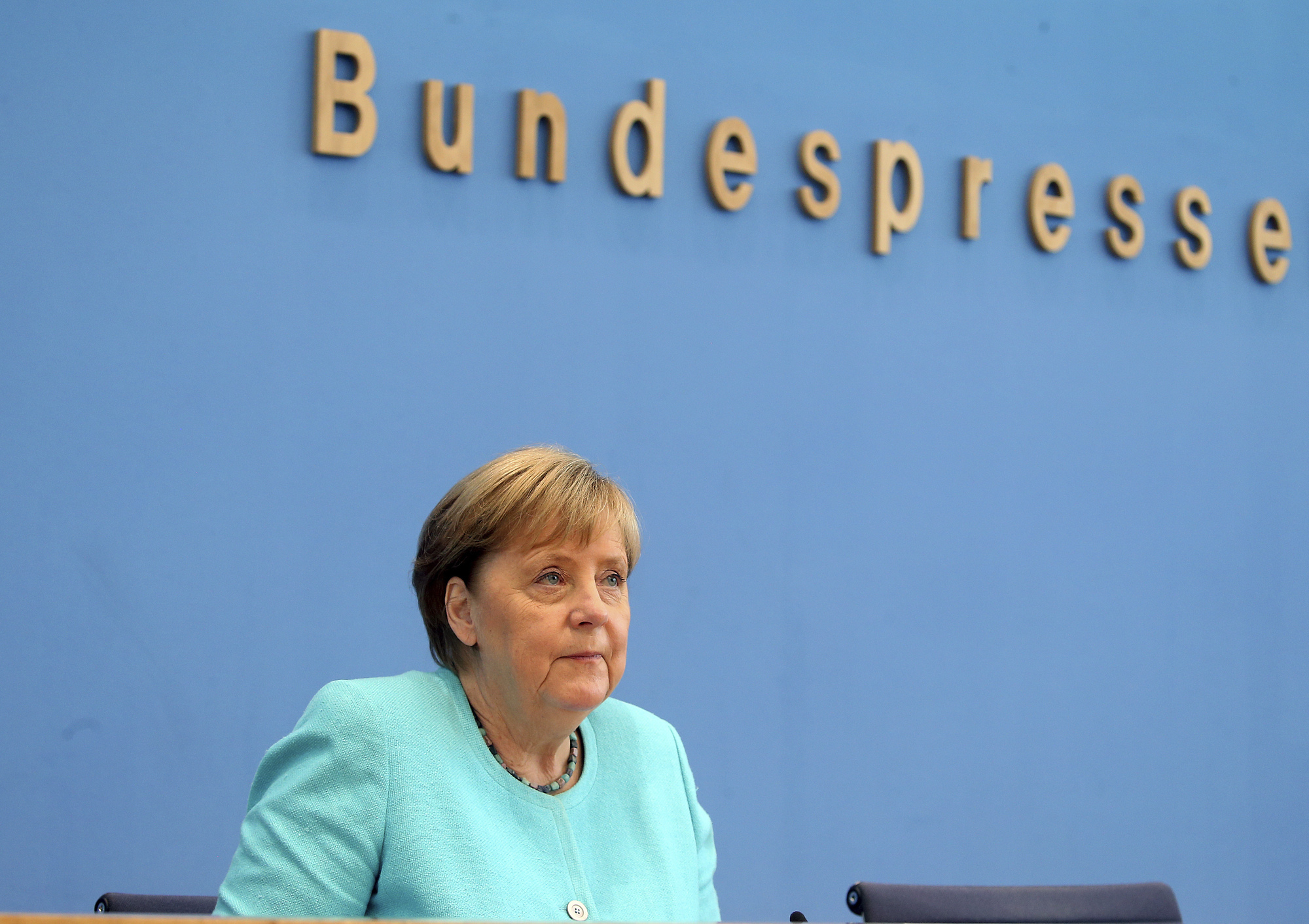
Germany opened its doors in 2015 and took in over 1m asylum-seekers from Syria, Iraq and Afghanistan as an undaunted Angela Merkel  “we can do this”. Picture: AP

Germany opened its doors in 2015 and took in over 1m asylum-seekers from Syria, Iraq and Afghanistan as an undaunted Angela Merkel  “we can do this”. Picture: AP

The news this week that children’s author Oliver Jeffers has had to delay publication of his latest book might have passed you by, but the reason for the delay should not. It was caused by the rippling after-effects of the six-day blockade of the Suez Canal by the stranded Ever Given in March.

The supersized-container effectively closed one of the world’s most important trading routes and, in the process, held up an estimated €8bn worth of goods daily. In recent months, that has led to shortages of many items and, most recently, the rescheduling of Jeffers’ book.

In the scheme of things, putting off a book launch is a relatively small inconvenience but it underlines a very important fact: our world is increasingly interconnected. As author Jeffers put it: “This world, it’s all connected.”

If that is true of goods, it is even more so of people. At times, it is easy to think that calamities happening in far-flung locations — an earthquake and tropical storm in Haiti, climate fires in Greece, or the Taliban takeover in Afghanistan — have little to do with a nation at the edge of the Europe. But, as the Syrian refugee crisis of 2015 has shown us, that ignores the reality.

That country’s civil war forced almost 7m of its citizens to flee, bringing about the largest refugee crisis in recent times. Germany, notably, opened its doors and took in over 1m asylum-seekers from Syria, Iraq and Afghanistan. “We can do this,” an undaunted Angela Merkel said at the time, as other European countries closed their borders.

This time round, it is Canada that has been quickest to respond to the deepening humanitarian crisis in Afghanistan, offering to resettle 20,000 refugees. It does not look as if Europe will follow suit. In Germany, Armin Laschet, head of the Christian Democratic Union, has said “2015 should not be repeated”, while French President Emmanuel Macron said his country would stand by those who shared their values, but France “must anticipate and protect ourselves against major irregular migratory flows”.

The Government here has committed to receiving some 300 Afghans under refugee and family visa schemes. It’s a start, but it is merely a drop in the ocean of need.

Yesterday, the EU, US and 18 other countries issued a joint statement saying they were “deeply worried about Afghan women and girls,” urging the Taliban to ensure their safety.

Fine words, but there is little of Merkel’s “we can do it” spirit in it.

And the disquieting truth is that we are going to see many more crises and many more displaced refugees as political unrest, human rights violations, conflict and, in particular, climate events force people to flee their own countries.

The global refugee problem has more than doubled in the last decade. According to the UNCHR, the UN Refugee Agency, some 86.5m people were displaced at the end of 2020, up from 36.4m in 2009. Put another way, one in every 95 people on earth has fled their home.

Who can tell when it will be our turn. We truly are all in this together.

More in this section

Revoiced

Newsletter

Had a busy week? Sign up for some of the best reads from the week gone by. Selected just for you.

Cookie Policy Privacy Policy Brand Safety FAQ Help Contact Us Terms and Conditions

© Examiner Echo Group Limited