The West’s understanding of the absolute, self-serving imperative of tolerance, of accepting difference in others, is fundamental. The idea is all-encompassing, all-empowering, and enriching on so many levels.
It is not too difficult to understand why this is so, as the last century’s catastrophes showed how intolerance plays out.
Even if we remember in a vague, increasingly imprecise way that almost 50m people died in the Second World War, we understand that zealotry — strident, xenophobic nationalism, too — all too often ends in atrocity. Recognising that should not, even for a moment, dilute the memory of the great transgenerational struggles required to reach this point.
For all too long, tolerance was not tolerated.
This week, as we mark the 23rd anniversary of the Omagh massacre, India marks the 74th anniversary of its partition, a tragedy rooted in religious differences and exacerbated by a post-colonial power vacuum. At least 200,000 lives were lost — some estimates say as many as 2m died.
That conflict endures; India and Pakistan struggle to be good neighbours. That tragedy was the setting for Salman Rushdie’s Satanic Verses, a book that meant that he lived most of his life under threats of death.
It is a chilling reminder of how extremism and cyclical history can march together that the fundamentalists behind Rushdie’s death-warrant fatwa have filled another post-colonial vacuum and taken over Afghanistan.
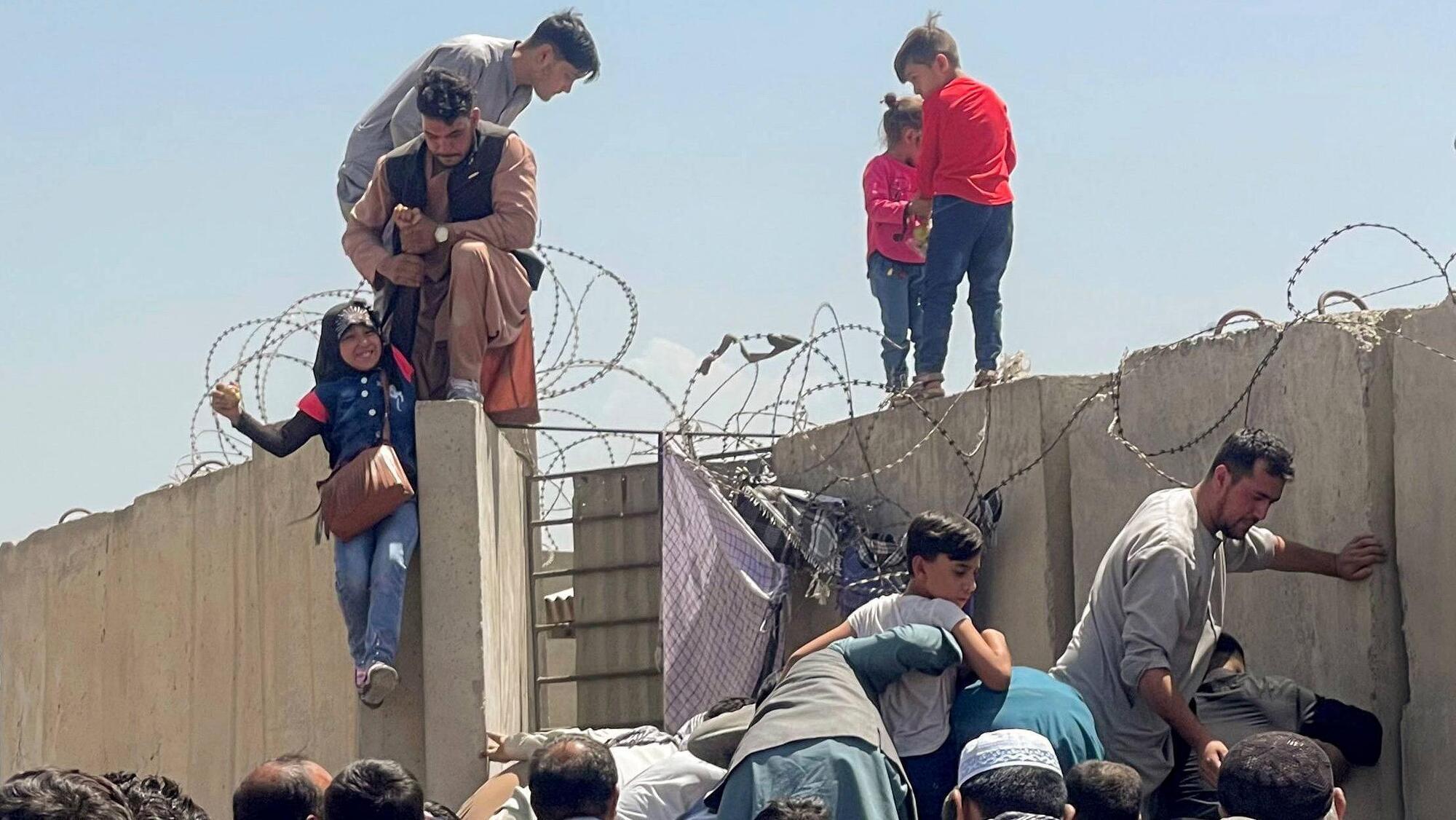
It seems impossible, even if you have Rushdie-grade imagination, to imagine the crush of terror felt by those trying to stay beyond the reach of the medieval, poisonously misogynic Taliban. Early yesterday, Reuters reported that at least five people were killed at Kabul airport, as hundreds tried to force their way onto planes fleeing the capital.
Imagine, if you dare, that you are young parents with children, trying to get on a plane going anywhere beyond the Taliban’s rule. Unfortunately, those airport deaths are unlikely to be isolated incidents. These tragedies are often, as this one is, attended by the age-old question — what can be done?
The answer is, as always, little enough of immediate impact, unless we send someone’s son or daughter to face down the Taliban in their own country. As that is more than unlikely, it may be more beneficial to ask what could have been done and if the tragedy offer lessons that might be applied elsewhere.
Poland and Hungary would reject the charge that they represent an unwelcome shift away from the European norms of tolerance — even if an older resident of Haifa, with roots in Kraków or Pécs, might recognise their
regression.
Those countries would justifiably reject comparisons with the Taliban, but measures to control the media and protections around sexuality suggest a similar affinity with intolerance and autocracy.
That these measures are hardened while these countries are in receipt of huge EU aid makes us, like it or not, complicit. This has been recognised at EU level, but what seems an inevitable intervention has been avoided.
That cannot continue if our condemnations of the Taliban are to have any authenticity.
To paraphrase: Tolerance begins at home.

Subscribe to access all of the Irish Examiner.
Try unlimited access from only €1.50 a week
Already a subscriber? Sign in
CONNECT WITH US TODAY
Be the first to know the latest news and updates