Irish Examiner view: Globalisation must be properly managed
Ireland needs to be part of a community of nations rather than an isolated, nationalist, insular entity
Irish Examiner view: Globalisation must be properly managed

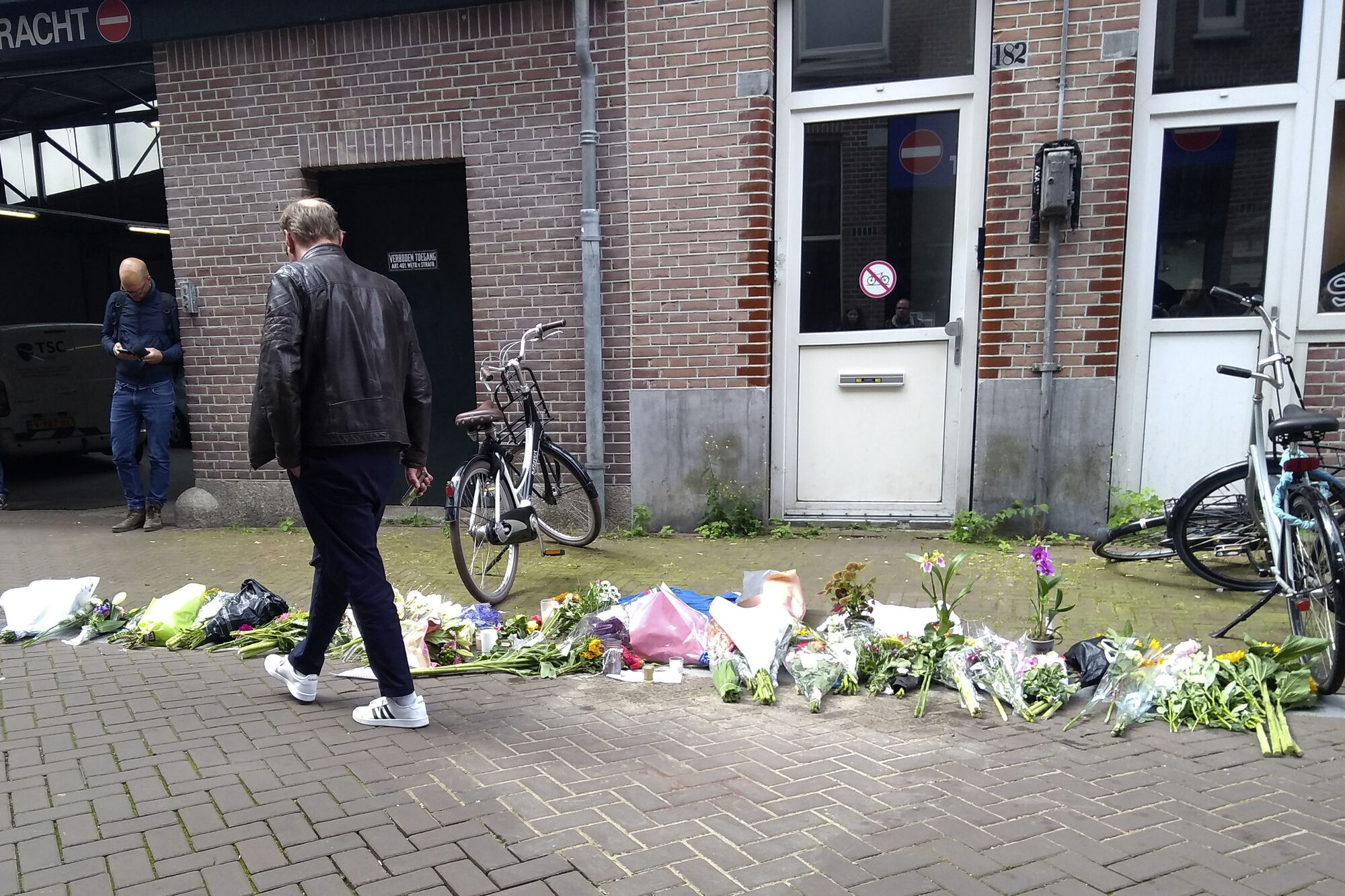
A man walks past flowers laid where journalist Peter R de Vries, who reported widely on the Dutch underworld, was shot. Picture: AP 

Globalisation has, like Rioja or Chardonnay, become almost a generic term. It is more an umbrella idea, more a catchall phrase but with an incredible, ongoing impact. 

It has lifted millions of people, especially in China, out of the grimmest poverty. At the other extreme of the pendulum’s swing, globalisation has had an impact on local environments. 

There is a direct link between the fact that many young families in Xinjiang or Heilongjiang today, unlike their parents possibly, can afford imported baby milk and the fact that, less than two years ago the EPA reported that the number of pristine rivers in Ireland has fallen from 500 to 20 in 30 years. 

That escape from poverty also drives China’s appetite for coal-burning power stations exacerbating the climate crisis.

We, all of us, have yet to match opportunity with obligation, it seems. That charge has, in recent weeks, become even sharper. Earlier this month, Ireland became, or rather confirmed our status as a tax outlier.

We are one of a tiny minority that refused to sign a preliminary corporate tax deal to close transnational loopholes that minimise tax bills for corporations and drive the widening gap between rich and poor.

Global tax deal

Paris talks among 139 countries led to a tentative agreement to tax the largest multinationals at 15%. It was endorsed by 130 countries. Ireland’s regular EU allies on tax, including Luxembourg, Malta, and even Netherlands, endorsed the deal. 

Only four EU countries — Cyprus, Hungary, Estonia, and Ireland — did not. This is not a good look. 

Finance Minister Paschal Donohoe has said he remains “committed to the process” but will “vigorously” defend Ireland’s 12.5% rate. 

Even if the proximity of Brexit Britain, and all that implies, is one of the realities behind Mr Donohoe’s argument, it is unwise as it implies that somewhere, deep in some official heart, there is an ember of the idea that we might be able to indefinitely resist American and EU pressure — globalisation as a pincer movement — on our unsustainable position. 

That position is made even more unattractive as it suggests that we do not have the confidence or ability to compete on a level playing field. We can and we must. 

We are on the wrong side of history on this and must change.

If globalisation has changed, how businesses operate it has also changed the threat of international drug cartels.

The shooting of Dutch journalist Peter R de Vries on an Amsterdam street this month, 25 years after a drugs gang murdered Veronica Guerin in Dublin, shows that.

Today, de Vries fights for his life in a country that was described, in 2019, by the Dutch police union as being on the verge of becoming a “narco-state”.

This week, at the European Parliament in Strasbourg, Dutch MEP, Sophie in ’t Veld, called for action “so that organised crime does not control the streets”. That the chief suspect behind the shooting has been linked with the Kinihan gang underlines how globalised crime is.

Globalisation has many benefits but if it is to be managed properly that means being part of a community of nations rather than an isolated, nationalist, insular entity, especially for a small open economy like this.

This, even as Global Britain pulls up the drawbridge, seems more obvious every day.

x

More in this section

Revoiced

Newsletter

Sign up to the best reads of the week from irishexaminer.com selected just for you.

Cookie Policy Privacy Policy Brand Safety FAQ Help Contact Us Terms and Conditions

© Examiner Echo Group Limited