Irish Examiner view: Delay hardly surprising, if unfortunate
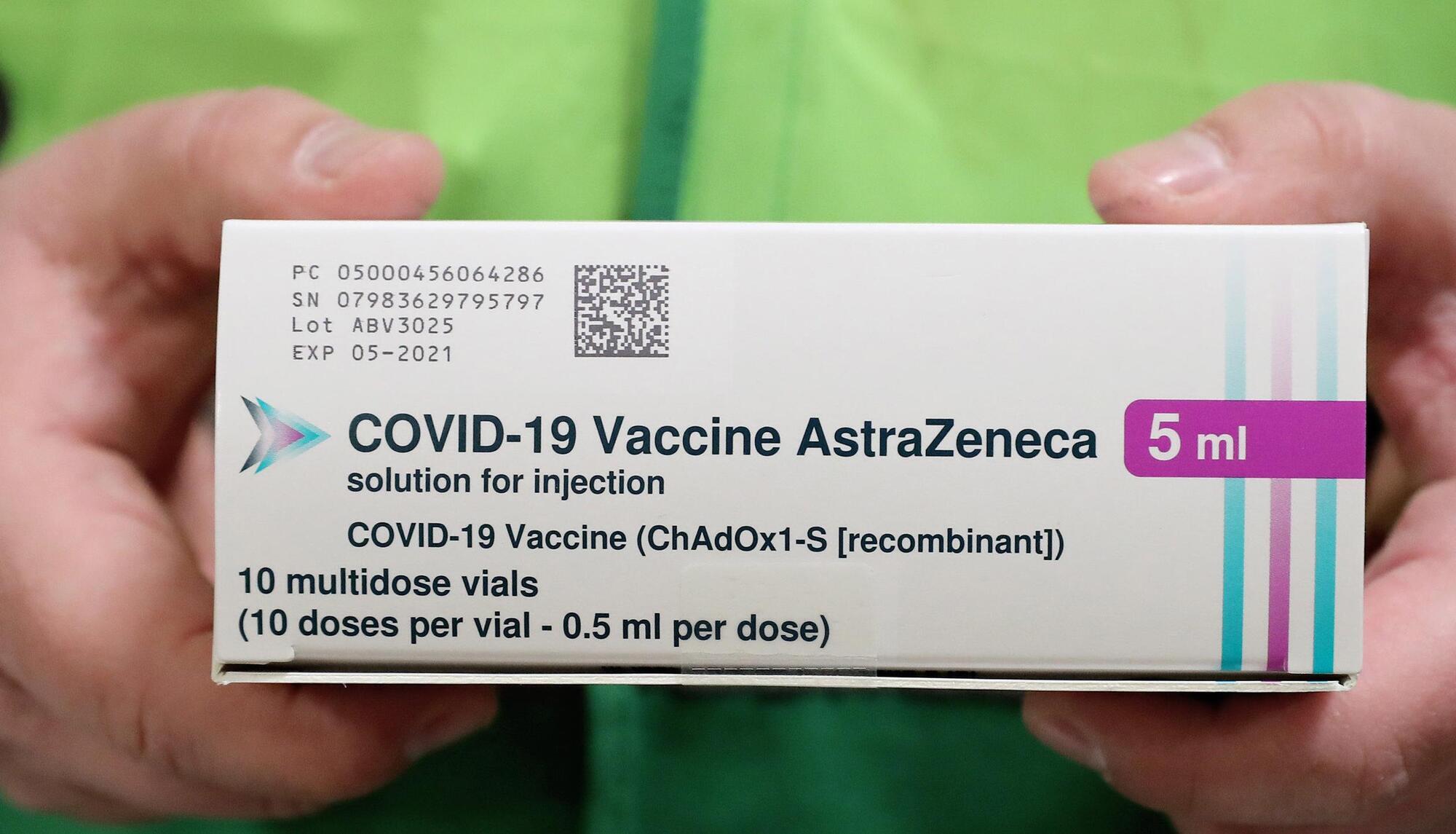
The National Immunisation Advisory Committee (NIAC) has recommended that the AstraZeneca Covid-19 vaccine be temporarily sidelined following a report from the Norwegian Medicines Agency of four new reports of serious blood clotting. Picture: Marc O'Sullivan
It may not, as the British monarchy circles the barouches after its latest intergenerational embarrassment, seem helpful to point to one of Imperial Britain's most popular poets to try to encourage Ireland's health administrators and workers struggling to deliver vaccines.
Despite the latest setback — the weekend decision to temporarily defer the administration of the AstraZeneca vaccine — Rudyard Kipling's 1909 — If you can keep your head when all about you, Are losing theirs and blaming it on you, If you can trust yourself when all men doubt you, But make allowance for their doubting too... " seems apt. And more than a tad steadying at a moment when those predisposed to criticism are re-energised. The piece's message is pertinent too for those ready to enthusiastically accept a vaccine — the great majority — when the opportunity arrives.
The National Immunisation Advisory Committee (NIAC) has recommended that the AstraZeneca Covid-19 vaccine be temporarily sidelined. Deputy chief medical officer Dr Ronan Glynn said the decision was taken “following a report from the Norwegian Medicines Agency of four new reports of serious blood clotting events... ”. Caution is the watchword but, he continued, "it has not been concluded that there is any link between ... the Covid-19 vaccine AstraZeneca and these cases. However, acting on the precautionary principle ... the NIAC has recommended the temporary deferral of the Covid-19 vaccine AstraZeneca vaccination programme in Ireland.”
What else could NIAC do? Especially as some people can, unfortunately, have adverse reactions to the most common, well-established, everyday drugs. Disappointing as that is it is important to remember that it is only one of four vaccines approved for use in the EU, there are alternatives. Equally, the WHO reports that there are 64 vaccines in clinical development and another 173 in preclinical development.
Though there are frustrating — and eye-opening — issues around the delayed and uneven distribution of vaccines this glitch can hardly come as a surprise. It would have been almost miraculous had a project on the scale of global vaccination gone without a number. How this one — there will be others — is resolved just adds another layer of complexity to today's difficulties, difficulties that will fade as the development of more than 200 alternative antidotes advances.
It is impossible, however, to understate the urgency around that work.
Just this morning most of Italy, including Rome and financial centre Milan, face renewed restrictions in an effort to stem a surge in cases. The country will also be placed under a nationwide lockdown over the Easter weekend for the second year running, Mario Draghi's government said on Friday. Italy saw infections rise 10% last week and officials have warned that the situation is deteriorating as new, highly contagious variants gain ground. Seven of the country's 20 regions are in the strictest lockdown mode meaning half the country’s regions — three were already so restricted — and most of its population will be under the most severe restrictions from today.
So, we are not alone, we are no longer one of the very few countries in the strictest lockdown mode. This has been recognised by the WHO in a plea to all countries to drop restrictions on the export of vaccines and vital components. "This is putting lives at risk around the world. We call on all countries not to stockpile supplies that are needed urgently to ramp up production of vaccines,” WHO chief Tedros Adhanom Ghebreyesus said.
This seems a contemporary version of the imperialism that Kipling and his peers celebrated. Let us hope that we do not take so long to learn the errors of our ways.