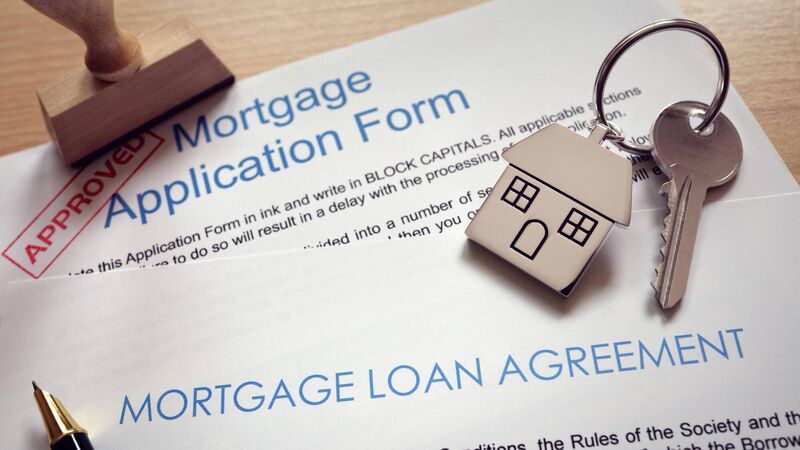
Anyone in Ireland hoping to buy a house will hardly be surprised to learn that we are back to having the most expensive new mortgage rates in the eurozone. The latest Central Bank figures reveal that rates in January were more than double the average for the rest of the currency group.
Two questions arise: The first is why this is the case, and the second is, what can be done about it?
The why is twofold: We have a banking quasi-monopoly in Ireland, with little incentive for banks to cut rates, made even worse by the departure of Ulster Bank. Furthermore, Irish banks charge higher rates because of higher capital requirements relative to their eurozone peers. This is a continuing fallout from the financial crisis of a decade ago.
Doing something about it demands drastic action because costly mortgages are linked to the housing crisis. Fixing one would help to fix the other. The Government needs to put pressure on the European regulators to apply looser capital rules for Irish banks. It also needs to consider setting up a public bank or bringing one into public ownership, one that would operate for the public good rather than private profit.
There is already a highly successful public development bank in Germany called KfW. There is also one in North Dakota in the US, with plans for three more in Washington, New York, and California, and many more likely to follow.
Why not an Irish equivalent?

Subscribe to access all of the Irish Examiner.
Try unlimited access from only €1.50 a week
Already a subscriber? Sign in
CONNECT WITH US TODAY
Be the first to know the latest news and updates