Irish Examiner view: Keeping calm the only way to carry on
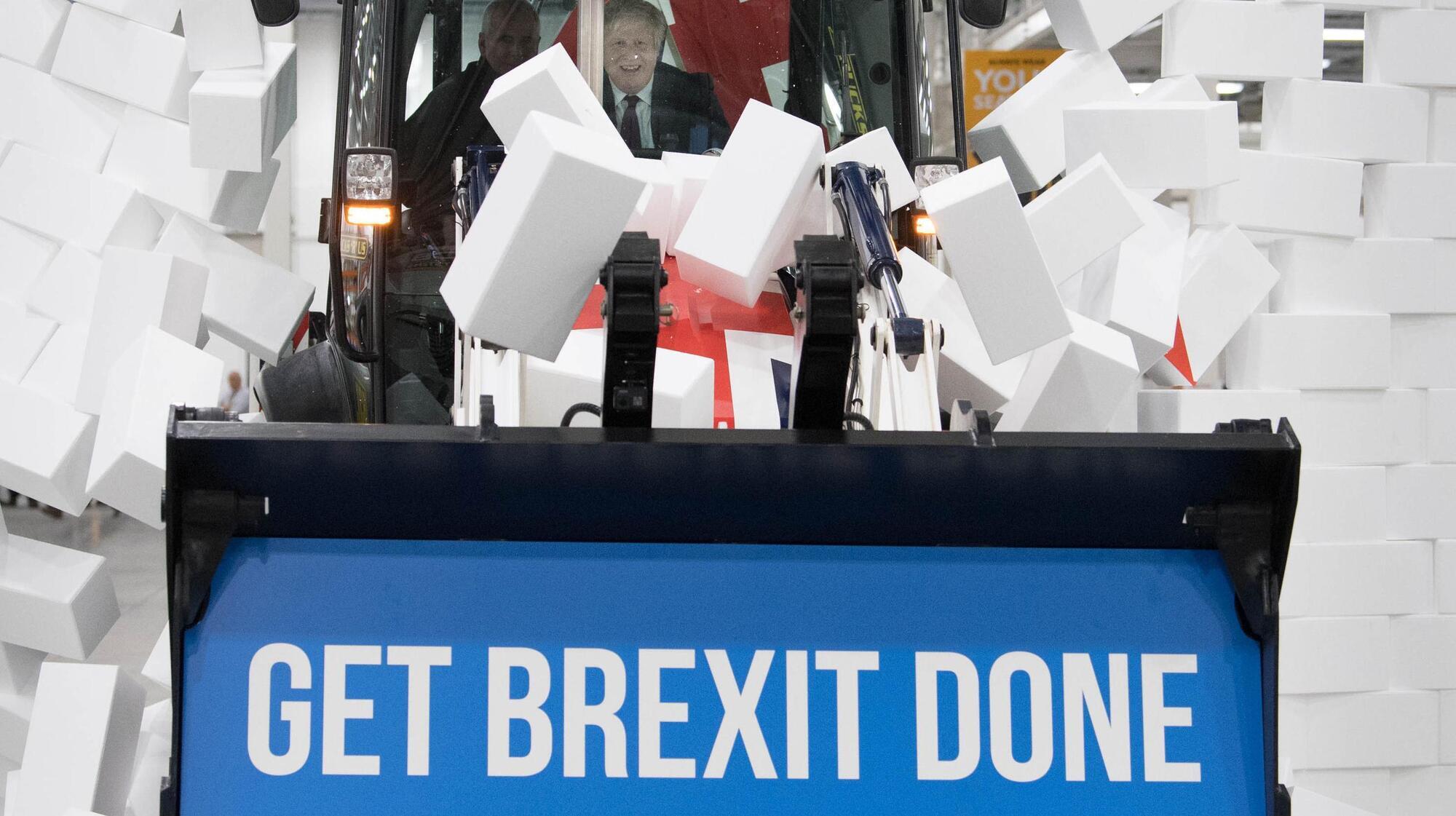
British Prime Minister Boris Johnson sits in a cab of a JCB during a visit to its cab manufacturing centre in Uttoxeter in December 2019.
One of the abiding images of the spin and the posturing around Brexit is the shameless publicity stunt by British prime minister Boris Johnson last December when he ploughed through a wall with a JCB digger that had ‘Get Brexit Done’ emblazoned on its bucket.
With a Brexit deal now done, there is a collective sense of relief. A deal is certainly better than no deal but while the worst might have been averted, the destruction — so presciently represented by Johnson’s wall-knocking antics — has not.
Among the very first casualties was the Erasmus+ scheme. The UK government decided, for cost reasons apparently, to end its involvement in an exchange scheme designed to broaden horizons, increase skills and help students develop personally, professionally and academically.
The UK plans to introduce its own international student-exchange scheme, yet for the relatively small price-tag of €2m, the Irish Government has stepped in to fund future third-level students in Northern Ireland who want to take part in the existing scheme.
That is the kind of conciliatory and far-sighted action that will help Ireland navigate a path through the many Brexit-induced obstacles ahead. As Taoiseach Micheál Martin has rightly said, a deal is better than no deal but — and this can’t be repeated often enough — “there is no such thing as a ‘good Brexit’ for Ireland”.
The signing of a deal after tortuous negotiations means that we have been saved tariffs and quotas and, vitally, the return of a hard border on the island of Ireland. It will take some time, however, before we know the repercussions for jobs, imports, livelihoods, the fishing industry and the financial sector, to mention just a few of the areas affected by the UK’s decision to extricate itself from a project that it has helped build, with 27 other countries, over the last 47 years.
Exiting from a union that spans five decades will be all the more fraught given that a majority in Northern Ireland and a more significant majority in Scotland voted against it. Scotland’s First Minister Nicola Sturgeon has already stressed that Brexit was happening against the wishes of most people in Scotland and that it would “hit jobs and living standards at the worst possible time”.
It’s not idle speculation to imagine that Brexit will accelerate another vote on Scottish independence that might just pass.
Whatever happens, the dynamic between all nations in the UK will shift and reconfigure as the implications, expected and unexpected, become clearer. From the off, however, the Irish government has acted with the co-operative spirit that led to the establishment of the European project in the first instance. Reaching out to support potential Eramus+ students in Northern Ireland was an expression of the kind of solidarity that will help us find a way through these difficult days.
Boris Johnson would do well to take note of his closest neighbour’s example because it won’t be long before the rhetoric of taking back control of the UK’s destiny will be exposed as further bluster from a leader who disingenuously ignores the harsh realities of doing business in a world without the EU benefits of free movement and trade.
Read More

CONNECT WITH US TODAY



Be the first to know the latest news and updates