Irish Examiner view: Public art pushed to the margins
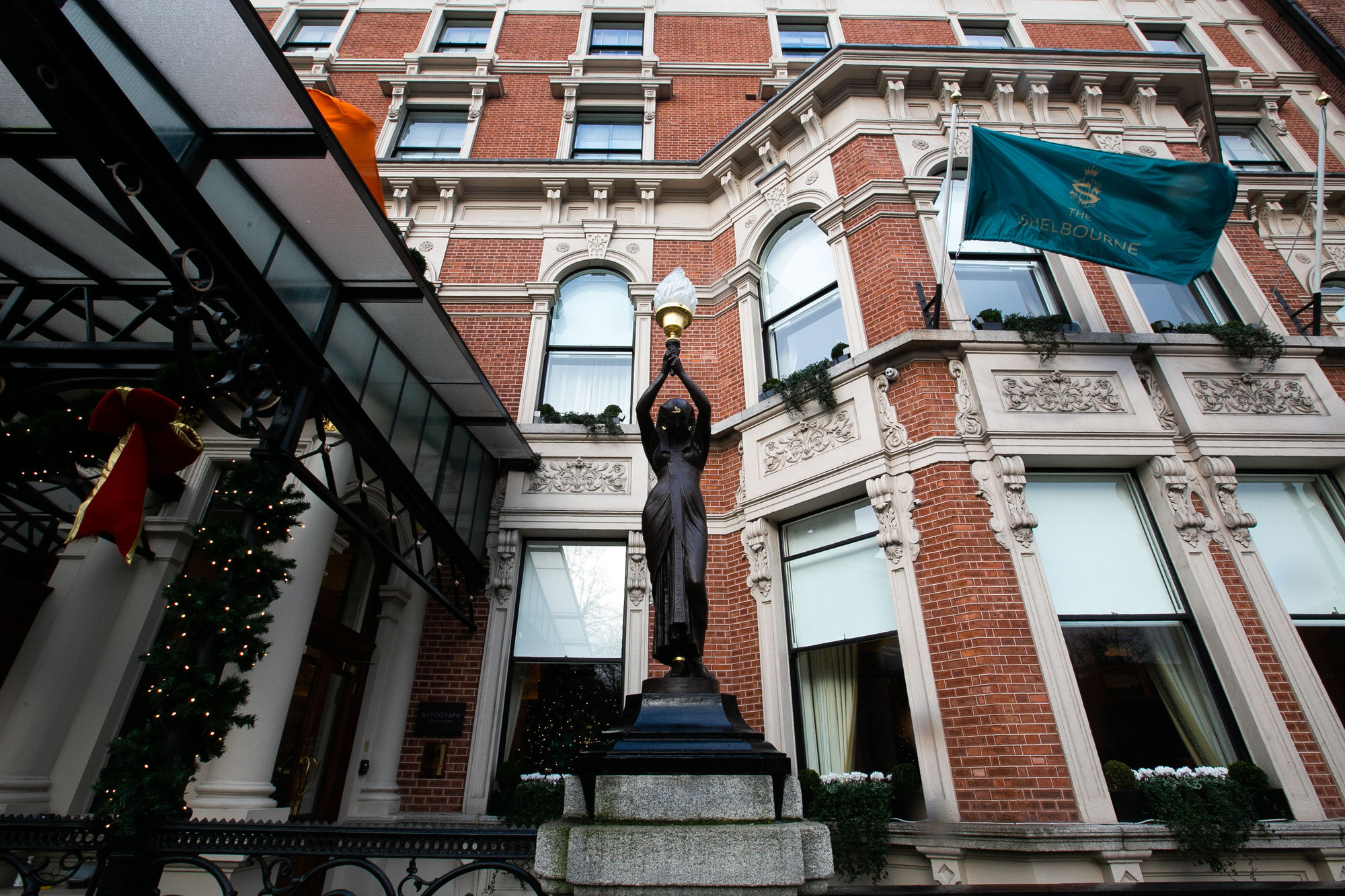
 The Shelbourne Hotel reinstated four statues removed earlier this year in a panic of political correctness spurred by the mistaken belief that two of them were images of Nubian slave women. Photo: Sam Boal/Rollingnews.ie

The Shelbourne Hotel reinstated four statues removed earlier this year in a panic of political correctness spurred by the mistaken belief that two of them were images of Nubian slave women. Photo: Sam Boal/Rollingnews.ie

As the heated debates south of America’s Mason-Dixon line show, it is very difficult and maybe sometimes undesirable to depoliticise public art. 

As one Confederate monument after another is removed from the public square, those unreconciled to today’s mores harden their position and maybe even renew a sleeping commitment to the old, unacceptable ideas celebrated through the statues. Those who think them inappropriate may also harden attitudes. 

Nevertheless, both those positions change over time, adding another layer of complexity to what or what should not be celebrated through a piece of public art.

The story of UCC’s Queen Victoria statue epitomises how inevitable it is that those views change over time. Erected in 1849, it remained prominent on the highest gable of the new Queen’s College until 1934. 

By then the college had changed its name and decided to replace Victoria with Finbarr. The statue of the queen was put in storage and later buried on the college grounds. 

It was disinterred in 1995 to mark the 150th anniversary of the Queen’s College establishment and is on display today in the staff common room.

An act in that drama played out in Dublin this week when the Shelbourne Hotel reinstated four statues removed earlier this year in a panic of political correctness spurred by the mistaken belief that two of them were images of Nubian slave women. 

Those statues, as they are less overtly political than public art commissioned to celebrate military or political figures, raise questions about how we encourage or facilitate public art, how we ringfence space — not to mention budgets — to, as civilisations have done for centuries, enrich our living and working spaces by making room for art.

We squeeze it to the very periphery of developments or a quiet corner of a public park, indulging the odd installation almost as an afterthought. That a growing proportion of our public art is now on the verge of a motorway suggests a deep disdain rather than commitment. 

To try to enjoy these works runs the risk of a car pile-up or whiplash — or both.

That artist Leanne McDonagh will light up the old R&H Hall building in Cork City’s docklands as a part of a six-installation national project, Shine Your Light: Solstice, underlines that marginalisation. 

That project may be transient and the location ideal for Ms McDonagh’s intent but it does, in the grander scheme, point to underwhelming support for public art and how it can enrich otherwise grim settings. We seem to like public art as long as we can hide it away or ignore it.

The pandemic has accelerated changes in how we work and live. It also suggests that the old model of a city or a high street is not as viable as it once was. 

Many cityscapes will be remade and reimagined. That gives us an opportunity to soften the glass canyons we call rows of office buildings with something more elevating than another car park or coffee franchise. 

Public art can, and often must be, seditious, it can force us not to forget but at this moment of great challenge its greatest quality is how it celebrates and shares beauty all the while speaking to our better nature.

If not now, when?

More in this section

Revoiced

Newsletter

Had a busy week? Sign up for some of the best reads from the week gone by. Selected just for you.

Cookie Policy Privacy Policy Brand Safety FAQ Help Contact Us Terms and Conditions

© Examiner Echo Group Limited