Irish Examiner view: A sporting legacy that inspires across time
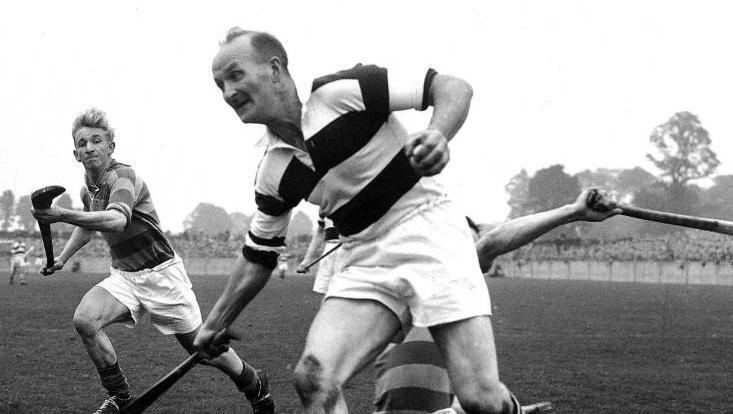
Glen Rovers' Christy Ring in action against Blackrock in the GAA Cork County hurling final at the Athletic Grounds. Picture: Irish Examiner Archives, ref no 166J
Sport marches to a drumbeat of its own; it measures or at least condenses time differently to most other pivots of life. Sport allows us, encourages us, to reach across the years to caress — again and often — the relics of greatness, and the memory of greats who once walked among us.
This luxuriating in what was once, in what was achieved, in what was won or lost, is much more than hyperbole, much more than basking in a reflected glory. It is much, much more than nostalgia — once accurately described as being dangerously close to self-pity.
Remembering greatness in any field, especially in sport, is a declaration of values. It is a declaration of the enduring belief that we can be inspired by achievement made real through almost gravity-defying exceptionalism. We remember because we need to celebrate the best in all of us, to renew the hope that we may be, again, touched by lives less ordinary.
Tomorrow marks the 42nd anniversary of Munster's 1978 victory over the All Blacks and even though a good proportion of the thousands at the game, and the thousands more who believe they were at it, have passed over to the great Thomond Park in the sky, the legacy of that achievement glows even though more than four decades have passed.
Should that legacy — absolute defiance of the expected — resonate loudly enough in Paris tomorrow night, celebrations, all too infrequent for Irish rugby in the City of Light, may ensue. In this case, remembering is more drawing from a wellspring than recalling details, scorelines or half-forgotten teamsheets.
Sometimes legacy is defined by its absence, by a comparative void.
Should it, despite Barack Obama's charisma, find a figurehead as brave and inspiring as Muhammed Ali then questions around next week's White House election would be far less disconcerting.
Ali won prominence as a beautiful heavyweight but maintains it through the force of his life-long, unflinching moral commitment to up scuttling, as Jesse Jackson did a generation earlier in Berlin, corrupt ideologies.
Because sport runs parallel to the everyday, some among us will remember that in late 1963
Éamon de Valera, just weeks after The Beatles played their only Irish concert, travelled to America for the funeral of White House incumbent President John F Kennedy.
Others, more animated by events closer to home, will remember 1963 as the year that Christy Ring's stellar hurling career with Cork, one that began in 1937 — months after Jesse Owens up scuttled Nazi ideas of a super-race — finally came to an end.
It is nearly 60 years since Ring last showed his great, almost unsurpassed skills on a hurling field, maybe even longer since he was at his Everest peak, yet those memories enrich and endure.
So much so that today, exactly 100 years after Ring's birth in Kilboy, near Cloyne in Co Cork, we publish a supplement to remember what was, by any benchmark, one of the greatest careers in the history of the GAA.
Ring's achievements, like those of Ali, Jackson and a handful of other greats of Gaelic games, withstand any scrutiny. Like them, he was a personality who was all but overtaken by the story of his achievements.
He was a modern man in a way that maybe not too many of his contemporaries were. He was secure in his self-knowledge and did not underestimate his own genius, once remarking that modesty was not to deny the ability that one knew oneself to have, but to know one's own ability while also knowing one's weaknesses.
That analysis may be a more valuable guide today than it was when he offered it so many years ago.
Leadership is, as today’s pandemic reminds us, a fickle, sometimes nebulous thing.
Its qualities can be mercurial but those who lead and inspire by example, and not just in their own field of endeavour, are far and few between.
Ringy was and is one such man.
CONNECT WITH US TODAY



Be the first to know the latest news and updates