Irish Examiner view: Promote moderation passionately to deter polarisation
Irish Examiner view: Promote moderation passionately to deter polarisation

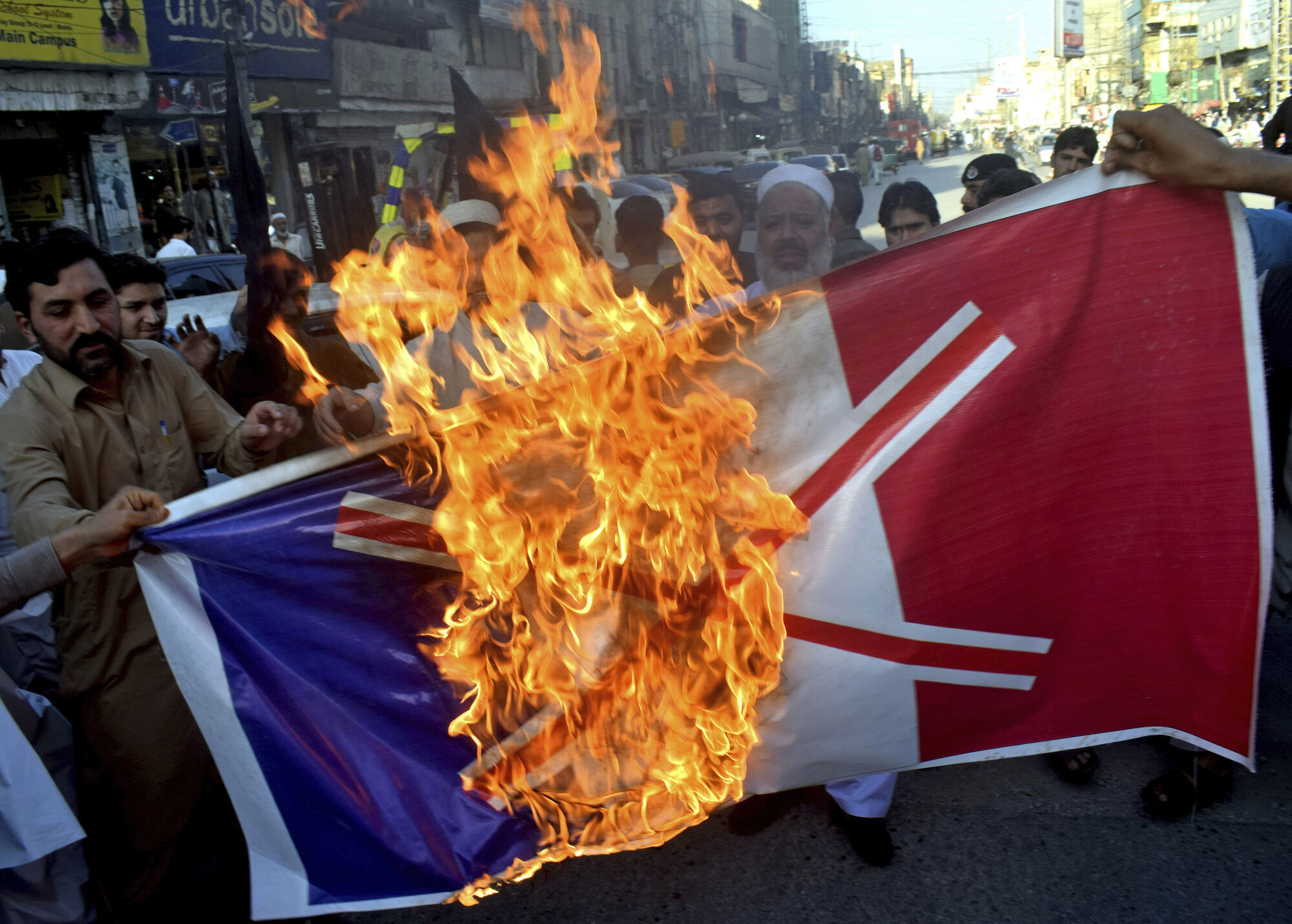
Pakistan traders burn burn a representation of the French flag during a protest against the publishing of caricatures of the Prophet Muhammad they deem blasphemous on Monday. Pic: AP/Muhammad Sajjad

Polarisation, political, material, or philosophical, is one of the defining characteristics of our time. The evidence is all around us. 

Boris Johnson might not be prime minister of a deeply-divided, imploding Britain had he been challenged by a less divisive Labour leader than Jeremy Corbyn. Equally, Micheál Martin might not be Taoiseach if Sinn Féin did not, still, provoke such a visceral reaction among the great majority of voters. 

That is just how politics play out in a democracy but it still represents polarisation.

If our world was less polarised, more on an even keel, France might not have recalled its ambassador to Turkey after President Recep Erdoğan questioned French President Emmanuel Macron’s mental health over his attitude toward Islam and Muslims. Macron criticised radical Muslims in France who practice what he described as “Islamist separatism”. 

That Macron’s view echoes the position of the great majority of tolerant, and inclusive Europeans shows the depth and challenge of that divide. That mutual incomprehension was behind the beheading of Paris teacher Samuel Paty by a radical Muslin aged just 18 and more than 200 other murders in France in recent years. Those killings, unsurprisingly, burn rather than build bridges.

That mutual incomprehension is behind the rolling back of Enlightenment values in Poland and Hungary. Nativist efforts to control immigration from Islamic societies were the spark that fuelled Viktor Orbán’s “illiberal liberalism”, a credo extended to re-energise homophobia and anti-semitism. That change, and the repeal of abortion laws, challenge the solidarity of the EU in a profound way.

America’s solidarity, such as that has become, will be challenged in an epoch-defining way next month. One important skirmish in that culture war concluded when, eight days before the presidential election, the US Senate confirmed Amy Coney Barrett to the supreme court. 

This highly-partisan appointment secures the conservatives’ influence in the court for years to come in a way that seems an affront to America’s increasingly diverse society. It may prove a Pyrrhic victory as the audacity and hypocrisy of the appointment may ensure that the already high voter turnout continues to ensure a return to a less confrontational political culture.

Unfortunately, as Britain’s Covid-19 death toll passes 61,000 — ours is still under 1,900 — and as the German government warns that new cases may reach 20,000 a day this week, that polarisation is seen in how some of the scientifically-proven measures aimed at containing the virus, especially mask-wearing, are challenged. In this instance, as on climate change, polarisation may indeed be a life-or-death matter.

A positive view of polarisation might be that the phenomenon is human nature, warning us that unless we find a way to accommodate our differences then we are heading towards a predictable conclusion. Despite that, it seems time we recognised that polarisation is an enemy within and that those unable to moderate their behaviour, if not their views, threaten the common purpose all good societies are built on. 

It’s time we became passionate about moderation.

x

More in this section

Revoiced

Newsletter

Sign up to the best reads of the week from irishexaminer.com selected just for you.

Cookie Policy Privacy Policy Brand Safety FAQ Help Contact Us Terms and Conditions

© Examiner Echo Group Limited