Israel election - Fateful times loom for Netanyahu
Last Sunday was International Democracy Day, observed annually since 2007 by the UN as a day to value and promote democracy around the world.
This year it happened to occur two days before a general election in Israel, providing a focus for political parties and their candidates to promote a renewal of democratic values in that country.
Unlike other Middle East states, Israel is a multiparty democracy with strong and independent institutions that guarantee political rights and civil liberties for most â but not all â of the population.
Indeed, it is less than a year since the adoption of a new law with constitutional weight, adopted by the Knesset (parliament), declaring that the right to exercise self-determination in the state of Israel belongs uniquely to the Jewish people.
The Knesset also downgraded Arabic from an official language to a language with âspecial statusâ.
At the same time, growing Israeli settlements along the West Bank have been a source of huge tension with Palestinians.
The EU continues to maintain that all settlements in the occupied Palestinian territory, including East Jerusalem, are a serious breach of international law.
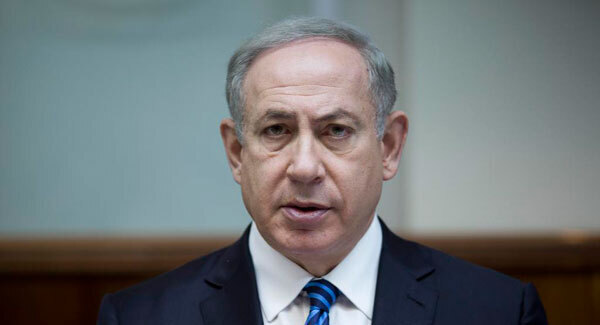
At the vanguard of that push for Jewish dominance over all of Israel and the occupied territories lies Benjamin Netanyahu, a towering political figure and the countryâs longest serving prime minister who has dominated the political landscape for more than a decade.
On Monday, he promised to annex Hebron â a mostly Palestinian city about 24km from Jerusalem â and the adjacent West Bank settlement of Kiryat Arba.
This was barely 24 hours before Israelis went to the polls in national elections for the second time this year.
It was a last, desperate effort, to shore up support for himself and his party. If the exit polls are accurate, he appears to have failed, suffering what could turn out to be the biggest defeat of his political career.
Up to now, Netanyahu has been the Houdini of Israeli politics, surviving one political and legal challenge after another but he may have pulled his last rabbit out of the hat. He now faces a dual challenge, one political and one legal.
The results of Israelâs election and Netanyahuâs legal fate are intertwined. He faces tough negotiations in the months ahead if he has any hope of forming a coalition government but an equally fateful date is looming for the Israeli leader facing possible criminal charges.
Despite relentless attempts by his legal team to postpone, Netanyahuâs final pre-indictment hearing in three corruption cases he is facing is scheduled to begin on October 2.
As Zehava Galon, former chairwoman of Israelâs left-wing Meretz party, put it: âNetanyahu didnât invent lying and slander, but he honed them for a defamation campaign of his own. He didnât invent corruption, but has (allegedly) made it his lifeâs work.â
The cauldron of Israeli politics makes events here and even in the UK seem tame by comparison.
As Spock might have said to his boss Captain Kirk on the starship Enterprise: âThis is democracy, Jim, but not as we know it.â