COnstructive criticism: Capital gains at expense of the regions
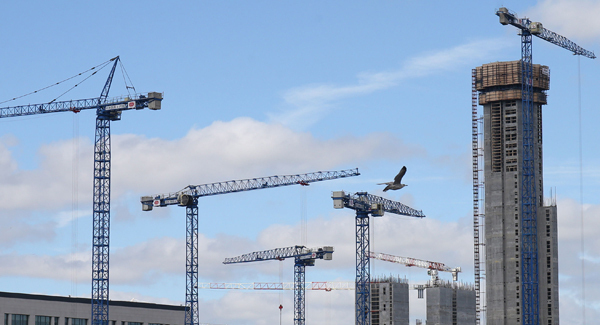
A RECENT crane count conducted by the Construction Industry Federation showed that Cork had 12 cranes compared to Dublin’s 123. That may seem to be a crude measure of economic activity, yet it demonstrates the regional divide.
Of particular concern is Government inertia when it comes to assisting economic development outside the greater Dublin area. The region with the most economic promise outside of the capital is continuously neglected, with Cork, Limerick and Waterford having seen several essential road projects delayed over the past 18 months, among them the Dunkettle interchange on the eastern approach to Cork city.
Despite the promises contained in the Government's strategy Project Ireland 2040, a €116 billion plan which aims to guide Ireland's development over the next two decades, infrastructure tends to be concentrated on the Dublin area.
Private investment in Cork and the wider region is not being matched by public infrastructure. The CIF estimates that Cork, Limerick and Galway must grow at double the rate of Dublin to ensure that 75% of the expected population growth of one million live and work outside the capital city by 2040. As things stand, that is unlikely to happen as the Government is not doing enough to ensure that there are houses, schools, and roads to support this population growth. Indeed, the ability of the current administration to deliver big projects is already questionable, considering the spiralling costs of two of the biggest infrastructural projects in the history of the State, the National Children’s Hospital and the National Broadband Plan.
The disparity between construction in Dublin and Ireland’s regional counties is notable, with 48% of Irish construction workers often travelling for jobs in Dublin, despite 76% being located outside the capital. This makes no sense, either regionally or nationally. Dublin has a housing crisis that could be partly alleviated by making the regions more attractive for living and working.
Yet, as CIF Regional Director, Conor O’Connell put it at the organisation's Southern Construction Summit, “it is a monumental failure that the region with the most economic promise outside of Dublin is continuously neglected.” The CIF summit is an attempt to galvanise stakeholders in the region to make a compelling case for increased investment. Among those stakeholders are two of the most powerful politicians in the country – Tánaiste Simon Coveney and Fianna Fáil leader Micheál Martin.
Although not entirely silent on the need for investment outside of Dublin, they have not been vociferous enough, either. It is true that politicians often find themselves labelled parochial when it comes to voicing concerns for their own backyard but parochialism is not necessarily a bad thing.
Coveney and Martin should be at the forefront of galvanising support among their colleagues for proper investment outside the capital. For that, they must persuade themselves, as well as others, that the interests of the regions are also national interests. A bloated Dublin with extortionate living costs is not in the national interest. A balanced economy is.
CONNECT WITH US TODAY



Be the first to know the latest news and updates