Deal shows change is unavoidable: Mercosur plan just a symptom
In an increasingly uncertain world, the idea of permanence is ephemeral; bedrock can begin to seem like sand. Change is accelerating and to survive we must adapt.
Two long-standing certainties — death and taxes — endure but in an Irish context, one unquestionable, largely because it went unquestioned, reality seems to have been redefined in recent days.
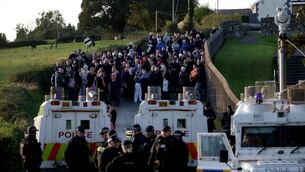
The once all-powerful farm lobby, primarily though not exclusively the Irish Farmers’ Association, has come under unprecedented pressure, so much so that it seems probable that its ambitions to block, or at least dilute, the EU-Mercosur trade deal will fail.
That prospect seems more than likely if that deal, 20 years in the making but far from finalised, is seen in an EU-wide context.
The Financial Times analysis was succinct: Combined, the EU and the South American trading bloc could create the world’s largest free trade area. A market of 770m people will have access to goods and services comprising almost “a quarter of the world’s gross domestic product”.
Those figures, that scale of commerce would generate momentum that a minor organisation in a small, peripheral EU country cannot hope to oppose successfully.
Despite that, all the usual well-choreographed formalities are being observed.
Farm leaders speak of calamity, warning that beef farming will be decimated. Agriculture Minister Michael Creed beats the we-won’t-stand-for-this drum.
Whether his opposition is sincere or a sop to a bruised constituency only he can tell but it underlines that our farm minister is usually regarded, certainly by the IFA, as the farmers’ man at cabinet rather than a representative of all citizens.
One of the consequences of such a powerful lobby is that to question their ambitions is regarded as opposing the interests of farming, even if that is as wrong as it is contrived.
As we have said many, many times the officially-designated, IFA-endorsed future for farming is built on sand. The official roadmap sets out a 10-year plan including an 85% increase in exports to €19bn and, among other targets, a 65% increase in primary production.
Those ambitions are, as EU Farm Commissioner Phil Hogan said long before the EU-Mercosur trade deal reached this point, unsustainable.
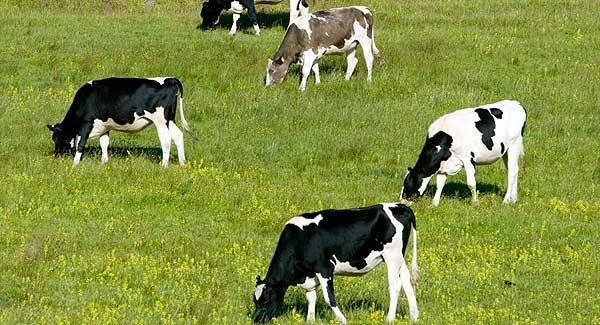
Our model of beef production is not sustainable, certainly not if subsidies end and real environmental constraints are imposed. A Teagasc National Farm Survey reports that, on average, beef farmers earn just €12,529.
This is a third of the average industrial wage and a fraction of average dairy incomes, which Teagasc put at €86,000.
The South American deal may bring these issues to a head and it is hard to see that as a bad thing — most of all for farmers. Beef farming has not rewarded farmers properly for many years so the crisis is not cyclical.
The new five-year CAP budget might be the conduit to, finally, face these issues.
Higher payments for lower stock levels, improved biodiversity, and water management might offer one solution. However, one thing is certain: Farmers, and especially their lobbyists, need to change.
The challenges raised by the Mercosur plan are symptoms of a world that will change whether we like it or not and it’s always better to manage change than to deny it.