Next European Union leaders face online security battle
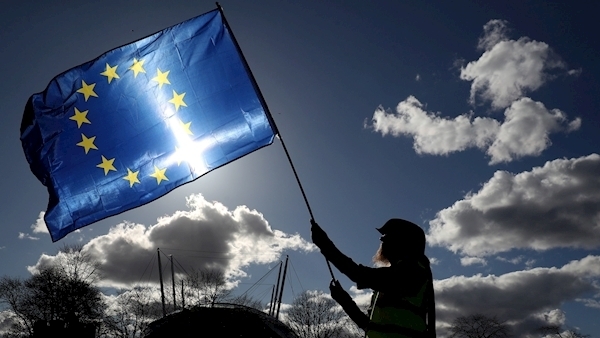
It was always likely that EU leaders would struggle to agree on who might be the next European Commission president. “Electing a pope is easier,” said Taoiseach Leo Varadkar, after an end-of-month summit was fixed to try to identify a candidate. That haggling stands in contrast to the seemingly unstoppable march of Boris Johnson to Downing Street.
Mr Johnson and the incoming EU leadership are likely to get to know each other well, maybe too well, even if European leaders’ patience on Brexit is exhausted. It is hard to imagine that Mr Johnson will assuage that discontent, as the EU has many more-pressing issues.
Climate chaos is foremost, but free-for-all social media, and the destructive opportunities offered by the new mobile communications, 5G, are far more significant than Brexit. The Chinese company Huawei epitomises those concerns. It is one of our world’s technology giants and is deeply embedded in communications networks.
The company (its turnover hit €100bn in 2018) will dominate 5G infrastructure. America — after Australia identified the scale of the 5G threat — leads the campaign against Huawei, which is seen as one of Beijing’s many Trojan horses in its determination to expand its global influence.
After the Australian government effectively banned Huawei, other countries, including the US, moved to restrict Huawei. Vardakar has said Ireland is keeping an “open mind” on 5G, but it is unimaginable we would not support the EU consensus — especially as the recent power cuts in Argentina, which hit nearly 50m people, gave a glimpse of what happens when infrastructure fails.
If the transnational 5G challenge is the intrusion-versus-society issue on its grandest scale, this week gave a glimpse of a more intimate, but as perplexing, example of how discretion and privacy are ideals served more in the breach than in the observance. On Thursday, Facebook and Twitter gave evidence in the Central Criminal Court that adds to concerns about how content is published online.
The two companies faced charges, after users of both platforms identified the boys convicted of Ana Kriegel’s murder, despite a court order prohibiting their naming. An innocent boy was also wrongfully identified on social media.
A temporary injunction was issued against Facebook and Twitter on Wednesday, restraining them from “any repeat or further publication” that would identify the boys.
However, after hearing that neither company can prevent contempt of court from occurring on their platforms, Mr Justice White accepted that the social media giants must only remove identifying material once they become aware of it, or once it is brought to their attention.
This is an admission that the idea of a content gatekeeper is meaningless, because that control can only be exercised after breach of regulations has occurred. This is the polar opposite of the disciplines applied to traditional media platforms and underlines how radically, and probably dangerously, our world has changed.
Is it any wonder EU leaders are so exasperated with the distractions forced on them by the impossible-to-satisfy demands of Boris Brexiteers?
CONNECT WITH US TODAY



Be the first to know the latest news and updates