Urgent: Unclog our roads - City streets gridlocked
Urban planners and council leaders in modern cities with historic centres are often criticised fairly for unwise decisions when they act and complacency or sheer incompetence when they don’t.
They deserve, however, a measure of sympathy when they grapple with roads and traffic.
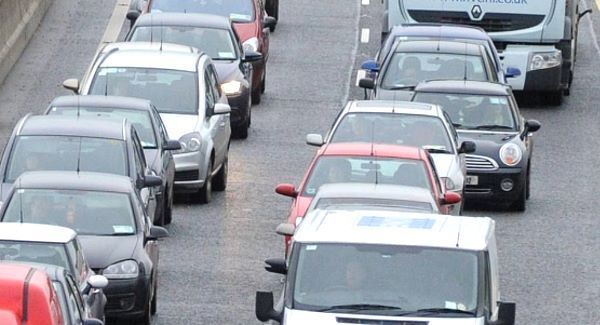
Eco-warriors cannot conceal their delight and retailers their fury when a traffic ban such as that on St Patrick’s St is imposed in an attempt to improve busy times. Commuting drivers fume in their (often singly-occupied) cars stuck in gridlocked traffic.
Just one vehicle breaking down at the wrong place at the wrong time can bring a city centre and its nearby suburbs to a halt.
Driverless cars won’t solve the problem, because they won’t be immune from breakdowns.
A glitch in or near the Jack Lynch Tunnel is headline news that fuels demands, not for new ideas for curbing traffic volumes in ways that will not restrict economic growth, but for a second tunnel.
All of this highlights the vulnerability of our road networks, which will be tested to even greater degrees as the population of Cork city and county rises, as forecast from 542,000 to 846,000 by 2050.
Presented with that forecast, the natural response of some politicians, eagerly supported by the civil engineering industry, is to call for significant infrastructure investment, by which they mean schools, hospitals, sewers, power grids... and, of course, roads — because more people means more cars.
This is the thinking that sustains our car culture, and shifting it is well beyond the pay grade of city and regional planners who can do little more than tinker at the edges to ameliorate everyday congestion problems in their localities.
There is no hard evidence that London’s congestion charge has decongested the city; as a tax, it’s been a feeble deterrent.
The relatively short journey by bus from Paddington on the west side of the central zone to Liverpool Street on the east can take one hour. Cars that have been kept out by the tax have been replaced by taxis.
Car clubs and incentive schemes to encourage car sharing have not been noticeably successful.
Little, if anything, has been done here to heed the words of wisdom heard from the AA last year.
“Traffic stats are merely a barometer of the recovery that’s happened in the last couple of years,” said Conor Faughnan, the organisation’s director of consumer affairs.
It is very evident in Galway and Cork. Cork is in the exact same situation as every other city in Ireland. You are heading for serious problems. Traffic volumes will inhibit economic growth and act as a choke and restrictor on it.
The AA tabled the key question: Why are people using their cars? Its answer was that there are insufficient public transport alternatives. Dublin, it said, should have been building 12 tram lines, Cork seven, and Galway four.
The choice is simply between accepting that road congestion and pollution is an aggravation with which we are doomed to live and sustained investment in public transport alternatives.
More roads — and road widening — has been shown to be a dead-end. There’s more than enough evidence to stand up the assertion that new roads induce new traffic.

CONNECT WITH US TODAY



Be the first to know the latest news and updates