No country for young mothers - Irish among older first-time parents
Relentless human population growth — most other species are in accelerating retreat — and ever-more-demanding material appetites are the primary drivers of climate change. In 1960, there were just over 3bn of us. Today, there are nearly 8bn citizens dependent on this finite world’s resources. Scientists have warned that unless we better manage population growth — as in curtail — it will be all but impossible to avert escalating climate catastrophe.
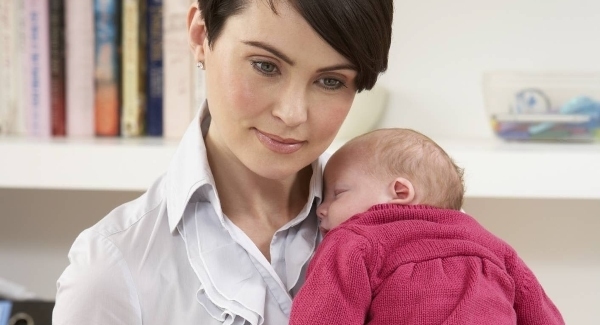
At first, it may seem a leap to link that mutually assured destruction with some of the detail in today’s United Nations Population Fund (UNFPA) report, but maybe it’s not. That report finds that Irish women are choosing to become mothers later in life than their peers in all but nine countries. Irish women, on average, have their first child aged 31.4, making them the fourth-oldest first-time parents in Europe after Spain, Switzerland, Italy, and Luxembourg. In the wider world, only women in Libya, Korea, Djibouti, Saudi Arabia, and Hong Kong leave motherhood until later in life. Looming climate change may not be a direct influence on this deferral, but the behaviours leading to it are.
The UN offers suggestions that might help us understand this situation, but they are not that hard to identify. The report argues that the capacity of women to choose the number of children they might have, and when they might have them, is more limited than might be expected in many wealthy countries. It is no different here.
The need to study into at least your early 20s to secure the kind of job that might offer even a remote prospect of buying a home a few years down the road means that parenthood is an ambition lurking beyond a distant horizon for most young Irish people. The relentless advance of AI in the workplace will harden that reality — as has the increasingly pervasive, contract-based employment faced by many young and not-so-young people. Working conditions — think of the Irish doctors fleeing to Australia as soon as they qualify — can have a negative influence in planning a family, too.
Despite that, the housing crisis probably has more influence on this dynamic than any other factor. Why would a responsible couple choose to become parents if they cannot secure a deposit, a mortgage, or anything other than the soul-destroying hamster wheel of implausibly expensive, rented accommodation? Many people bravely accept that challenge, but it is obvious that many more choose not to.
That reluctance to become a parent is sharpened by a weak legislative commitment to supporting parental leave structures that support families in a way that does not look like well-organised babysitting. Once Irish parents cope with that reality, they are confronted with eyewatering childcare costs. This has long been an issue, but no-one, least of all the responsible government minister, has been able to explain why Irish childcare costs are so out of line with those across Europe. There are many, many wonderful and enviable things about rearing a family in Ireland, but we would be foolish not to at least consider this wake-up call from the UN — one that shows how quickly, and why, fundamentals change.

CONNECT WITH US TODAY



Be the first to know the latest news and updates