Democracy and how to trash it - Madrid’s hunt for outlaws
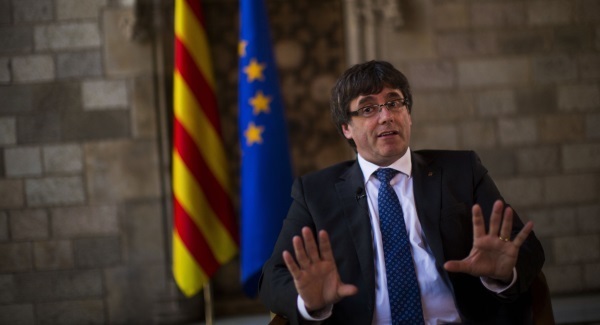
THE determination of Spain’s government to get all of its Catalan dissidents back to Madrid to face trial, along with 20 others awaiting hearings and sentences, for the monstrous crime of being, well, dissidents, shows no signs of losing impetus.
Catalonia’s former president, Carles Puigdemont, is in a German prison while courts there decide how to respond to a European arrest warrant (EAW) extradition request from Spain. One of his comrades has been in the dock in Edinburgh.
A judge there has to assess an 18-page warrant accusing Clara Ponsatí — briefly an education minister in Catalonia’s regional administration — of sedition, misusing public funds, and inciting violence against the security forces that attempted to close polling stations in an independence referendum judged to be illegal by Spain’s constitutional court.
It is likely that Ms Ponsatí, who has been released on bail, will fare better in the short-term than Mr Puigdemont — and not because the governing nationalist party in Scotland’s devolved parliament has an understandably fraternal feeling for the Catalan secessionists; Scottish courts — as here — are independent of government. What should work in her favour is that the statute books of Scotland and England and Wales recognise no such crime as sedition or rebellion, while one of the less-objectionable aspects of the by-no-measure flawless EAW system is that courts looking at extradition requests must decide whether or not the alleged criminal offence has an equivalent in the jurisdiction — in this case, Scotland — in which the accused was arrested.
The other charges against her would seem to be the work of an extant unit of the Spanish Inquisition. Puigdemont might have a tougher time; lawyers for Spain’s government will argue that Germany’s criminal code describes an offence — high treason — that is akin to rebellion.
Two other fugitive Catalonian politicians can probably anticipate undisturbed exiles in Switzerland, where the country’s justice department government has got to the heart of the matter: It says the charges against them are, “in all likelihood”, political and, therefore, extradition requests would be turned down. Swiss law can be criticised for
protecting tax-dodgers and money-launderers, but it also forbids extradition, if authorities judge a case to be “predominantly political”, which all of these are.
What part of the word democracy — a revered gift from Greece — is Spain’s central government unable to understand? The same question might be asked of the European Commission’s president, Jean-Claude Juncker. He congratulated Vladimir Putin for winning an election the Russian president couldn’t lose, given that his only serious rival had been barred from standing, but has not yet found the time to talk to the Spanish government about Articles Two and Seven of the 2007 Lisbon Treaty on the European Union.
There is something in those paragraphs, isn’t there, about the values, common to member states, on which the union was founded? Something about democracy?

CONNECT WITH US TODAY



Be the first to know the latest news and updates