We need to recognise that sexual corruption exists — and act to stop it
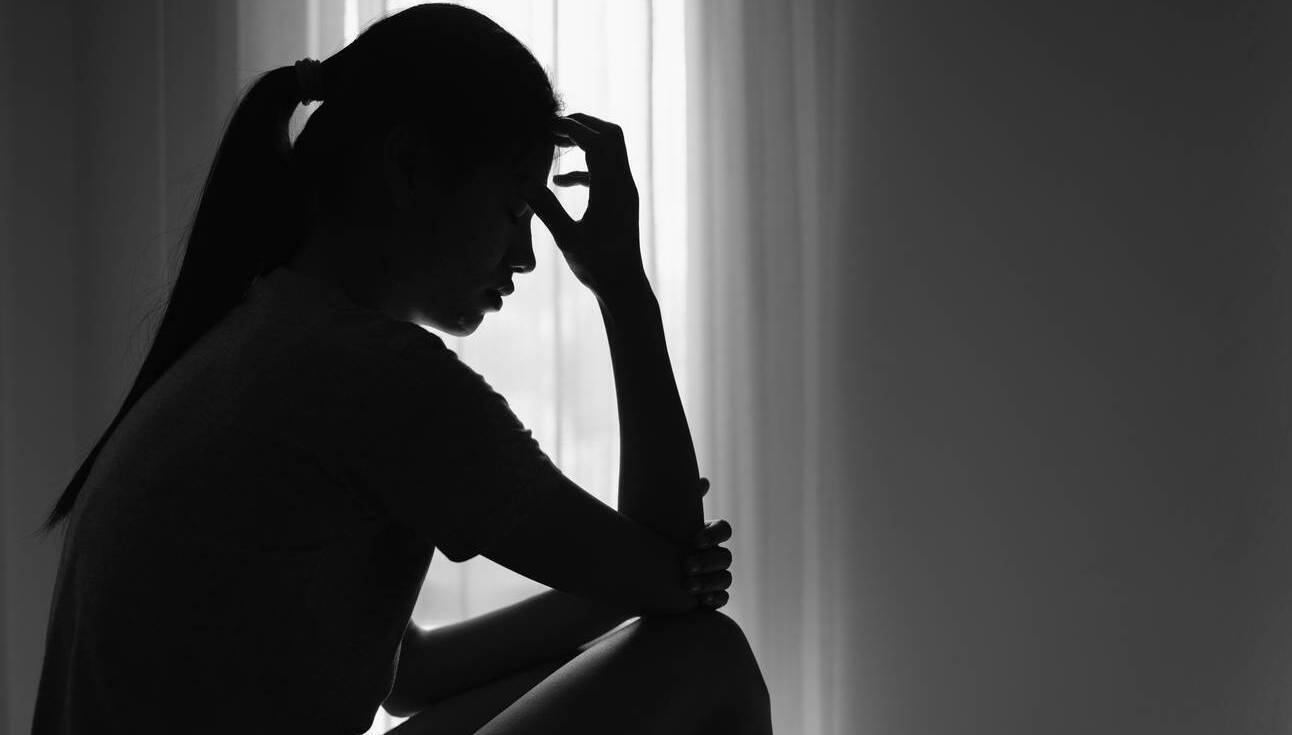
This kind of predatory behaviour is clearly an issue of abuse and violence, but it is also a corruption issue — and one that affects women and people in vulnerable situations disproportionately. File picture
When Irish people think about corruption, they usually think about brown envelopes, backhanders, rigged contracts, planning favours, or “jobs for the boys”.
That is understandable. For a long time, corruption has been discussed mainly as a problem of money changing hands.
However, corrupt public officials do not always ask for cash, or a job for their dubiously qualified relative, in exchange for access.
Sexual corruption is the abuse of public power for sexual gain. It happens when a public official, such as a lecturer, police officer, immigration official, health worker, or other person with public authority, implies, openly or suggestively, that access to a service, benefit, decision, or opportunity depends on sexual compliance.
This kind of predatory behaviour is clearly an issue of abuse and violence, but it is also a corruption issue — and one that affects women and people in vulnerable situations disproportionately.
In many cases of sexual corruption, the exchange is quid pro quo: this for that. The “this” is access to something the person should receive fairly. The “that” is sexual access, coerced through dependence, fear, discretion or vulnerability.
Bring sexual corruption out of the shadows
At DCU Anti-Corruption Research Centre, we have been researching sexual corruption to bring it out of the shadows so that we can understand and fight this deeply harmful form of corruption.
Our recent Research Ireland-funded work with Transparency International Ireland and the Transparency Legal Advice Centre examined public awareness and experience of sexual corruption in Ireland and Northern Ireland. The results are striking.
In a survey of 1,000 adults in Ireland and 1,000 adults in Northern Ireland, respondents were asked whether a public official had implied to them, or someone they knew, that they would grant a government service or benefit in exchange for sex or sexualised contact.
The survey covered 10 public service areas, including policing, health, education, immigration, local government, and planning.
Some 10.9% of respondents in Ireland and 7.1% in Northern Ireland reported direct experience or knowledge of sexual corruption.
Using a much more conservative estimate, where those who opted out of the sexual corruption question are treated as having no exposure, the figures are still 8.5% in Ireland and 6.6% in Northern Ireland.
These are not numbers that we, or the Government, can ignore.
The point is not that Ireland has a unique problem. International data from Transparency International shows that sexual corruption exists in every country covered by its Global Corruption Barometer. The point is that Ireland has a problem — and we are not taking it seriously.
Our wider work at DCU ARC and the work of colleagues in other universities point in the same direction.
Sexual corruption has been documented across countries and sectors. It is more likely where officials have discretion, where reporting systems are weak, where victims fear disbelief or retaliation, and where those seeking help are dependent on the very people who can exploit them.
Sexual corruption a threat to women's economic participation
In Burkina Faso, our Research Ireland and Irish Aid-funded work shows that sexual corruption is a real threat to women’s economic participation.
One respondent described how officials exploit women’s lack of alternatives: “These officials know that women entrepreneurs have no other way out. So, they’ll always demand sexual favours, and take it or leave it, at the risk of seeing their project fall through.”
Another put it even more starkly: “Civil servants take advantage of moments of weakness, situations where they know the woman has no choice but to accept their proposals.”
Our ongoing work on sexual corruption in Ukrainian higher education, carried out as part of Dr Olesia Zhytkova’s European Union-funded SAFE Postdoctoral Fellowship at DCU ARC, shows how the same dynamics can appear in universities.
Her focus group participants noted that in Ukraine many people do not yet recognise “sexual corruption” as a distinct problem. Cases are more often labelled as sexual harassment, if they are labelled at all.
One participant described sexual corruption as “in essence, extortion”, adding that “a good mark is bought at the expense of human dignity”.
Another said the problem is serious because “people simply aren’t aware that it exists”.
That lack of recognition matters. If we cannot name a problem, we struggle to measure it, report it, sanction it, or prevent it.
The Ukrainian evidence also shows why institutions matter.
Respondents linked sexual corruption to broader cultures of tolerance for corruption, academic misconduct and abuse of power. Yet they also pointed to better practice: Universities with clear policies, visible reporting information, and safer environments for students and staff. This is important.
Sexual corruption is not inevitable. It is shaped by institutional choices.
Ireland, which at the time of writing is drafting a new anti-corruption strategy, has the opportunity to take this issue seriously and show international leadership by being one of the first countries to address it properly within anti-corruption policy.
That means recognising sexual corruption explicitly in anti-corruption and integrity laws and frameworks. It means ensuring that public bodies, universities, police, health services, immigration systems and local authorities understand the risk. It means protecting whistleblowers and victims.
It means collecting better data. And it means making sure people know that access to public services should never depend on sexual compliance.
Most corruption debates are about trust in institutions.
Sexual corruption destroys trust in a particularly intimate way. It tells people that the state’s agents, its power, may not merely fail them, but may be turned against their dignity, autonomy and safety.
That should disturb us. More importantly, it should move us to act.
Prof. Robert Gillanders is co-principal investigator of COGS (Corruption, Gender, and Sustainable Development, a joint undertaking between DCU and Université Norbert Zongo) and is a professor of economics at DCU Business School. Dr Olesia Zhytkova is a postdoctoral researcher in the COGS project.
Disclaimer regarding Olesia Zhytkova’s contribution: This is funded by the European Union. Its contents are her sole responsibility and do not necessarily reflect the views of the European Union.
CONNECT WITH US TODAY
Be the first to know the latest news and updates