Would Donald Trump threaten the Vatican over Pope Leo's anti-war stance?
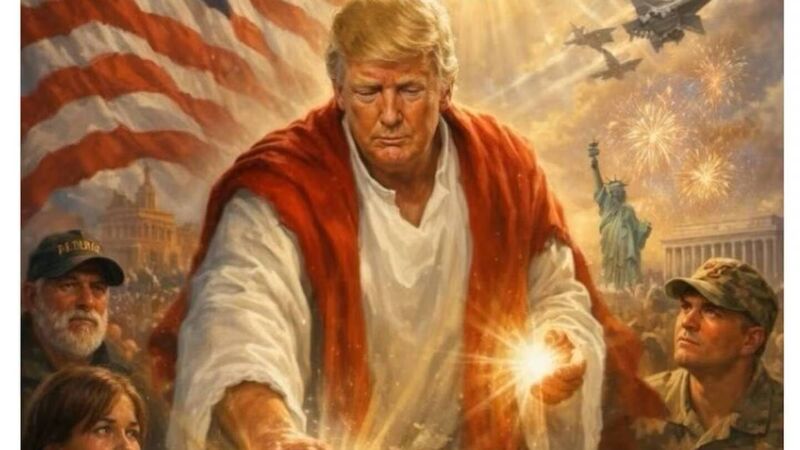
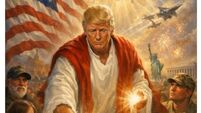
Donald Trump posted an AI-generated image of himself as Jesus on Truth Social.
Would the Trump administration be so bold and reckless as to threaten the Vatican over Pope Leo XIV’s criticisms of the White House’s military policies?
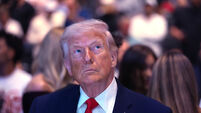
At first glance, that may seem a far-fetched scenario, but after US president Donald Trump’s extraordinary broadside against Pope Leo on Sunday night — saying he didn’t think the US-born leader of the Catholic Church was “doing a very good job” and that “I’m not a fan of Pope Leo” — maybe not that unlikely.
The president even went to far as to suggest if he wasn’t in the White House, Leo wouldn’t be in the Vatican, suggesting Leo only got elected “because he was an American, and they thought that would be the best way to deal with President Donald J Trump”.
Read More
Trump’s sharply-worded comments came just days after various stories have surfaced about a strange meeting in the Pentagon in January between some top Department of Defence officials and the papal nuncio in Washington.
The nuncio — the pope’s ambassador to the US — at the time was Archbishop Christophe Pierre, and he was summoned to a meeting in the Pentagon by Elbridge Colby, the US under-secretary of defence for policy.
Colby’s grandfather was William Colby, a former director of the CIA, and according to initial reports in (based in New York) the nuncio was given a “dressing down” because of the pope’s opposition to Trump’s foreign policy.
According to that report, the Pentagon officials insisted the Catholic Church should take the US government’s side in military matters.
There was also a claim that a military official referenced the 'Avignon Papacy' during the Pentagon meeting. This was an unhappy period in church history when the powerful King of France, Philip IV, challenged the power of the papacy, obtaining the elevation of Clement V as a pro-French pope in 1305, residing at Avignon — where popes would remain for the next 70 years in what became known as the 'Babylonian Captivity' of the papacy.
It was a time when the papacy suffered a grave loss of prestige and a weakening of papal authority because it was too closely identified with French interests.
If the 'Avignon Papacy' was invoked during the meeting, it would be open to several interpretations, one of which would be an implied threat.
The unease in the White House had initially been caused by remarks made by Pope Leo, the first US-born leader of the Catholic Church, during a new year address to diplomats assigned to the Vatican.
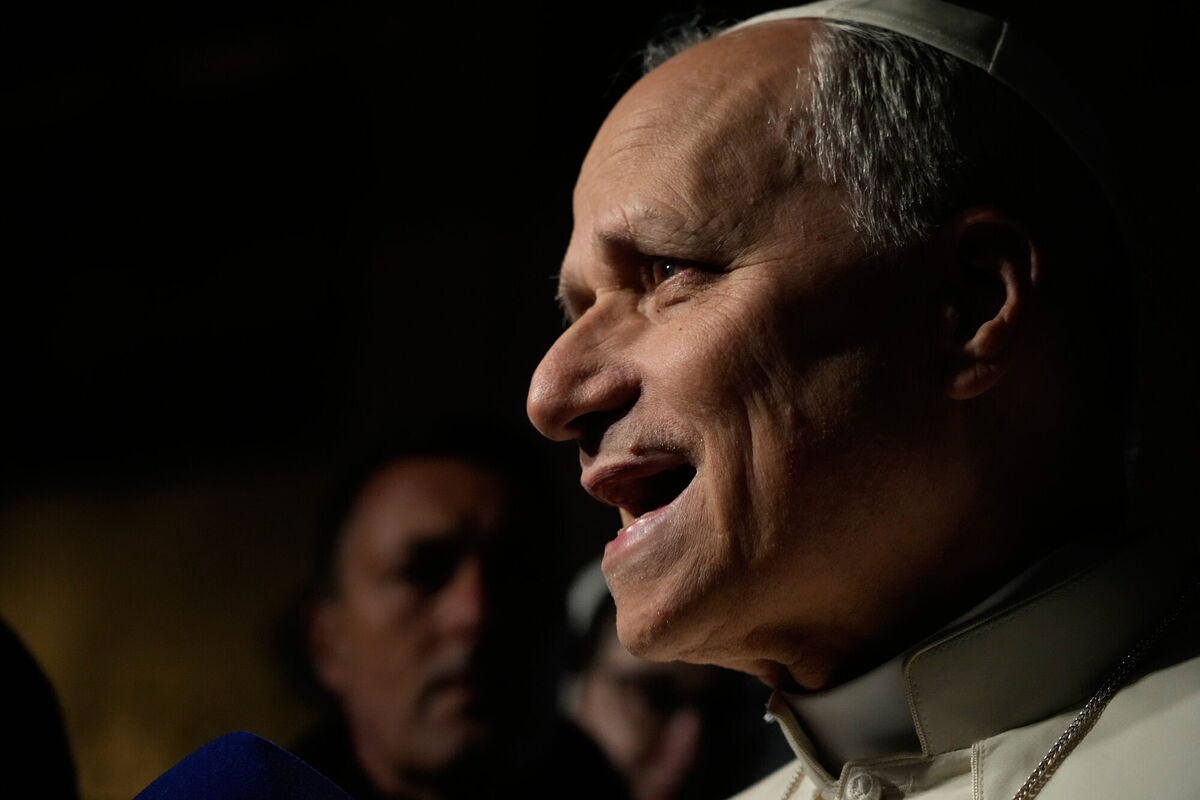
Pentagon officials objected to what they perceived as implied criticisms of the Trump administrations foreign policy in the January speech where Pope Leo said: “A diplomacy that promotes dialogue and seeks consensus among all parties is being replaced by a diplomacy based on force.”
This was at a time when Trump had been threatening to seize Greenland from Denmark — a Nato ally — launched missile attacks on alleged drug-smuggling boats and abducted Venezuelan leader Nicolas Maduro.
The pope made clear his concern over the growing use of military force to resolve international disputes. “War is back in vogue,” he told the diplomats, “and the zeal for war is spreading”.
The summons to the nuncio from Colby — who is a Catholic and close to vice-president JD Vance — to a meeting in the Pentagon was regarded as highly unusual.
“It was like inviting a vegetarian to a barbecue,” said Massimo Faggioli, professor of ecclesiology at Trinity College Dublin. The Pentagon, he told the , is “the building where the orders to wage war come from, and that by itself is not a natural place to have a meeting with a representative of a global organisation like the Catholic Church, which is known for its efforts to stop wars.”
According to the , based in Kansas City, “the controversy surrounding the meeting is likely to further inflame religious pushback to an unusual wave of spiritual sabre-rattling by President Donald Trump’s administration — particularly surrounding the US government’s military actions in Iran, which the president himself has suggested are the will of God.
Particular criticism has been directed at Secretary of Defence Pete Hegseth, who has consistently sought to justify the war in Iran in religious terms. He has invoked his Christian faith to cast the US as a Christian nation righteously seeking to vanquish its foes, describing the attack on Iran as a holy war.
“Our troops, our American warriors deserve the credit for this day, but God deserves all the glory,” Hegseth said. “Tens of thousands of sorties, refuellings and strikes carried out under the protection of divine providence. A massive effort with miraculous protection.”
On his arm, Hegseth, who is a member of a small Protestant sect, carries a tattoo with the words “Deus Vult” (God Wills It), used as a rallying cry by Christian warriors during the bloody Crusades proclaimed by a pope in the 11th century.
Trump, a nondenominational Christian, has also made references to faith when discussing the war in Iran. When asked by a reporter during a press briefing earlier this month whether he believed God was on the side of the US in the war, the president responded, “I do, because God is good”.
The reported Trump’s certainty contrasted with remarks offered the next day by Vance, whose new book is about his conversion to Catholicism, who was more cautious when asked the same question by the reporter: “I think my attitude towards military conflict has always been to pray that we are on God’s side”.
What is seen in some quarters as the Trump administration’s “war theology” drew especially sharp criticism from faith leaders — including Pope Leo — when the president took to social media and threatened to eradicate Iran’s “entire civilisation” if his demands weren’t met. He concluded the social media post with the phrase “God Bless the Great People of Iran”.
Pope Leo called Trump’s civilisational threat “truly unacceptable” before calling on citizens of “all the countries involved” to contact their representatives and call for peace. The pope would later stress that “God does not bless any conflict”.
Last Saturday, at a prayer vigil in St Peter’s Basilica, the pope went further: “Even the holy name of God, the God of life, is being dragged into discourses of death”.
Trump’s threats to erase Iran’s civilisation prompted a strongly-worded editorial in the , which said they “force Catholics to decide if they will be complicit”. In the 2024 presidential election, a majority of Catholics (56%) voted for Trump as against 43% for Kamala Harris.
The editorial said the “religious vulgarity of Hegseth is so undisguised and noxious that it can’t be ignored”.
And it went on: “If US Catholics were in need of clarity amid the chaos and religious jingoism, it is provided at the highest levels by a pope who speaks with a midwest accent and thus can’t be dismissed, as others have been in the past, as someone who just doesn’t understand the United States”.
CONNECT WITH US TODAY



Be the first to know the latest news and updates