Dorcha Lee: Security will be the big challenge for Ireland's EU presidency
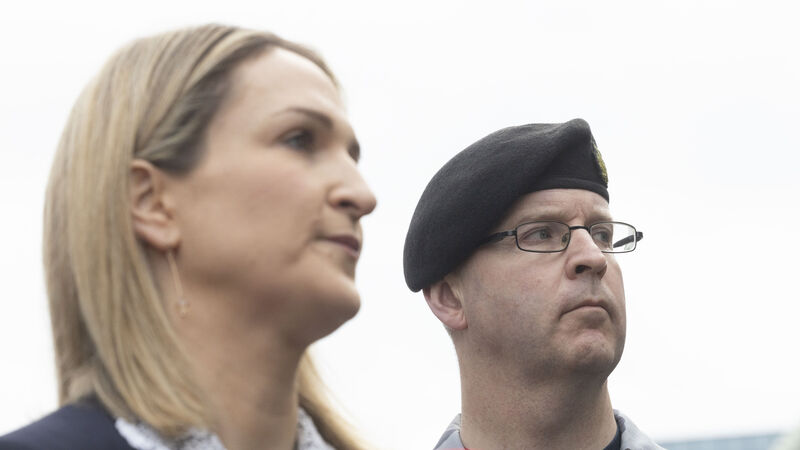
Minister for foreign affairs and defence, Helen McEntee (left), and the head of the Irish Naval Service, Commodore Darragh Kirwan (right). The minister has brought forward the acquisition process for primary radar to track aircraft and a range of maritime surveillance equipment to monitor the vulnerable cables off the West Coast. File photo: Sam Boal/Collins Photos
The recent spate of Department of Defence announcements on the re-equipment of the Defence Forces (DF), comingled with security arrangements for the incoming Irish EU presidency, may have confused the public.
It is important to separate out the long-term re-equipment programmes for the DF, from the short-term security requirements for the six-month Irish EU presidency period, starting on July 1. Hopefully, the long-term programmes will be completed before the subsequent Irish presidency, which will be sometime, having regard to probable EU expansion, between 2038 and 2043.
Read More
When the last Irish presidency was conducted, in 2013, the security threats were very manageable. Since then, the situation has changed utterly, and really only Nato member nations, or those backed by arrangements with Nato member states, will have the full range of military capabilities to run a safe and secure presidency.
The minister for European affairs, Thomas Byrne, has recently warned that Ireland's presidency is likely to be targeted by Russian drone and cyber attacks, citing the Danish presidency as an example.
In the Russia-Ukraine War we are not neutral. Our training, logistical and financial support for the Ukrainian Army allows and sustains Ukrainian soldiers to kill more Russian soldiers on the battlefield than they might have been able to do without Irish support. Let us have no illusions about that.
True, Ireland’s support for Ukraine is not directly lethal, but its indirect effects are most definitely lethal. We fully support EU sanctions against Russia and allow our citizens to join the Ukrainian Army. From a Russian point of view, we are aiding and abetting the enemy.
In a recent RTÉ interview, the chairman of the EU Military Committee, General Seán Clancy, gave an overview on the European security and defence situation. He said Russia could threaten European countries within five years. Many defence analysts agree. Admitting that there had been a paradigm shift in the EU-US security relationship, he said Europe was moving towards strategic autonomy in defence.
Asked about security for the Irish presidency, he said he had no doubt that Ireland would mount an effective security operation. In fairness, General Clancy’s remit, as chairman of the EU Military Committee, takes in all 27 member states, and it would be improper for him to comment in detail on the security arrangements of any one member state.
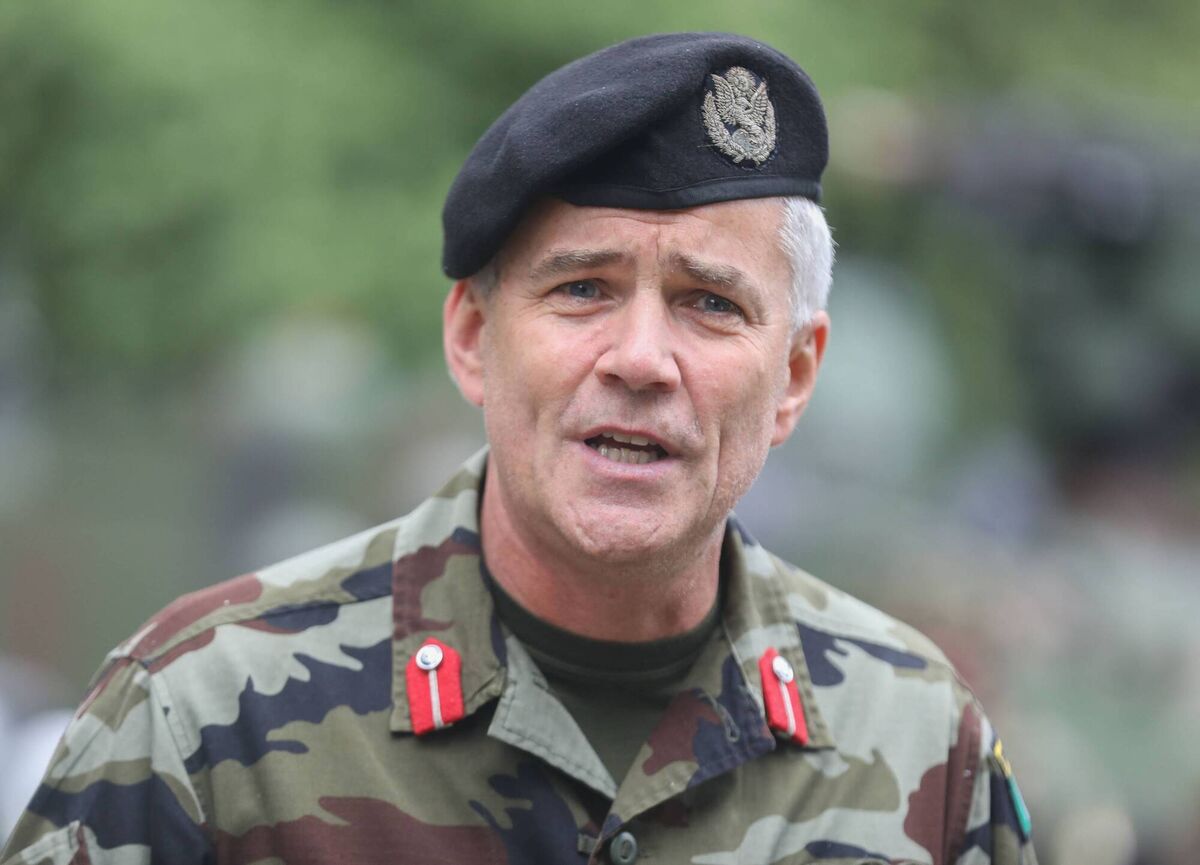
As regards the presidency, cyber defence seemed to be sorted, and the Gardaí have the resources, or access to resources, they require. However, the Defence Forces have said they will not have the capacity to protect all the locations recommended by the Gardaí for the coming presidency from drone attack.
Apparently, the DF, from their own resources, will be able to provide drone cover for just one location, Baldonnel. Of course, while An Taoiseach is entertaining our guests in marquees at Baldonnel, drones could be playing silly so-and-sos at Dublin, Cork, Shannon and Knock airports.
One solution is to contract in outside experts to provide the necessary drone protection. But drones are only one concern.
Our main vulnerability is that there are significant gaps in the most important military capabilities, as a maritime nation conducting an EU presidency. That is an understatement.
The minister for defence, Ms Helen McEntee, has brought forward the acquisition process for primary radar to track aircraft and a range of maritime surveillance equipment to monitor, inter alia, the vulnerable cables off the west coast. This means that our security services may be able to watch, in real time, the cables being torn up from the ocean floor and cut to ribbons.
We still won’t have the air and naval capabilities to actually deal with certain threats in time for this presidency. We may be able to learn that the cables are about to be cut but we lack our own naval and air capabilities to intervene.
We can imagine an air threat materialising while the EU Heads of Government are gathering in a Dublin, or Cork venue, but can do nothing about it. Of course, we could have deferred taking on the presidency until the Air Corps has fighter jets and the Naval Service takes delivery of perhaps, a frigate or two.
In the meantime, Luxembourg, for example, could stand in and do an excellent presidency. It has zero maritime security issues and their Nato neighbours, Belgium and Netherlands, already alternate in protecting each other’s air space, including Luxembourg, on a rotational basis as part of Benelux Air Policing.
Advancing the Lithuania presidency to replace the Irish is another option. The Lithuanians can whistle up Nato help as required.
At this late stage, in the absence of concern being expressed publicly by other EU member states, it is assumed that secret arrangements have been made to give naval and air cover, from friendly nations. If so, fine, but from where?
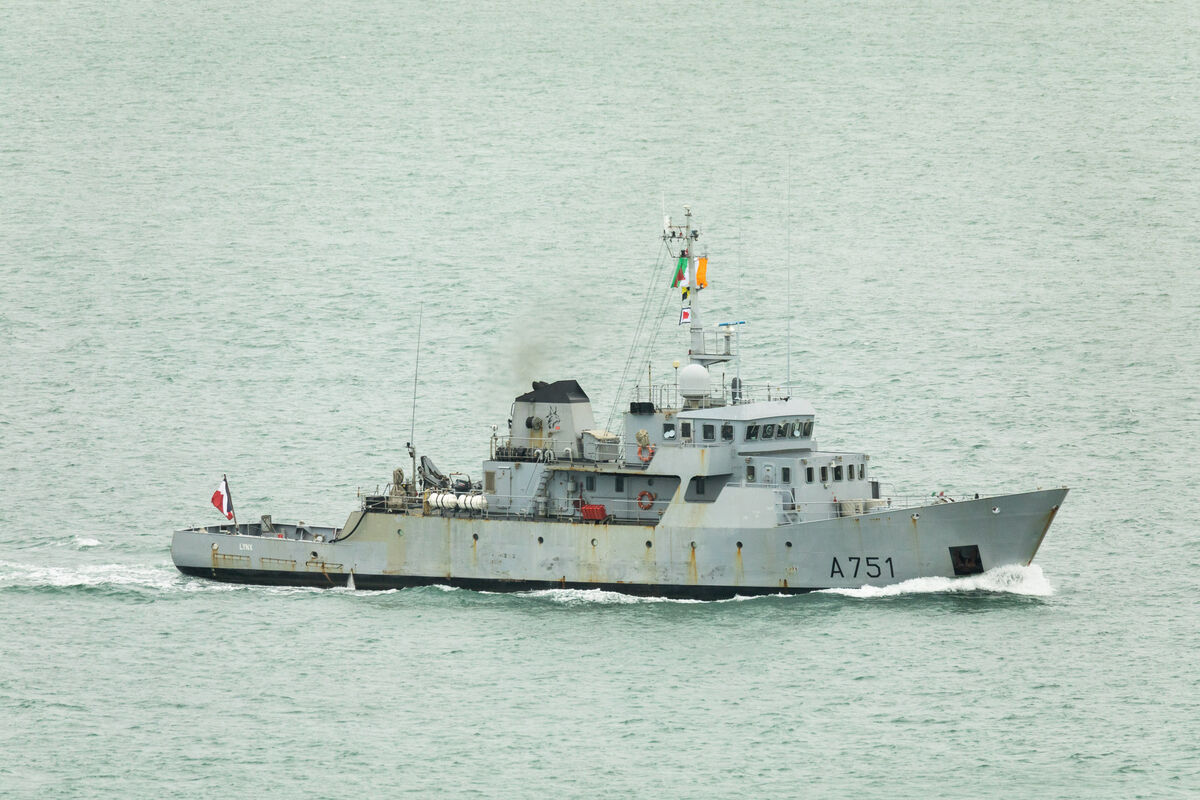
There are leaks to the media that British and French navies will be ‘allowed’ to patrol Irish waters. That’s a weird way to put it. Will they be requested, and be present 24/7 in Irish waters, in sufficient numbers, for the whole six months?
Ireland's coastline is approximately 7,500km, less 400km for NI, leaving the Republic with 7,100km. That’s massive. Cyprus, which has the current EU presidency, with about one 10th the length of our coastline, has the protection of the Greek Navy and Airforce, with the UK protecting their Sovereign Base Areas in the South.
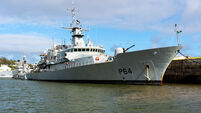
With such a large area to cover, a mere passing patrol, once every three weeks, would be tokenism, like when the one ship Naval Service had to manage with the Muirchú.
If the Internet went down, even for a matter of days or weeks, the impact would be incalculable.
The details of our recently upgraded security arrangements with the UK are classified. There is no public mention yet of basing RAF aircraft in Baldonnel and Shannon for the duration of the presidency for potential combat operations against hostile air attack.
Another obvious choice is our nearest EU neighbour and historical ally, France. But would the ideologues of undefended neutrality, protest? Would they object to protection from the very navy that brought the Father of the Irish Republic, Wolfe Tone, to Ireland in 1798?
If the French Navy was good enough for Wolfe Tone, it should be good enough for them.
Ideally, a Joint Operational HQ would co-ordinate the military response with the foreign naval and air elements, under Irish operational control.
It should be possible to reassure EU member states that Ireland can not only run a good presidency, but also, a secure one.
- Dorcha Lee is a retired Colonel and defence analyst


CONNECT WITH US TODAY



Be the first to know the latest news and updates