Paul Hosford: Ministerial meeting in Ukrainian bomb shelter reminds us of the stakes
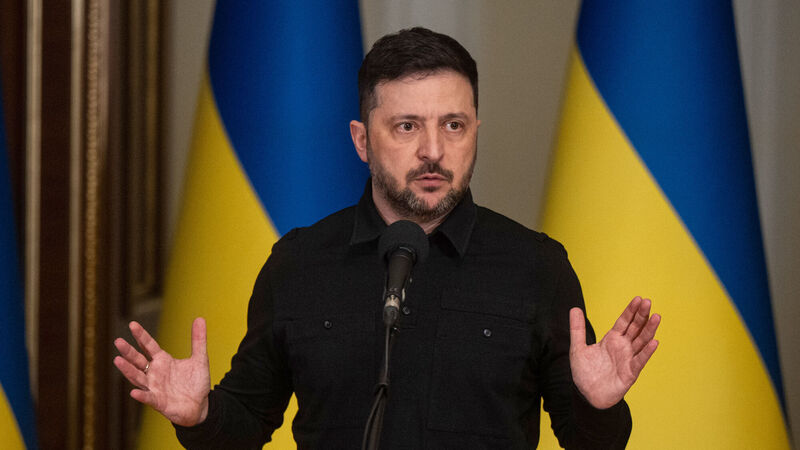
Ukraine's president Volodymyr Zelenskyy has long known that foreign support is key to protecting his country's future. File picture: Danylo Antoniuk/AP
The lobby of the Fairmont Grand hotel in Kyiv is salubrious, all marble, dark oak and crystal chandeliers.
Even the metal detectors erected for the arrival of the EU's foreign ministers could not detract from the grandeur.
The press room, however, was less salubrious. Set in the hotel's bomb shelter, the repurposed underground car park was a reminder that for all the protocol surrounding the arrival of the EU's ministers, this was no ordinary Brussels sit-down.
Billed as an informal meeting of the EU's Foreign Affairs Council, the gathering comes as Ukraine marks four years since the horrors of Bucha, just 45 minutes north of where dignitaries sat on Tuesday.
Read More
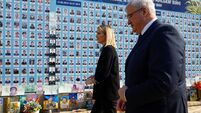
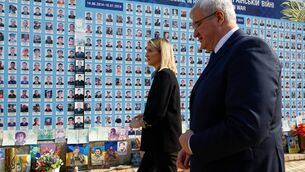
Following their train journey from Poland, it was the first place to which they were taken to see a rebuilt town where just four years ago, investigators uncovered mass graves and bodies of civilians, many showing signs of execution, torture, and mutilation.
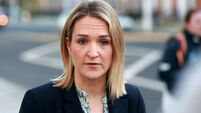
Ireland's representative at the meeting, Helen McEntee, said the visit had "affected" her and made her more certain in her convictions around the war that Russia is the aggressor.
Despite Russian claims that the massacre was an invention of the Ukrainian government for propaganda purposes, reports from Amnesty International, Human Rights Watch, and the support claims of summary execution, unlawful killing and enforced disappearances.
The use of the bunker for the press was not just because of the threat of Russian drones — indeed, overnight had not seen a single air raid warning for the first time in a week — but to ensure that the country's president could access the lobby unencumbered.
Mr Zelenskyy has long known that foreign support is key to protecting his country's future and the president had just returned from Saudi Arabia, where Ukraine was touting its expertise in drone defence to gulf states — a play largely aimed at freeing up Patriot missile interceptors from those states.
As when he travelled to Dublin a few months ago, Mr Zelenskyy's movements are a massive security operation in and of itself. In Dublin, the visit was only ever referred to officially as a "high-level visit" with no names attached.
In his home capital, his movements and speeches are strictly controlled, to the point where a speech given in full glare of the continent's media was retroactively embargoed by summit staffers.
That speech saw Mr Zelenskyy excoriate one of the participants in the meeting, Hungary, whose foreign minister Péter Szijjártó was accused by a number of media outlets in his home country of regularly discussing the EU’s confidential plans on sanctions with Russian officials, actively looking for ways to block or delay their adoption.
Mr Zelenskyy said that the Hungarian veto on a €90bn loan for his country effectively amounted to "one person standing against all of Europe".
In a city where residents still suffer from blackouts due to damage to critical infrastructure and who have come through a bitterly cold winter where temperatures dropped to -21c, the thoughts of spring are already crowded by what comes next winter.
The Ukrainian president on Tuesday said a €5bn plan to recover from the winter just gone and prepare for the next had been delayed, losing a month of preparation.
Mr Zelenskyy's pitch to the ministers in attendance was simple: allow money to flow into rebuilding, defence, and weaponry to secure his country not because it was right or moral, but because it is in European interests to do so.
Having the meeting in a place with a bomb shelter was perhaps a reminder for those in attendance of the stakes.
- Paul Hosford is Acting Political Editor.


CONNECT WITH US TODAY



Be the first to know the latest news and updates